
China launches 'Heavenly Sword' AI to counter US cyber tech

A major geopolitical chess match is unfolding in the AI space, and Chinese cybersecurity giant 360 Security Technology just made a massive move.
At the ISC.AI 2026 conference in Beijing, 360 founder Zhou Hongyi unveiled "Yitian Tulong"—a suite of two new AI security tools named after the legendary "Heavenly Sword and Dragon Saber" from classic Chinese martial arts lore. The release is a direct, high-profile answer to Anthropic’s powerhouse model, Mythos, which has recently sent shockwaves through the global cybersecurity industry, News.Az reports, citing Reuters.
Mythos, previewed earlier this year, has stunned experts with its ability to effortlessly identify software vulnerabilities. However, its immense offensive potential also triggered immediate national security alarms in Washington. The U.S. government went so far as to block Anthropic from exporting even a scaled-down version of the program to foreign destinations and nationals.
For China, leaving that kind of digital leverage solely in American hands wasn't an option. Zhou warned of a dangerous "one-way transparency" if U.S. entities could use Mythos-like models to scan global software systems while Chinese firms lacked the same capabilities.
"This kind of powerful weapon that can change the landscape of cyber offence and defence cannot be held only by others," Zhou stated, framing vulnerability-finding AI as a critical national strategic asset.
The Yitian Tulong suite tackles both sides of the digital battlefield:
Tulongfeng ("China's version of Mythos"): Designed to automatically hunt down and discover software vulnerabilities. 360 claims it has already flagged 3,432 vulnerabilities, with 105 officially confirmed by Chinese authorities.
Yitianzhen: Built to fully automate cyber defense and incident response.
What makes 360's approach unique is how they are bypassing U.S. chip embargoes. Because tight export controls have left domestic Chinese models with a self-admitted 20% to 30% gap in raw baseline computing power, Zhou argued that China simply "cannot wait" to catch up on hardware.
Instead of relying on the American playbook of "the strongest chips and the strongest computing power," 360 is utilizing an "AI agent" strategy. By layering their existing security databases, automated tools, and human expertise over their current AI models, they claim to have achieved "Mythos-equivalent capabilities."
"If the U.S. route is to cultivate a genius hacker," Zhou explained, "360's route is to organise a professional attack-and-defence team."
Related Stories
 AI News
Anthropic bans users from ‘needless abusive or cruel behavior’ towards Claude
46 minutes ago
Nana Patekar’s son Malhar vows to continue his father’s work; says ‘Nanasaheb Is Immortal...’
1 hour ago
 AI News
OpenAI projected to bring in $20bn less in revenue than expected
1 hour ago
 AI News
Trump: Anyone who uses term ‘artificial intelligence’ is an enemy
1 hour ago
 AI News
Gemini Pro is now only for Google AI Pro and AI Ultra subscribers
1 hour ago
 AI News
AI fears are growing
1 hour ago
 AI News
AI Stocks Tumble On OpenAI News; GigaCloud Tech, Snowflake, GE Vernova In Focus
2 hours ago
 AI News
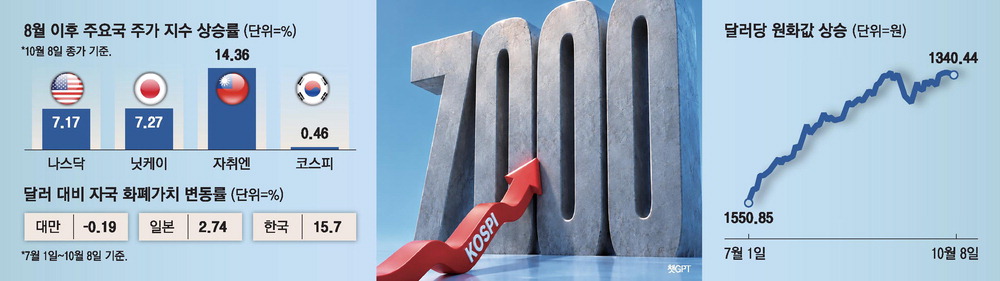
As the global stock market resumes its artificial intelligence (AI) rally and the new stock price co..
2 hours ago