
CHARLEBOIS: Canada shouldn’t copy Trump’s beef blunder
See more Toronto Sun on Google — save as a Preferred Source
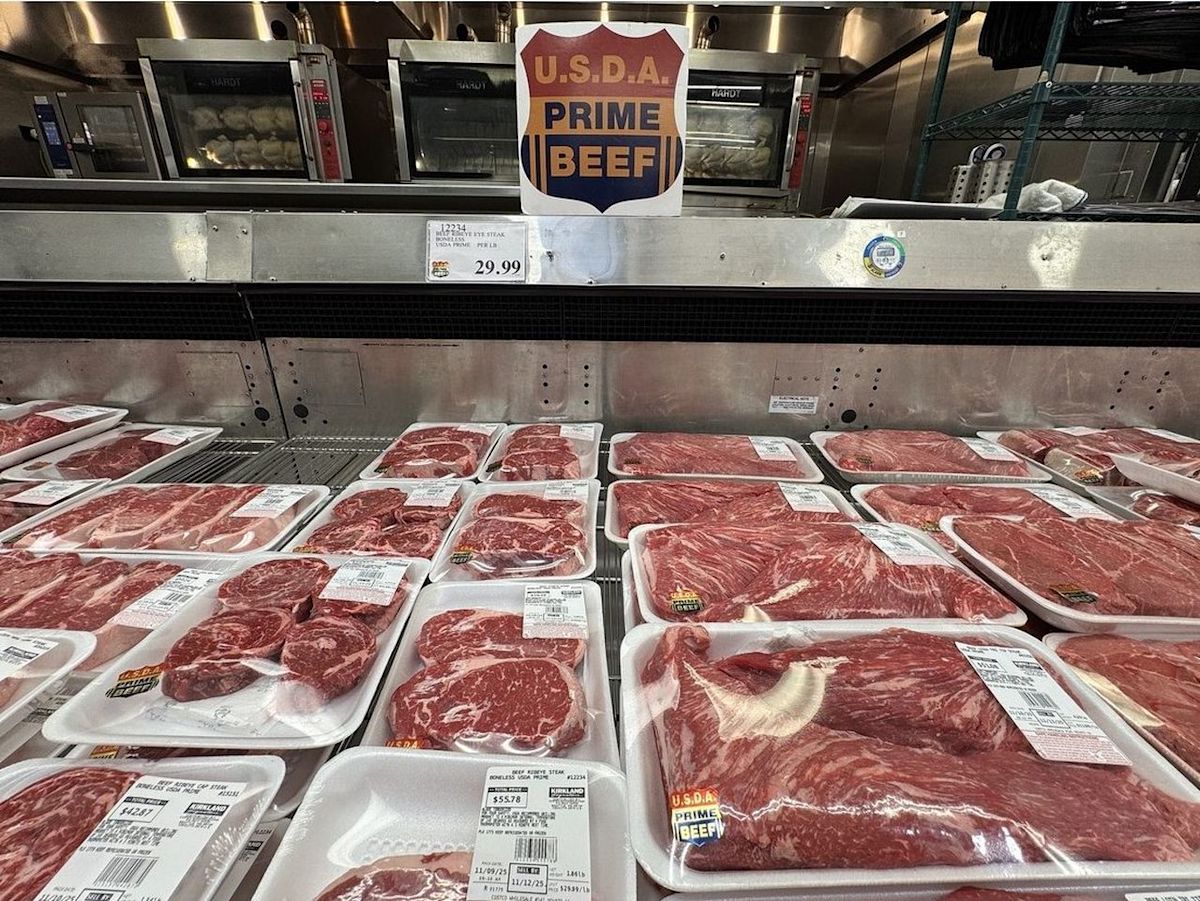
President Donald Trump knows how to provoke and move markets. But when it comes to beef prices, he may have missed a few briefings on cattle economics.
Last week, Trump authorized an additional 300,000 metric tonnes of lean beef trimmings to enter the United States at the lower, within-quota tariff rate. Beginning September 1, the measure will permit up to 100,000 tonnes a month for 90 days. The imported trimmings will be blended with American beef to produce ground beef. The White House is encouraging suppliers to offer it at a 25% discount.
Trump also announced that his administration would make it easier for ranchers to process and sell their own meat.
The objective is clear: increase supply and bring down prices. But it will not work as advertised.
Beef prices are elevated because the United States has too few cattle while Americans continue buying beef. The U.S. herd is near a 75-year low following years of drought, wildfires, high feed costs and restrictions on cattle imports from Mexico. Beef production is expected to fall by about 4% this year.
This is not a problem that can be solved in 90 days.
Cattle are not widgets. Rebuilding a herd takes years. Ranchers must retain heifers instead of sending them to slaughter, which initially reduces the beef supply even further. Biology—not politics—sets the production schedule.
The additional imports may lower the wholesale cost of lean trimmings, but a 25% discount on one ingredient will not produce a 25% discount at the grocery store. Retail prices also include domestic beef, labour, processing, inspection, transportation, refrigeration, packaging and retail margins.
Some savings may reach consumers. A dramatic or lasting price decline is highly unlikely.
Allowing ranchers to process their own meat could eventually increase competition. But meat processing requires costly facilities, skilled workers, inspection and reliable cold-chain infrastructure. Removing regulations does not create more cattle, and food-safety oversight cannot be weakened simply to produce cheaper hamburgers.
There is also a longer-term risk. If producers believe that every increase in cattle prices will trigger government-sponsored imports, they may become less willing to invest in rebuilding their herds. A policy designed to address today's shortage could therefore prolong tomorrow's shortage.
Canada should pay close attention.
Our beef market is also being reshaped by a K-shaped economy. Higher-income Canadians can continue buying beef despite rising prices. Many struggling households are buying less, choosing cheaper cuts or switching to chicken, pork and other proteins.
According to Statistics Canada, ground beef prices have risen 8.1% since January. NielsenIQ data indicate that Canadian beef sales declined about 4% by volume during the last quarter. Canadians are not abandoning beef, but many are rationing it.
Meanwhile, Ottawa is accelerating trade negotiations with Mercosur, which includes Brazil, Argentina, Uruguay and Paraguay. These countries can generally produce beef at a lower cost than Canada.
Allowing more South American beef into Canada is not necessarily bad policy. Carefully managed imports could supplement domestic supplies and limit further price increases. But Ottawa should not pretend that imports will restore the prices Canadians remember from a few years ago.
Too much imported beef could also weaken Canadian producers at precisely the moment they need incentives to expand. Any Mercosur agreement must include reciprocity, credible inspection and traceability standards, and safeguards against sudden import surges.
Trump may give American consumers some temporary relief, but he cannot import his way out of a structural cattle shortage. Canada should learn from his mistake before making the same one.
– Sylvain Charlebois is director of the Agri-Food Analytics Lab at Dalhousie University, co-host of The Food Professor Podcast.
CHARLEBOIS: Meat losing ground as cottage cheese remains Canada's hottest grocery item
CHARLEBOIS: Don't tax Canada's 'pink gold' potash
CHARLEBOIS: Ottawa's tariff trap — don't weaponize the grocery bill
Related Stories
 Canada
Polls open in North Vancouver
7 minutes ago
 Canada
‘We’re not at war with Canada,’ U.S. treasury secretary says
7 minutes ago
 Canada
The Canadian suspected of spying on NATO was denied bail. Here’s what comes next
7 minutes ago
 Canada
‘Lake Ontario’ returns to provincial agency maps after ‘Lake America’ switch. Live trade war updates here.
7 minutes ago
 Canada
Windsor
1 hour ago
 Canada
Alberta municipalities on alert as Dutch elm disease cases increase in province
1 hour ago
 Canada
Voters to cast their ballots in Beaches
1 hour ago
 Canada
Michael Higgins: Trade war was never about sovereignty
1 hour ago