
Canada's going to need to use its aging secondhand British subs for another decade
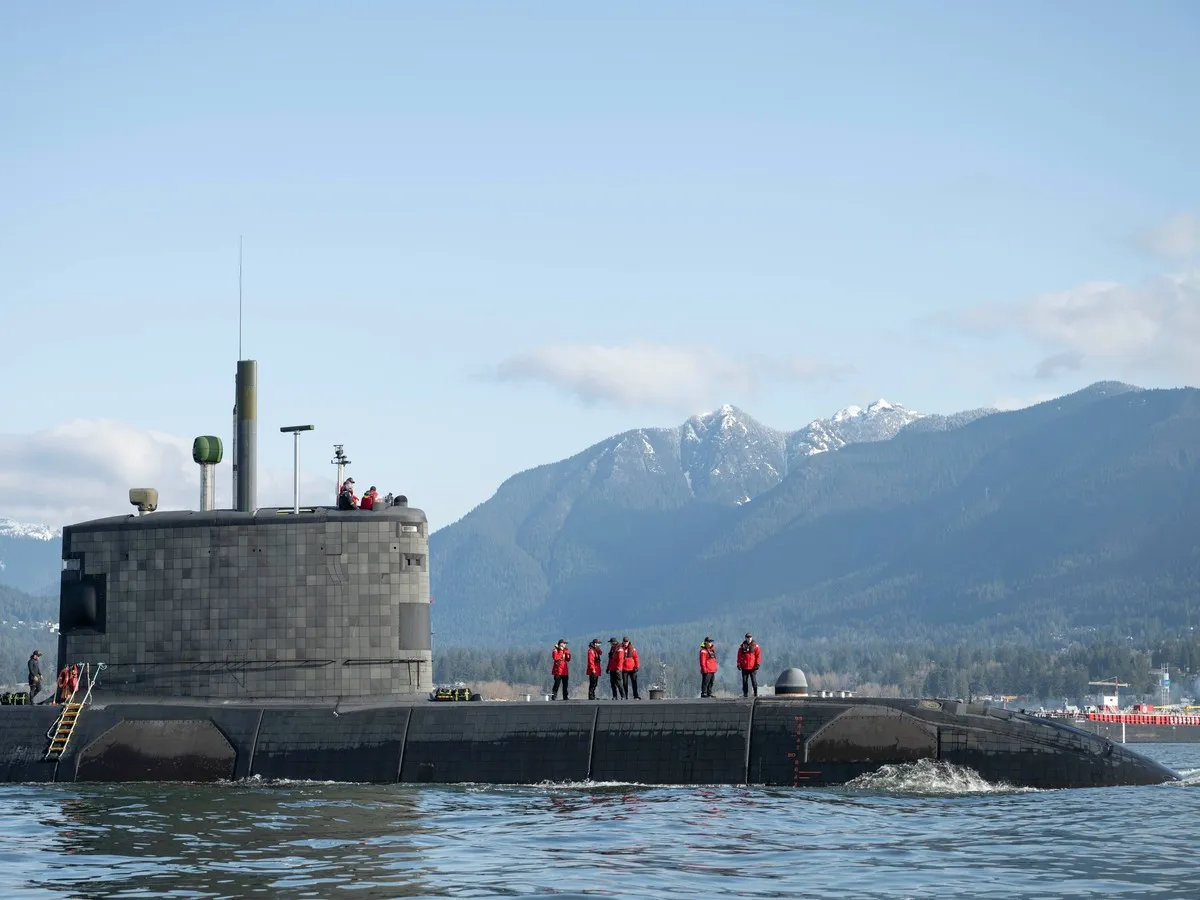
Canada will have to squeeze at least another decade of life out of its used British submarines as it waits for Germany to deliver up to 12 new vessels. But not everyone’s convinced that can be done.
The four diesel-electric subs the Royal Canadian Navy acquired from Britain in the late 1990s have been plagued with disasters, including floods, a deadly fire and a grounding that took the only operational sub we have right now out of action for a decade.
But the recent announcement that Canada is negotiating with Thyssenkrupp Marine Systems as the preferred supplier for up to 12 new subs to replace them doesn’t mean the Victoria Class will go by the wayside any time soon.
“Canada will conclude contracting no later than the end of 2027, with the first four submarines to be delivered ahead of schedule, in 2034,” Andrée-Anne Poulin, who speaks for National Defence, wrote in an email.
“Until then, the RCN’s current submarine fleet will remain operational into the mid-to-late 2030s.”
The navy needs to keep running the Victoria Class so it can train submariners for the German submarines we’re buying, said Paul Mitchell, a professor at the Canadian Forces College who is writing a book on the Victoria Class.
“By hook or by crook, the navy has to make these things work for the next 10 years because they have to generate crews,” Mitchell said.
“So, the navy is just going to do whatever it can do to keep these things operational, which is basically what it’s been doing for the last 20 years.”
The vessels kept Canada in the business of running submarines after Canada’s three Oberon Class subs were taken out of service between 1998 and 2000, Mitchell said.
“It was always a life raft,” he said.
“If they didn’t get the Victoria class, we wouldn’t have a submarine service to fill out right now. It was just keeping it alive.”
With “careful management,” Mitchell said, the subs “absolutely can last us another decade.”
The pressure hulls — the primary, watertight inner hulls of a submarine — can be managed safely, he said.
“If there’s concerns about it, they put restrictions on the depth that they can dive,” Mitchell said. “The bigger question is, there’s lots of parts on a sub that are increasingly difficult (to source) and perhaps within a couple of years, (they’ll be) impossible to replace without really expensive re-engineering efforts.”
Canada has spent lots of effort and money on the Victoria Class subs, “and still had, I think, by most peoples’ admissions, pretty weak results,” said David Perry, a defence analyst with the Canadian Global Affairs Institute.
“My running joke several years in the last ten has been I don’t know what a good number of operational days for a submarine force is, but zero seems low,” Perry said.
Related Stories
 Canada
Canadian investigation launched into data breach that exposed millions of IDs
50 minutes ago
 Canada
Alberta premier adamant referendum ads are not ‘neutral’ on separation question, as UCP president claims
50 minutes ago
 Canada
48% of northern Canadians say Trump’s U.S. is biggest threat to Arctic
50 minutes ago
 Canada
Washington mobilizes allies in the Arctic
1 hour ago
 Canada
Lululemon, Canada Goose and Ikea, among brands expanding into resale markets
1 hour ago
 Canada
Proposed Kuugaaluk dam found to have significant environmental impacts
1 hour ago
 Canada
Tariff
1 hour ago
 Canada
U.S. shouldn't buy 'blood potash' from Belarus, Sask. premier says
1 hour ago