
Regulated iGaming market goes live in Alberta, government aims to box out grey market

Alberta’s regulated iGaming system is now live, starting the race for private sports betting companies and online casinos to stake their shares in the provincial gambling market.
It makes Alberta the second province to officially open the doors to private online gambling operators, behind Ontario.
Nearly 50 companies paid $200,000 in registration and permit fees leading up to Monday’s launch, but Service Alberta Minister Dale Nally said he thinks closer to 20 are ready for customers.
A spokesperson for the provincial gambling regulator, the Alberta Liquor, Gaming and Cannabis Commission, or AGLC, said “all systems are a go” as of midnight.
The new system stems from legislation passed last year by Premier Danielle Smith’s government. Nally, who oversees the AGLC, has said the goal is to protect online bettors in the province.
Before Monday, online gamblers in Alberta either took advantage of the government-owned PlayAlberta or risked offshore sites with no consumer protection.
Alberta’s new system seems to have made an impact already.
One online platform headquartered in Estonia — Coolbet — announced earlier this month that it was pulling out of Alberta as a result of its regulations.
“We know that while gambling will never be safe, people will be safer in the regulated space,” Nally said in a recent interview.
Alberta will also be cashing in on some revenue it was missing out on with residents placing unregulated or grey-market bets. The new system is to see Alberta collect 20 per cent of each company’s revenue.
The government is forecasting a $76-million bump to provincial coffers in the first year, said Nally, although the regulatory system is “not about the money.”
“It never has been,” he said. “This has been about putting players’ safety and player responsibility first.”
Alberta’s self-exclusion program for brick-and-mortar casinos, which allows people to essentially ban themselves from gambling, is also applicable to online operators. Companies are required to let Albertans set their own time or wager limits.
Nally said one per cent of gross online gambling revenue would be set aside to spend on problem gambling programs, resources and treatment.
Two per cent is to be earmarked for First Nations. Nally said how those funds would be spread out is still being determined.
Ontario has allowed residents to use online casinos and sportsbooks since 2022. Every year since, iGaming Ontario, the provincial regulator, has reported significant growth in overall betting, revenue and active accounts.
Ontario has also seen significant increases in the number of people seeking help for gambling.
A University of Toronto study in March suggested that the rate of men under age 24 who called Ontario’s gambling helpline increased by more than 300 per cent since 2022.
It also found that the number of active online accounts per 100,000 people increased by 239 per cent in the first three years, to about 7,300 from 2,160.
Nally said its possible Alberta will see the same.
But he said Ontario’s numbers could be explained by higher public awareness of gambling addiction and the resources available.
“Those problematic gambling behaviours didn’t begin the day that (Ontario’s) market launched,” he said. “They existed previously, but there wasn’t as much awareness.”
For Albertans who don’t gamble, Nally said Monday’s launch might just mean they start seeing more online betting ads and commercials, on top of the ones meant for Ontario’s market that have been popping up for Alberta audiences for some time.
“I think it’ll be more of the status quo. Maybe some more billboards,” Nally said.
One expert said already being inundated with ads might mean Alberta has seen the brunt of online gambling.
“I expect there might be a tiny increase in helpline calls and maybe a tiny increase in problem gambling. But I don’t think it’ll be as significant as we saw in Ontario,” said Robert Williams, a professor with the University of Lethbridge’s addiction and mental health program.
The clinical psychologist and member of the Alberta Gambling Research Institute said he doesn’t expect a lot of the money will stay in the province, because many online operations are multinational companies.
“It’s an economic vacuum on the province,” said Williams.
“It’s not like establishing a casino where you have a huge economic footprint by building it with all local supplies, hiring local people … you leave a lot of the cash in the jurisdiction.
“With an online website that you’re simply importing to a different country, there’s very little expense, with the exception of your competitive advertising.”
A few operators are starting in Alberta with charity donations.
FanDuel, a major online sportsbook based in the United States, said in a news release last week that it’s donating $30,000 to the Canadian Red Cross in Alberta and $50,000 to the Dollar A Day Foundation to support mental health resources.
“As we plan to enter this new market, we’re committed to delivering a best-in-class entertainment experience and meaningful community engagement remains at the heart of everything we do,” said Dale Hooper, general manager with FanDuel Canada.
DraftKings, another U.S.-based sportsbook and online casino operator, said it would be giving $150,000 to Food Banks Alberta on Tuesday and that employees would be putting in some volunteer hours.
River Cree Resort and Casino, just west of Edmonton, said it won’t be ready to offer online gambling until later this year.
Vik Mahajan, the resort’s chief executive officer, said it’s possible online betting will take away some business from physical casinos, but he also sees it as an opportunity to grow.
“If there is an iGaming market that opens up, we have to be a part of it.”
Related Stories
 AI News
'Jurassic family': Spielberg leads outpouring of tributes for actor Sam Neill
12 minutes ago
 AI News
The Open 2026 build
12 minutes ago
 AI News
World Cup 2026: Declan Rice - England to make late call midfielder for semi
12 minutes ago
 AI News
US allies apprehensive after capricious Trump changes tune at Nato summit
12 minutes ago
 AI News
India’s Opposition: Stranded Between Alliance and Disarray
13 minutes ago
 AI News
Montreal Olympic Games left a legacy that's still being felt, 50 years later
13 minutes ago
 AI News
Crime suppression unit hits Thompson streets
14 minutes ago
 AI News
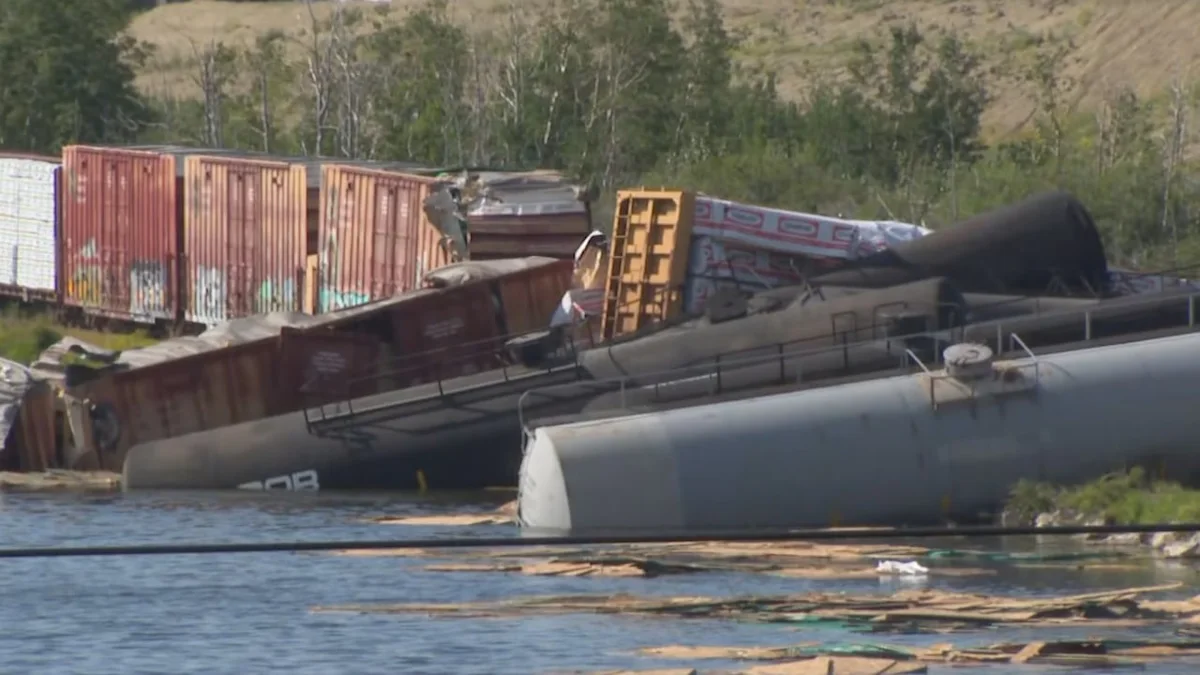
Train derailment sends multiple railcars into southwest Calgary wetland
14 minutes ago