
Canada won't disclose cost of fighting First Nations in court on water, housing
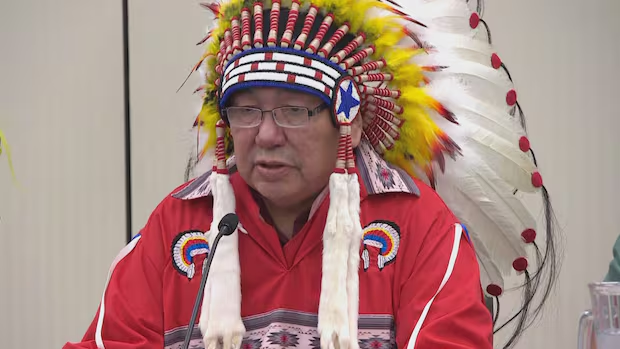
Canada won't disclose cost of fighting First Nations in court on water, housing
Canada spending money to keep First Nations 'poor and sick,' says chief leading class action
The federal government says it won't disclose how much money Canada has spent fighting First Nations in court over their rights to safe drinking water and housing on reserve, a move analysts call overreaching and unnecessarily secretive.
The Justice Department said it would not disclose the figures in response to a CBC Indigenous access to information request, arguing solicitor-client privilege shields the total amount of money the Carney and Trudeau Liberal governments spent battling two remote fly-in First Nations in Manitoba from 2022 until now.
"It is disappointing that Canada has invested so much into fighting us. The federal government is spending money on keeping First Nations poor and sick," said St. Theresa Point Chief Elvin Flett, lead plaintiff in one of the cases, in a statement.
In December, Flett's community and Shamattawa First Nation won separate but similar Federal Court orders confirming Canada's duties to ensure First Nations have access to these vital services, an early step in two complex national class-action lawsuits to seeking billions of dollars in compensation.
Ottawa is appealing both orders, however, and continues to deny any duty in these areas.
According to court papers, Canada's appeal counsel includes five federal lawyers, of whom one bears the King's Counsel title typically bestowed on senior or leading attorneys.
"These resources would go so much further if Canada worked alongside First Nations," Flett continued in the statement.
"The money could be used to build actual homes to alleviate the urgent housing crisis on reserve. We call the federal government to come to the table."
Government institutions can invoke solicitor-client privilege to withhold documents when the information relates to legal advice given to a client, according to the federal information commissioner. In a 2021 decision, that office found the Department of Justice was wrong to invoke this privilege over legal fees because this is "neutral information which is not subject to the privilege."
The government's decision not to disclose how much the legal battle has cost is a blatantly overbroad use of the access law, according to one University of Winnipeg professor.
"Basically the government is not following the law or they're stretching it as far as they can to promote secrecy instead of transparency," said Kevin Walby, director of the university's Centre for Access to Information and Justice.
Canada has legal duty to provide safe water, housing to remote First Nations, federal judge rules
Liberals continue court fight against First Nations drinking water rights, despite new bill
He said it's "an insult to the people in those communities" and "a slap in the face to all Canadians because this is Canadian taxpayer money that they're using to fight these senseless legal battles."
The federal NDP, which has obtained similar information in recent years, also criticized the decision. The party's written questions in the House of Commons have shown Ottawa spent $3.2 million fighting St. Anne's residential school survivors and at least $14.5 million fighting First Nations child advocate Cindy Blackstock in court.
The public has a right to know just how much money the government is spending to deny their legal duties to Indigenous peoples, says the NDP's justice critic.
"It is unconscionable that the Liberals are spending public resources fighting against Indigenous rights in the courts, rather than investing in First Nations' human right to safe, clean drinking water and to closing the First Nations infrastructure gap," said Vancouver East MP Jenny Kwan in a statement.
Asked to explain, Justice Department spokesperson Kwame Bonsu said the department "is committed to fiscal responsibility while also ensuring the federal government is supported by high-quality legal services."
The department said it's standard practice to assert solicitor-client privilege or litigation privilege while matters are active to protect information concerning legal fees, disbursements, legal costs and the overall final legal cost.
A second academic disputed this and within minutes of being contacted produced three examples of requests where government bodies disclosed the amount of cash spent on lawyers.
"This information has been treated as presumptively subject to disclosure, but many government institutions are backtracking on that," said Balsillie Scholar Matt Malone, who helped create the Open By Default database at the Investigative Journalism Foundation.
"Here, deeming that aggregate totals fall within a category of information protected by solicitor-client privilege is a complete overreach," said Malone.
The appeals in the St. Theresa Point and Shamattawa cases are to be heard in the fall.
Brett Forester is a reporter with CBC Indigenous in Ottawa. He is a member of the Chippewas of Kettle and Stony Point First Nation in southern Ontario who previously worked as a journalist with the Aboriginal Peoples Television Network.
Related Stories
 Canada
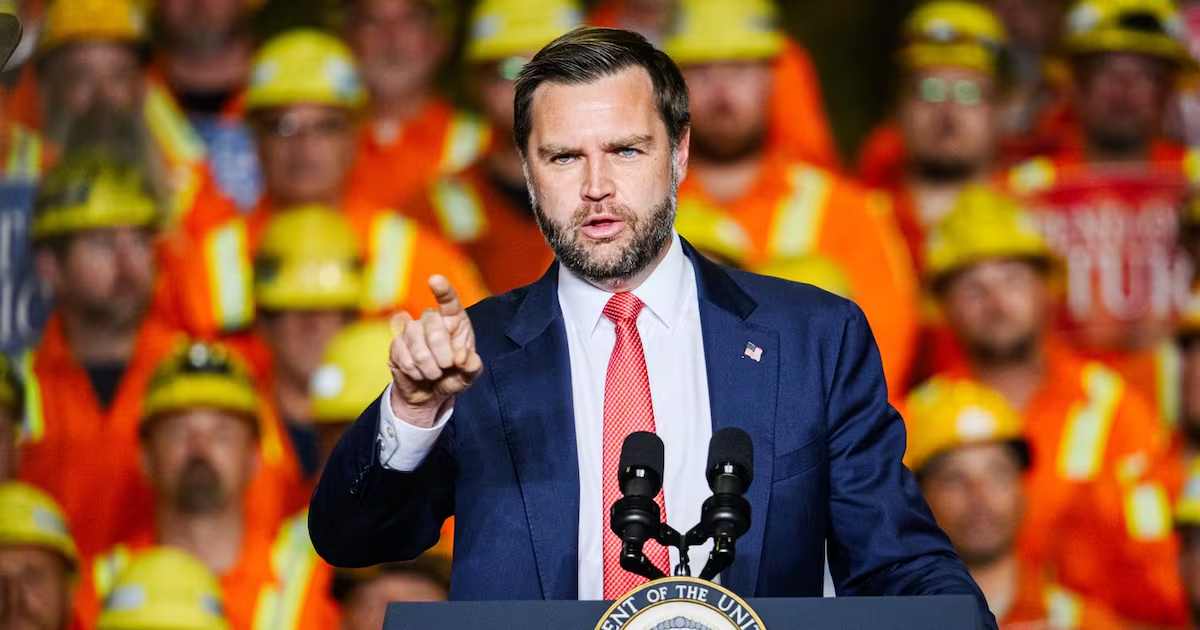
Vance says trade negotiations with Canada are ongoing
41 minutes ago
 Canada
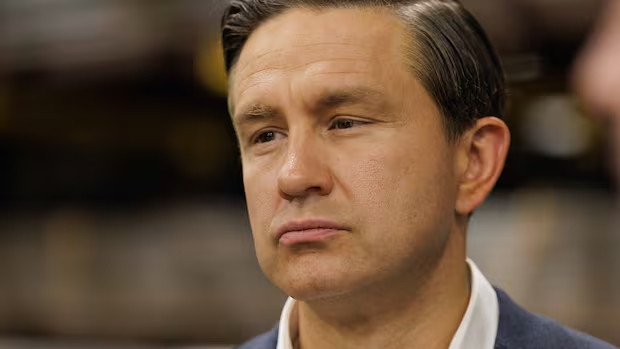
Poilievre asks Carney to recall Parliament to discuss collapsed U.S. trade deal
41 minutes ago
 Canada
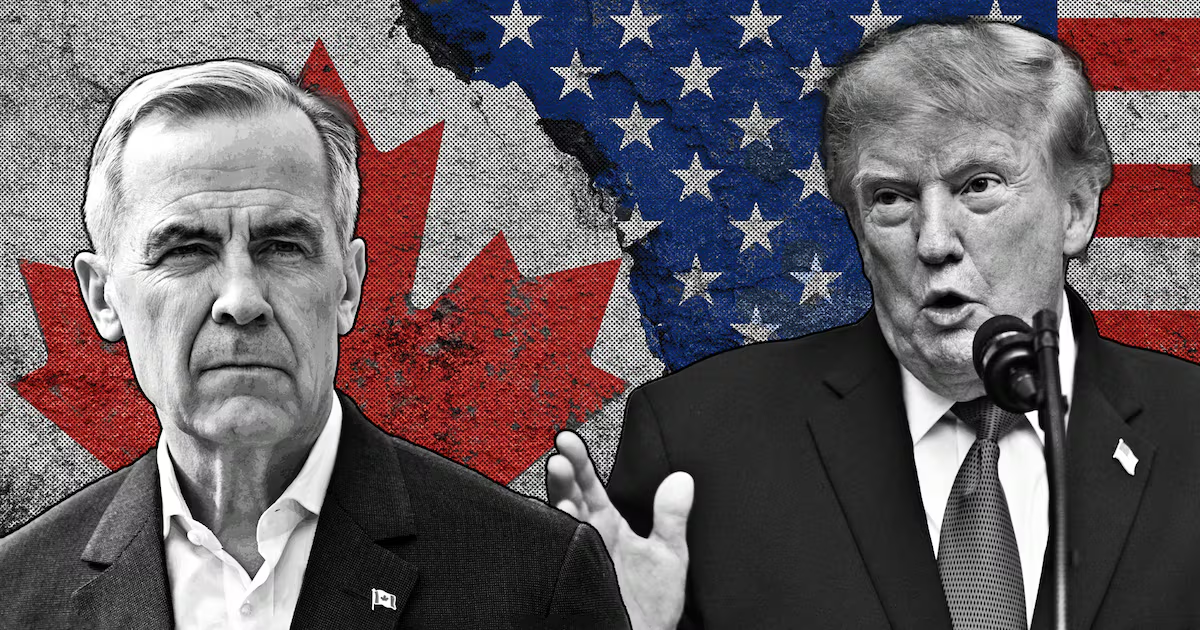
Vance sends message to PM as Carney says he had to walk away from deal. Live updates here.
41 minutes ago
 Canada
Carney says Trump’s demands would dismantle Canadian auto industry as Ford warns US could be cut off
41 minutes ago
 Canada
Want to represent Canada at Eurovision? Here's everything to know
1 hour ago
 Canada
Carney says Canada ‘could not accept what the U.S. had offered.’ Live updates here.
1 hour ago
 Canada
Ontario Premier Doug Ford to speak amid U.S.
1 hour ago
 Canada
Trump threatens new 50% tariffs on Canadian cars, trucks and steel
1 hour ago