
Want to represent Canada at Eurovision? Here's everything to know

Want to represent Canada at Eurovision? Here's everything to know
Submissions for contestants competing for Canada open Aug. 31
On July 1, it was announced that Canada would compete in the 2027 Eurovision Song Contest for the first time.
In June, CBC/Radio-Canada became part of the European Broadcasting Union, making Canada eligible for the 70-year-old talent competition that catapulted the careers of ABBA, Céline Dion, France Gall, Maneskin and more acts.
More than 130 million people watched last year’s competition, from across Europe and around the world. Of the voters from outside European countries, Canadians were among the top three in the “rest of the world” category.
Canada will enter the 2027 Eurovision Song Contest
The 71st Eurovision Song Contest (ESC) will take place in Burgas, Bulgaria next May, but before then Canada needs to choose its representative. Submissions for contestants open Aug. 31 and are open to applicants from across the country.
“The Eurovision Song Contest is the biggest music stage in the world, and we invite artists from across Canada to be part of this remarkable adventure with us,” CBC’s Executive Vice-President Doug Smith shared in a press release.
“We are seeking a magnetic Canadian performer with a genuine passion for representing Canada and a proven track record of captivating very large live audiences, whether through exceptional vocal power, electrifying stage presence, or truly original artistry.”
Submissions deadlines and eligibility
Submissions open Aug. 31 and close Sept. 9. All applicants must be Canadian citizens or permanent residents aged 18 and older. Canadian artists interested in applying can access a portal at cbc.radio-canada.ca/en/eurovision for further information on eligibility requirements.
After the registration period closes, a shortlist of musicians will be selected by CBC/Radio-Canada and finalists will be announced in the fall.
Then, the competition will be in the hands of Canadians, who will choose their favourite acts through a digital vote. All performance videos will be uploaded to an Eurovision Song Contest Canada website.
Results of the public vote will be combined with a review from an independent jury of music experts to decide which finalist will compete for Canada next May.
The selected finalist will partner with music industry heavyweights to craft Canada’s official Eurovision song and performance.
The first Eurovision Contest took place in Lugano, Switzerland in 1956. It included competitors from Belgium, France, Germany, Italy, Luxembourg, the Netherlands and Switzerland. Over the years, more and more countries began competing. Last year, 35 countries participated, including Australia, the U.K., Greece and Ukraine. And now, Eurovision holds the Guinness World Record for longest-running international televised music competition.
Several musicians have gone on to have lengthy careers after winning the contest. Disco pop legends ABBA won the contest in 1974 for Sweden, with their song Waterloo.
In 1988, a 20-year-old Céline Dion competed for Switzerland at Eurovision, singing Ne Partez Pas Sans Moi. She won and two years later released her ninth studio album and first English-language album, Unison.
Dreaming of representing Canada at Eurovision? These Canadian former contestants have some advice
Dion isn’t the only Canadian singer to compete for other countries at Eurovision. Nine others have participated, including Onatrio’s Gary Lux who competed six times starting in 1983 for various countries, Quebec’s Annie Cotton for Switzerland in 1993 and B.C.’s Rykka for Switzerland in 2016.
Related Stories
 Canada
Re
52 minutes ago
 Canada
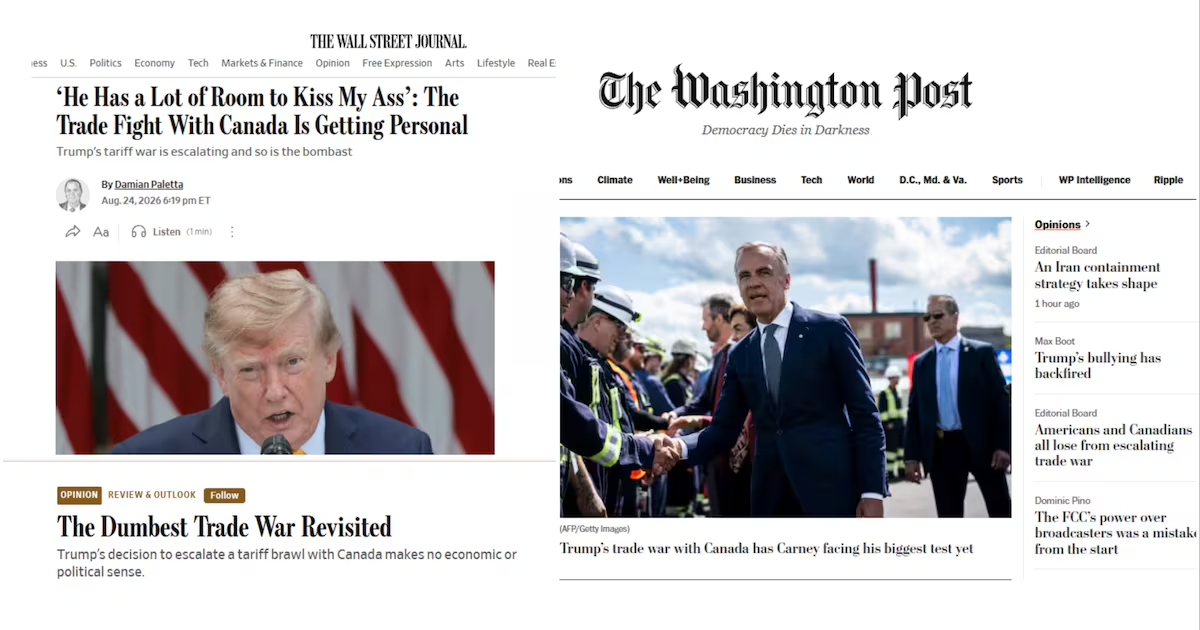
‘Dumbest trade war’: Here’s how major world outlets are reacting to the tariff battle
52 minutes ago
 Canada
Watch: Doug Ford's blunt warning to Trump over Canada tariffs
52 minutes ago
 Canada
How Canada could hit back to hurt the US economy
52 minutes ago
 Canada
Border communities brace for more fallout in Canada
1 hour ago
 Canada
'Bully': Feud erupts between Trump and Ontario's Doug Ford over US-Canada trade war
1 hour ago
 Canada
Saskatchewan braces for fallout as U.S.
2 hours ago
 Canada
Danielle Smith, Doug Ford discuss trade war during Monday phone call
2 hours ago