
Canada

British Columbia and Canada are partners in a period of great consequence for our country. The world is changing rapidly. In response, we are focused on what we can control: building an affordable, competitive, sustainable and independent Canadian economy. Together, we are working to build our strength at home and expand our export markets abroad. To that end, we must diversify our economies, strengthen our trade relationships and deliver opportunities to every region of the country.
British Columbia brings significant assets to this work. It is Canada’s Pacific gateway – Canada’s access to the fastest growing markets. B.C. has world class ports, established trade corridors, a diversified and resilient economy, a highly educated and skilled workforce, and one of the cleanest electricity grids in the world. Canada and British Columbia are committed to building on B.C.’s strengths to create shared and lasting prosperity that respects the rights of First Nations and makes them full partners, while driving economic development and protecting our environment.
Both governments share a fundamental belief that this is the moment to leverage our domestic advantages to build a stronger Canada. To that end, British Columbia and Canada agree to pursue a series of actions that grow the B.C. and Canadian economies, fund public services that all Canadians rely on, and diversify our trade relationships.
Northwest Critical Mineral and Conservation Corridor
Northwest British Columbia represents one of Canada’s greatest untapped opportunities. It is a region rich with world-class critical mineral deposits and irreplaceable ecosystems. Canada and British Columbia commit to responsibly developing this region’s economic potential in partnership with First Nations, while protecting its exceptional natural value. The following commitments reflect British Columbia and Canada’s shared commitment to strengthen Canada’s position in global critical mineral supply chains:
British Columbia’s resource and manufacturing industries are facing challenges from trade and supply chain disruption. The following commitments reflect both Parties’ recognition of the importance of sustaining the competitiveness of these sectors.
Ports, Transportation, and Security
B.C. is Canada’s Pacific Gateway: the essential link between the Canadian economy and the fastest growing markets in the world. Port capacity, road and rail connections and goods movement corridors are key to growing exports efficiently and at scale. As a coastal Province, maritime security is essential to Canada’s economic future. The following commitments represent a plan to revitalise B.C.’s ports and throughways and to enhance Canada’s maritime security through a robust defence strategy.
George Massey Tunnel Replacement Project
The Parties agree to engage in discussion on direct or indirect financial support to the Massey Tunnel Replacement Project to ensure the efficient flow of goods. This could involve low-cost financing models or credit facilities in addition to direct financial support. Canada commits to supporting up to one-third of capital costs, to a maximum of $3 billion.
British Columbia has world class natural gas reserves and liquefied natural gas (LNG) assets. As Europe and Asia accelerate their search for reliable sources of energy from stable jurisdictions, Canadian LNG has a window to establish itself as a trusted, long-term supplier – and with the lowest carbon emissions of any LNG in the world. Beyond providing the revenues needed to pay for public services, B.C.’s LNG sector represents a significant opportunity for First Nations’ economic ownership and partnership. Canada and British Columbia are committed to ensuring that the benefits of LNG development flow to the communities and Nations whose territories these projects occupy, along with all Canadians.
Clean Electricity, Decarbonisation, and Environmental Commitments
British Columbia already has one of the cleanest electricity grids in the world because of decades of public investment in hydroelectric infrastructure and a provincial commitment to building a clean economy. Canada and British Columbia both see the value in extending that infrastructure to build the transmission capacity and generation needed to power the next generation of major projects, decarbonise B.C.’s industrial base and position Canada as a global leader in clean energy supply in line with the goal of net zero by 2050. The commitments in this section reflect both Parties’ recognition that the clean energy transition is an economic opportunity as much as an environmental imperative.
The transition to a low carbon economy creates new categories of economic value – in protected forests, restored watersheds, clean energy systems and nature-based solutions that store carbon at scale. The commitments in this section reflect both Parties’ shared interest in developing the carbon market infrastructure needed to unlock that value and attract private sector investment in climate action.
Canada has signed a bilateral agreement with Alberta that, subject to certain conditions, supports new pipeline infrastructure to the B.C. coast. The federal government has the authority to approve and build pipelines across provincial boundaries. Canada and B.C. acknowledge that B.C. communities, coastlines and ecosystems bear the real and lasting consequences of any spill or incident, and as such B.C.’s role in hosting this proposed national interest project will be recognised, compensated and protected. This section contains commitments from both British Columbia and Canada in this regard.
Skills Training and Talent Development
The projects and commitments in this agreement are only achievable if we have the workforce available to build and operate them. British Columbia is facing a significant skilled trades shortage just as demand is accelerating. Closing that gap requires coordinated federal and provincial action on training, childcare and labour standards.
Annex A: Canada-British Columbia Cooperative Prosperity Agreement Implementation Committee Timelines
The Implementation Committee established under this Agreement will collaboratively advance work in the agreed areas on the following timelines:
Related Stories
 Canada
Ford fires 'another warning shot' for public sector to buy Canadian
18 minutes ago
 Canada
Trump makes tariff case saying 'it's time to teach Canada you can't do this anymore'
18 minutes ago
 Canada
Read the full transcript of U.S. Trade Representative Jamieson Greer's interview with CBC News
18 minutes ago
 Canada
Danielle Smith rejects taxing oil exports, pushes increased diplomacy efforts with U.S.
1 hour ago
 Canada
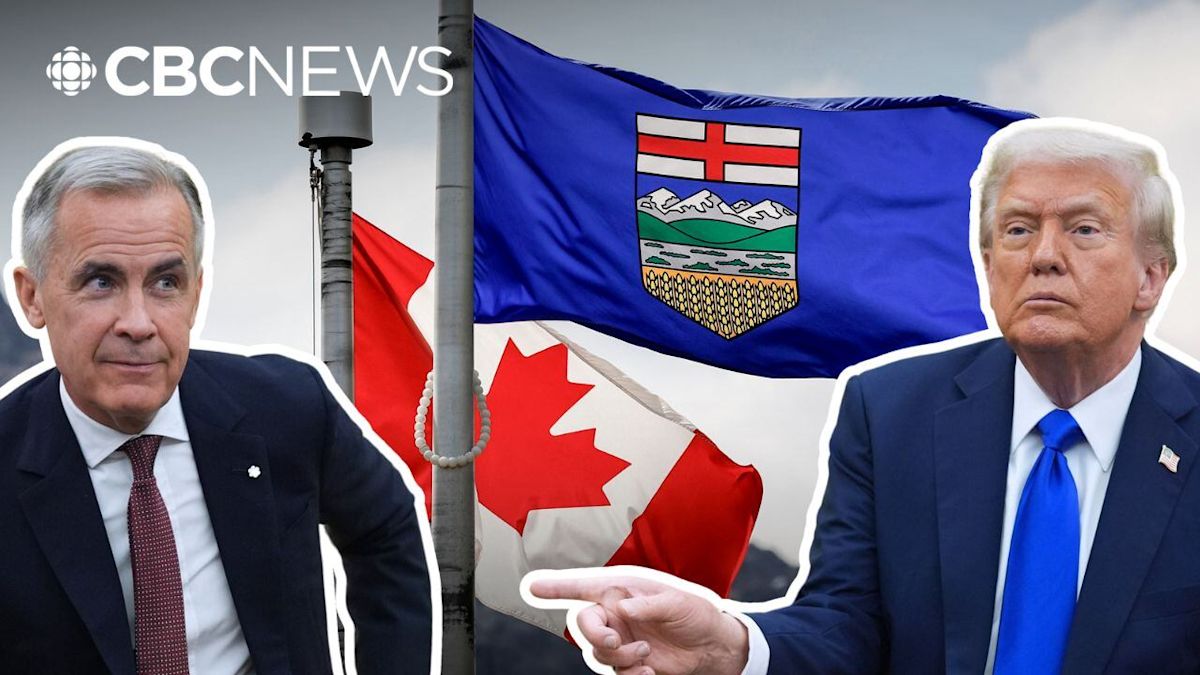
How U.S. tariffs get spun into Alberta's separatism debate
1 hour ago
 Canada
How are the new U.S. tariffs affecting Alberta beekeepers?
1 hour ago
 Canada
'Putting Canada into a subordinate position': Linguist unpacks Trump's escalating rhetoric as trade war heats up
1 hour ago
 Canada
Toronto's Nepali
1 hour ago