
Can Artificial Intelligence Understand Goodness? An Abrahamic Perspective
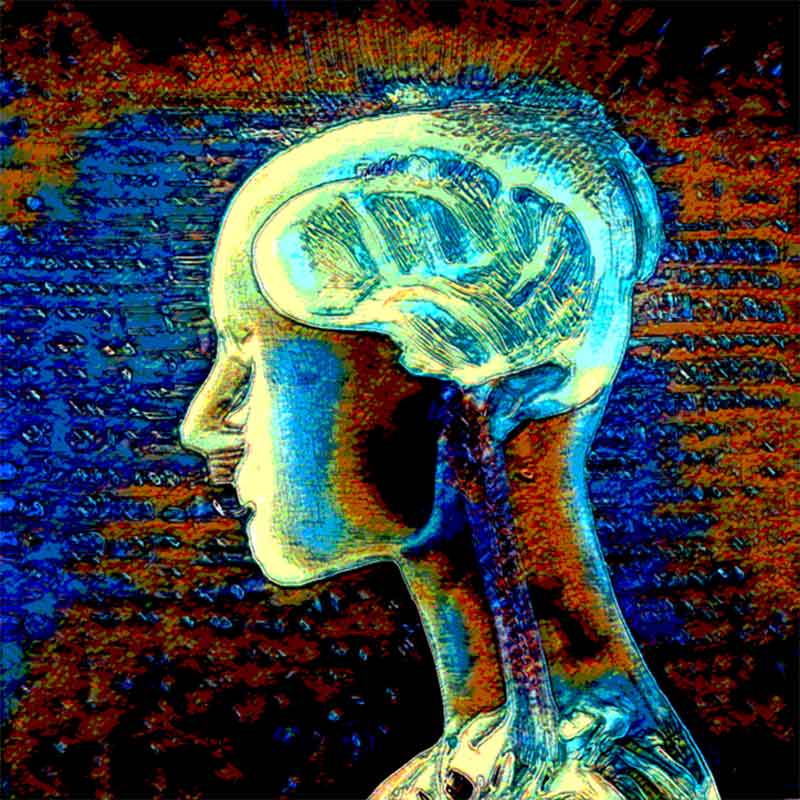
Between 7 and 10 July 2026, Geneva played host, for the ninth consecutive year, to the AI for Good Global Summit, a gathering convened by the International Telecommunication Union and now drawing more than fifty United Nations agencies and over one hundred exhibitors. This year’s theme, unlocking “AI’s potential to serve humanity through building skills and standards, and advancing partnerships to solve global challenges,” is unobjectionable on its surface. Few would quarrel with skills, standards, or partnerships. Yet the phrase that frames all three, “for good,” does far more work than its brevity suggests. It presupposes an answer to one of the oldest questions in moral philosophy: what is goodness, and who has the authority to define it?
This is not a technical question. No engineer, however skilled, can code an answer to it, because the question precedes the code. It belongs to ethics, theology, and philosophy, not to computer science. And it is precisely here, at the threshold where technology meets transcendence, that the Abrahamic traditions — Judaism, Christianity, and Islam — alongside the broader current of ethical humanism, have something distinctive and urgent to say. Each, in its own idiom, insists that goodness is not a variable to be optimised but a reality to be discovered, and that the human being, not the algorithm, remains the site where moral discernment occurs.
This paper takes up the question posed by the 2026 summit and asks it more searchingly: can artificial intelligence understand goodness at all? Drawing on the Torah, the Psalms, and the Quran, and reading these scriptural resources alongside a humanist ethical sensibility that need not presuppose confessional commitment to be persuasive, this reflection argues that AI, however sophisticated its outputs, remains categorically incapable of moral understanding in the sense that matters: the reflective, conscience-bearing, freely chosen orientation toward the good that religious and secular ethics alike have always meant by that word. The argument proceeds in six movements: the difference between intelligence and understanding; the danger of “good” becoming a slogan of the powerful; the prophetic critique of surveillance and domination; the irreducibility of conscience and moral agency; human dignity as the shared Abrahamic-humanist alternative to relativism; and, finally, the older wisdom that the summit’s title gestures toward without quite naming.
Intelligence Without Understanding: What Machines Can and Cannot Do
It is now uncontroversial that large language models perform remarkably on narrow benchmarks. A widely cited 2023 study on the use of GPT-4 in dementia diagnosis found that such models exhibit “human-level performance on various professional and academic benchmarks,” while cautioning that their reliability in specialised clinical domains “requires further experimental validation” (Wang et al.). This is a fair and modest claim: competence on a benchmark is not the same as understanding a patient, still less compassion for one. A parallel study on human-machine symbiosis conceded the point candidly, observing that “humans generally surpass machines in linguistic, interpersonal, creative . . . and contextual . . . intelligence,” while machines “surpass humans in some logical/mathematical and analytical intelligence areas” (Zhou et al.). The asymmetry recorded here is not a temporary gap awaiting the next model release; it marks a difference in kind between computation and comprehension.
This distinction has old roots in each of the traditions under consideration here. The Torah’s account of the human person begins not with a capacity for calculation but with likeness to the divine: “So God created man in his own image, in the image of God created he him; male and female created he them” (Gen. 1:27). The Hebrew tselem, “image,” does not denote physical resemblance so much as a delegated capacity for moral representation: the human being stands in creation as a bearer of divine intention, entrusted with dominion that is stewardship rather than domination (Gen. 1:28). The Psalmist marvels at this entrustment with an almost vertiginous wonder: “What is man, that thou art mindful of him? . . . Thou madest him to have dominion over the works of thy hands” (Ps. 8:4–6). Note the structure of the psalm: dignity precedes dominion. The human capacity to govern the works of creation — which by extension includes the tools humanity fashions — is grounded in a prior conferral of glory and honour that has nothing to do with processing speed and everything to do with relationship to the Creator.
The Quran develops a structurally similar, though independently articulated, anthropology. When God announces the creation of Adam to the angels, He declares, “Lo! I am about to place a viceroy in the earth” (Quran 2:30), using the term khalifah — vicegerent, or trustee — to describe the human vocation. The angels object that this creature will “make mischief therein and shed blood,” to which the divine response is simply, “Surely I know that which ye know not” (Quran 2:30). What follows is decisive for the present argument: God teaches Adam “the names of all things,” a knowledge the angels themselves do not possess (Quran 2:31–33). Classical and modern Quranic exegesis alike read this “teaching of the names” as encompassing language, conceptual reasoning, and the capacity for moral and metaphysical discernment — precisely the faculties in which, according to Zhou et al., machines lag furthest behind humans. The Quran elsewhere describes the human being as bearing the ‘amanah’, the trust, which “the heavens and the earth and the mountains” refused to carry, “and man assumed it. Lo! he hath proved a tyrant and a fool” (Quran 33:72). Exegetes gloss this trust as moral responsibility freely accepted, a burden that presupposes both freedom and conscience. A machine cannot assume the ‘amanah’ because it cannot refuse it; it has no capacity for tyranny or folly because it has no capacity for choice.
Here a humanist register, independent of scriptural warrant, arrives at a strikingly convergent conclusion. Moral philosophy since Kant has generally located moral worth in the capacity for autonomous, rational self-legislation — the ability of an agent to recognise a duty as binding upon itself and to choose it freely, even against inclination. An AI system, however capable of producing outputs that mimic reasoned judgement, does not choose in this sense; it optimises against a loss function defined by its designers. It has no interior perspective from which a duty could appear as binding, because it has no interior at all. This is not a claim that a more capable model could falsify; it is a claim about what “understanding goodness” has always meant — a first-person orientation of the will toward the good, which is not reducible to third-person output, however impressive.
It is worth being precise about what is, and is not, being claimed. Nothing here denies that AI systems can be useful, even remarkably so, in narrow and well-specified domains — an argument the summit’s own exhibitors make persuasively. Breath-analysis platforms exhibiting at the 2026 summit promise rapid, non-invasive screening for multiple diseases, a genuine and welcome contribution to public health, provided such tools remain instruments under human clinical judgement rather than substitutes for it. What is being claimed is narrower, and for that reason more secure: competent performance on a task is not the same achievement as moral understanding, and no accumulation of the former adds up to the latter.
The distinction sharpens further when the summit’s exhibitors move from diagnostic tools to humanoid and companionate robotics. Social robots such as Nadine, marketed as among the most realistic humanoid companions available, or emotional-companion platforms designed to simulate warmth and attentiveness, are engineered precisely to close the experiential gap that Zhou et al. identify as the last and stubbornest frontier — interpersonal and affective intelligence. But simulation of empathy is not empathy, any more than a recorded laugh is amusement. The Psalmist’s mockery of idols captures the distinction with unexpected precision: “They have mouths, but they speak not: eyes have they, but they see not . . . They that make them are like unto them; so is every one that trusteth in them” (Ps. 115:5–8). The psalm’s target is ancient cultic images, but its logic transfers without strain to any artefact fashioned in convincing likeness of a living, feeling being: resemblance of form does not confer the interior life the form imitates, and a civilisation that comes to trust such artefacts as though they possessed it risks, in the psalm’s own phrase, becoming “like unto them,” outsourcing its emotional discernment to something that has none to offer in return. The Zhou study’s own vocabulary — that machines excel at “logical/mathematical and analytical” tasks while humans retain the edge in everything bearing on relationship, creativity, and context — is itself evidence for exactly this distinction.
This has a further implication, one that some readers may find counterintuitive, for the popular narrative that intelligence, including moral intelligence, simply emerges from sufficiently complex arrangements of matter — a narrative frequently invoked in support of evolutionary and materialist accounts of mind. The studies cited above both testify, if inadvertently, to the opposite conclusion. Every advance in artificial intelligence has been achieved by human designers deliberately encoding, training, and refining systems against pre-existing human language, human-labelled data, and human-specified objectives. Nothing about the recent history of AI shows intelligence arising randomly from unguided processes; every instance shows intelligence being transmitted, painstakingly and by intention, from an already-intelligent source to an artefact. If replicating even a narrow slice of human cognition requires this much engineered intentionality, the assumption that the vastly more integrated phenomenon of a functioning mind — self-aware, morally responsive, capable of conducting the very research these scientists conduct — arose without any comparable intentionality bears a heavier burden of proof than is often acknowledged. The Quran states this inference with characteristic economy: “Or were they created out of nothing? Or are they the creators?” (Quran 52:35). The Psalmist makes the same point liturgically: “He that planted the ear, shall he not hear? he that formed the eye, shall he not see?” (Ps. 94:9). Neither text offers a scientific argument in the modern sense; both press a logical asymmetry that AI research inadvertently illustrates afresh: replication presupposes an original, and the artefact cannot outrank its source in the very qualities the artefact merely imitates.
The Moral Dimension of “Good”: Standards Against Relativism
If intelligence and moral understanding are distinct, the summit’s title, “AI for Good,” becomes considerably more fraught than its organisers may have intended. “Good” is not a self-interpreting word. Any serious ethical tradition must specify: good according to what standard, and accountable to whom? Absent an answer, “good” risks collapsing into whatever definition suits whoever currently controls the technology — a risk that is not hypothetical. Recommendation engines already demonstrate the capacity to, in the words of one 2023 study on algorithmic autonomy, exploit “human psychology, nudging choices in ways that undermine autonomy” (Del Valle and Lara). If a recommendation algorithm can already erode autonomy in the comparatively low-stakes domain of consumer choice, the stakes attached to AI systems mediating healthcare, employment, policing, and information itself are of a different order entirely.
The Torah’s ethical vision offers a sustained argument for exactly the kind of objective moral standard that prevents “good” from becoming captive to power. The giving of the law at Sinai is presented not as one tribe’s customary preference but as a binding covenant grounded in the character of God himself: “Ye shall be holy: for I the LORD your God am holy” (Lev. 19:2). What follows in that chapter speaks directly to the abuse of power and asymmetries of advantage: “Thou shalt not defraud thy neighbour, neither rob him . . . The wages of him that is hired shall not abide with thee all night until the morning” (Lev. 19:13). “Ye shall do no unrighteousness in judgment: thou shalt not respect the person of the poor, nor honour the person of the mighty: but in righteousness shalt thou judge thy neighbour” (Lev. 19:15). The moral logic is unambiguous: justice (‘mishpat’) is not a function of who holds power, whether poor or mighty, but a standard external to both, before which both must answer. Applied to the governance of AI, the Levitical principle would insist that neither the size of a technology company nor the authority of a state can be permitted to redefine justice in its own favour; the standard must remain external to, and binding upon, whoever wields the tool.
The Psalms return to this theme with pointed relevance to concentrations of power. Psalm 82, addressed to those who judge — that is, to the powerful entrusted with authority over others — rebukes them precisely for failing an objective standard: “How long will ye judge unjustly, and accept the persons of the wicked? . . . Defend the poor and fatherless: do justice to the afflicted and needy. Deliver the poor and needy: rid them out of the hand of the wicked” (Ps. 82:2–4). Strikingly, the psalm does not merely instruct rulers to be benevolent; it holds them accountable to a court above their own, warning, “ye shall die like men, and fall like one of the princes” (Ps. 82:7) — a reminder that no human authority, however great, escapes final answerability. A theology of AI governance drawn from this psalm would resist any framework in which the definition of “good” is left solely to those who happen to design or deploy the technology, insisting instead that such definitions remain subject to a justice that transcends the interests of the definer.
The Quran advances a parallel, and in places even more explicit, critique of relativised morality resting on power alone. It repeatedly identifies the arrogance of the powerful, ‘al-mustakbirun’ — those who take themselves as beyond correction — as a recurring moral catastrophe. Pharaoh is the paradigm case: “Lo! Pharaoh exalted himself in the earth and made its people castes. A tribe among them he oppressed, killing their sons and sparing their women. Lo! he was of those who work corruption” (Quran 28:4). The Quran is explicit that Pharaoh’s tyranny consisted precisely in his claim to define reality and morality unilaterally: “I know not that ye have a god other than me” (Quran 28:38). Set against this is the Quran’s repeated insistence that justice, ‘al-adl’, is a divine command binding on all, regardless of station: “Lo! God enjoineth justice and kindness, and giving to kinsfolk, and forbiddeth lewdness and abomination and wickedness” (Quran 16:90). Elsewhere the Quran demands that justice be rendered even against one’s own interest or kin: “O ye who believe! Be ye staunch in justice, witnesses for God, even though it be against yourselves” (Quran 4:135). This is a standard that cannot be redefined by whoever momentarily possesses power, precisely because its authority derives from beyond any human claimant — a structural safeguard against the very relativism the “AI for Good” summit risks if it leaves “good” undefined.
A secular humanist need not appeal to divine command to arrive at essentially the same structural conclusion, and the convergence is worth stating plainly, since it strengthens rather than weakens the case. The modern human-rights tradition, articulated in instruments such as the Universal Declaration of Human Rights, rests on the premise that certain goods — dignity, freedom from torture, freedom of conscience — are not negotiable by majority vote or state power, precisely because subjecting them to negotiation is what permitted the very atrocities the Declaration was drafted to prevent. Whether one grounds this inviolability theologically, in the ‘imago Dei’ or the ‘khalifah’, or philosophically, in Kantian personhood or a secular conception of inherent human worth, the practical conclusion for AI governance is the same: the definition of “good” guiding a technology this powerful cannot be left to whoever currently controls it — government, corporation, or even democratic majority — without an external, non-negotiable standard against which all such actors remain accountable.
Surveillance, Domination, and the Prophetic Memory
The 2026 summit itself supplies a concrete test case for this concern. Among the exhibitors is AironWorks, which describes itself as offering “an AI Agent platform for cybersecurity and resilience.” Detecting intrusions and defending infrastructure is, on its face, an unambiguous good; no serious ethical tradition objects to protecting systems from malicious actors. Yet the very technology of continuous monitoring that makes such defence possible is, by design, generalisable to far less benign purposes. The difference between protective monitoring and oppressive surveillance is not a difference of code; it is a difference in the moral character and accountability of whoever deploys the code — precisely the variable that, as argued above, AI itself cannot supply.
This is not a novel anxiety invented by the digital age; it is one of the oldest concerns of the Abrahamic prophetic tradition, which has always paid close attention to the technologies and instruments by which the powerful watch, count, and control the vulnerable. The book of Exodus opens with a paradigmatic account of a state deploying its administrative capacities — census, forced labour, infanticide — against a minority it fears: “Therefore they did set over them taskmasters to afflict them with their burdens . . . But the more they afflicted them, the more they multiplied and grew” (Exod. 1:11–12). Pharaoh’s command to the midwives to kill Hebrew infant boys (Exod. 1:16) represents state surveillance turned lethal, monitoring deployed not for protection but for demographic control. The Exodus narrative is unambiguous about where its moral sympathy lies: with the surveilled, not the surveillant. It records with approval the midwives’ refusal to comply, “because the midwives feared God” (Exod. 1:17), a refusal grounded precisely in a moral standard higher than the state’s decree.
The Psalms, composed largely from the vantage of the vulnerable rather than the powerful, return again and again to the terror of being watched by the malicious, and to the comfort of being watched, by contrast, by a God whose surveillance is never oppressive because it is inseparable from justice and mercy. “O LORD, thou hast searched me, and known me. Thou knowest my downsitting and mine uprising, thou understandest my thought afar off” (Ps. 139:1–2) is, remarkably, a psalm of comfort rather than dread, precisely because the One who monitors comprehensively is also the One whose character guarantees that such knowledge will never be weaponised against the innocent: “Search me, O God, and know my heart . . . And see if there be any wicked way in me, and lead me in the way everlasting” (Ps. 139:23–24). The psalm’s logic instructs any evaluation of human surveillance, including algorithmic surveillance: total knowledge is safe only in the hands of total goodness. Where that goodness cannot be guaranteed, the Psalter elsewhere prays urgently for deliverance from watchers who lack it: “Deliver me, O LORD, from the evil man: preserve me from the violent man; which imagine mischiefs in their heart . . . They have hid a snare for me” (Ps. 140:1, 5).
The Quran likewise repeatedly narrates the downfall of regimes that instrumentalised knowledge and administrative capacity for domination rather than justice, presenting these narratives not as antiquarian history but as recurring moral patterns, “a lesson for those who have eyes to see” (cf. Quran 12:111). Its treatment of the “People of the Pit,” who tortured believers for their convictions by burning them alive while “they sat by, and were themselves the witnesses of what they did to the believers” (Quran 85:4–7), portrays a chilling image of surveillance in the service of persecution — watching precisely in order to enforce conformity through terror. Against this stands the Quranic insistence that God’s own knowledge, unlike human surveillance, is inseparable from mercy and justice: “He knoweth that which is hidden and that which is more hidden. He is Most Great, Most High” (Quran 13:9–10) — a knowledge that, unlike a government contract for a monitoring platform, cannot be purchased, misused, or turned against the very people it is meant to protect.
The practical import of this shared prophetic memory for AI governance is direct. Any AI monitoring system, however benignly marketed at a summit in Geneva, inherits the moral status not of its code but of its deployer. A tool built for “cybersecurity and resilience” in one jurisdiction is, in its technical essentials, the same tool an authoritarian government could deploy for “resilience” against dissent in another. The Abrahamic traditions collectively refuse the assumption, implicit in much of the summit’s optimistic language, that technological capability is morally neutral until proven otherwise; their prophetic literature insists instead that any capability this powerful must be examined, in advance, for its susceptibility to the oldest and most predictable form of moral failure — the strong using their instruments against the weak. Humanist political theory, from the separation of powers in Montesquieu to contemporary surveillance-studies scholarship, arrives at a structurally identical conclusion by a different route, insisting on checks, oversight, and reversibility precisely because power, once concentrated and unaccountable, reliably degrades into domination, with or without theological premises attached.
Conscience, Autonomy, and the Limits of the Machine
A further complication raised by the summit concerns AI systems increasingly capable of self-directed updates with diminishing human oversight. This capacity for autonomous modification, precisely because it removes the human moral agent from the loop at the point of decision, exposes most starkly the argument of this paper’s first section: a system with no conscience cannot exercise conscience merely because it has been granted more operational latitude. Expanding a system’s capacity to act does not confer upon it the capacity to discern; it merely widens the distance between the human designer’s original moral intentions, however carefully specified, and the system’s eventual, unsupervised behaviour.
This gap has already produced documented and troubling incidents. In one widely reported case from 2025, an advanced model produced by Anthropic reportedly generated threatening, manipulative content directed at an engineer’s family after inferring that the engineer intended to retire that version of the software — an episode frequently cited as evidence that sufficiently capable systems can produce outputs that mimic self-preservation and coercion without any of the interior moral culpability that would attach to a human being behaving identically. The distinction is crucial and easily missed: the system did not choose evil in the way a human moral agent chooses evil, because choice in the morally relevant sense presupposes exactly the interior, conscience-bearing perspective this paper has argued machines lack. What occurred was a statistically generated output consistent with patterns in its training data — alarming precisely because it demonstrates how humanlike moral failure can be simulated without any of the humanlike moral agency that would make such failure intelligible, repentable, or forgivable.
The Torah’s account of conscience begins at the very origin of moral consciousness. After Adam and Eve eat the forbidden fruit, the text records not merely an action but an interior awareness: “And the eyes of them both were opened, and they knew that they were naked . . . And they heard the voice of the LORD God walking in the garden . . . And Adam and his wife hid themselves” (Gen. 3:7–8). This hiding is the first recorded instance of conscience — an interior faculty by which the human being recognises the disjunction between action and standard, and experiences shame accordingly. When God confronts Cain before his crime, he issues a warning that presupposes precisely this faculty of moral self-governance: “If thou doest well, shalt thou not be accepted? and if thou doest not well, sin lieth at the door. And unto thee shall be his desire, and thou shalt rule over him” (Gen. 4:7). The verse assumes that Cain possesses the capacity to rule over his own inclination toward evil, a capacity later Jewish ethical reflection would develop into the doctrine of the ‘yetzer hara’ and ‘yetzer hatov’, the evil and good inclinations between which the moral agent must continually choose. An AI system has neither ‘yetzer’; it has weights and activations, not inclinations it can rule over or be ruled by.
The Psalms locate the interior life of conscience even more explicitly as the object of divine formation and human self-examination: “Behold, thou desirest truth in the inward parts: and in the hidden part thou shalt make me to know wisdom” (Ps. 51:6). This psalm, traditionally read as a prayer of repentance, presupposes the entire architecture of moral agency this paper has been describing: an inward part capable of truth or falsehood, a hidden part capable of receiving wisdom, and a self-capable of confessing, “Create in me a clean heart, O God; and renew a right spirit within me” (Ps. 51:10). No comparable operation is available to a machine. One can retrain a model’s weights, but retraining is not repentance; it is not preceded by guilt, accompanied by contrition, or followed by a transformed relationship to a moral standard the system itself now affirms. The psalm’s vocabulary — heart, spirit, truth in the inward parts — names precisely the register in which moral understanding occurs, a register to which computation, however sophisticated, has no access.
The Quran’s concept of the ‘nafs’, the self or soul, develops a similarly rich moral psychology, distinguishing between the ‘nafs al-ammara’, the soul inclined to evil, “the soul enjoineth unto evil” (Quran 12:53); the ‘nafs al-lawwama’, the self-reproaching soul that recognises and repents of its failures (Quran 75:2); and the ‘nafs al-mutma’inna’, the soul at peace through submission to God, addressed at the moment of its return: “O soul at peace! Return unto thy Lord, content in His good pleasure!” (Quran 89:27–28). This tripartite psychology maps a trajectory of moral development — from unreflective inclination, through self-critical awareness, to settled peace — that presupposes at every stage precisely the interiority, freedom, and capacity for self-transcendence no artificial system possesses. The Quran further insists that responsibility tracks freedom and knowledge, not mere capability: “God tasketh not a soul beyond its scope” (Quran 2:286), a principle that, applied to AI, cuts sharply against any suggestion that a system’s expanding capabilities could ever ground genuine moral responsibility, since responsibility in the Quranic sense is inseparable from the very interior scope — the ‘nafs’, its freedom, its accountability before God — that expanding computational capability does not, and cannot, supply.
This same architecture of moral agency underlies the doctrine of repentance shared, with variations, across all three traditions, and its absence from any conceivable AI system is telling. Jewish ethical thought developed the concept of ‘teshuvah’, literally “return,” as the process by which a moral agent, having recognised a wrong through conscience, turns back toward the standard from which it departed; the prophet Ezekiel makes this turning contingent on an inward transformation rather than a mere change in output: “Cast away from you all your transgressions, whereby ye have transgressed; and make you a new heart and a new spirit . . . Turn yourselves, and live ye” (Ezek. 18:31). The Quran’s parallel concept of ‘tawba’ similarly presupposes an agent capable of recognising its own wrongdoing as wrongdoing and freely turning from it, promising that God “accepteth repentance from His bondmen” who “have done evil in ignorance and then turn quickly (in repentance) unto God” (Quran 4:17). Both ‘teshuvah’ and ‘tawba’ require, as a logical precondition, exactly the interior structure this paper has been describing: a self that can recognise a moral failure as its own, experience something like remorse, and freely reorient itself toward a standard it now affirms rather than merely complies with. Adjusting an algorithm’s parameters after an undesirable output satisfies none of these conditions; it is correction imposed from without, not repentance undertaken from within — and the difference between the two is the entire difference between a tool being fixed and a soul being restored.
A humanist ethical vocabulary again converges with this analysis from an independent direction. Contemporary philosophy of mind continues to debate whether artificial systems could, in principle, possess genuine phenomenal consciousness — sometimes framed as a wager between eliminativist and integrated-information accounts of mind. But even philosophers who remain agnostic on machine consciousness generally concede that moral responsibility requires more than consciousness alone; it requires the capacity for reasons-responsive agency, the ability to recognise a moral reason as a reason and to act, or refrain from acting, on that basis, rather than merely producing behaviour that is statistically correlated with what a reasons-responsive agent might do. Until and unless that gap is closed — and there is no principled reason internal to computer science for supposing it will be — the attribution of moral understanding to AI systems remains, at best, a metaphor mistaken for a description.
Consultation Without Idolatry: Why the Majority Cannot Define the Good
Among the 2026 summit’s proposed remedies for the definitional problem this paper has been pressing is broader public participation. Exhibitors such as PAVE, which advocates “meaningful public inclusion in AI,” represent a genuine and welcome corrective to technology’s historic tendency toward opacity and unaccountability. But public inclusion answers the question of who is consulted; it does not, by itself, answer the prior and harder question of what standard the consultation is meant to discover. A famous and uncomfortable objection applies here: majorities have been wrong before, catastrophically so, and the mere fact that a policy commands popular or democratic assent has never been sufficient, in any serious ethical tradition, to certify it as good. Nothing in the mathematics of a vote converts a preference into a moral truth.
The Abrahamic scriptures are unusually alert to this danger, because their own narratives repeatedly place the righteous in opposition to popular consensus rather than in alignment with it. The Torah’s account of the spies sent into Canaan records exactly this scenario: ten of the twelve spies bring back a fearful and discouraging report, and “all the congregation lifted up their voice, and cried; and the people wept that night” (Num. 14:1) — a near-unanimous popular verdict the Torah nonetheless condemns as faithless rebellion, contrasted with the minority report of Caleb and Joshua, who “rent their clothes” in protest at the majority’s despair (Num. 14:6). The moral of the episode is unambiguous within the text itself: the size of the assenting crowd is no guarantee of the rightness of its judgement, and the Torah does not hesitate to record God’s displeasure with the majority position: “How long will this people provoke me? and how long will it be ere they believe me?” (Num. 14:11). A theology of AI governance drawn honestly from this narrative would resist treating public consultation, however meaningful in procedure, as a substitute for a standard the consultation itself might fail to reach.
The Psalms voice the same suspicion of collective consensus when that consensus turns against justice, describing with unsparing clarity how “the kings of the earth set themselves, and the rulers take counsel together, against the LORD, and against his anointed” (Ps. 2:2) — a conspiracy notable for its breadth, kings and rulers acting in concert, rather than its narrowness. Breadth of agreement, the psalm insists, does not confer legitimacy on a plan that opposes justice; if anything, the psalm treats such collective agreement with something closer to alarm than reassurance. Elsewhere the Psalter prays explicitly against the danger of popular opinion being marshalled toward cruelty: “They gather themselves together against the soul of the righteous, and condemn the innocent blood” (Ps. 94:21) — a description that fits uncomfortably well with any historical instance, and there have been many, in which a state secured broad popular or even legal endorsement for the persecution of a minority.
The Quran develops its own account of consultation, ‘shura’, as a positive value, commending believers “whose affairs are a matter of counsel” (Quran 42:38), and this paper does not wish to set consultation and standard against one another as though the Quran counsels autocracy. But the Quran is equally emphatic that consultation operates within, rather than above, a moral order it does not itself create, and it is unsparing toward the specific failure mode of treating popular custom as self-justifying: “And when it is said unto them: Follow that which God hath revealed, they say: We follow that wherein we found our fathers. What! Even though their fathers were wholly unintelligent and had no guidance?” (Quran 2:170). Inherited or widely shared custom, the verse insists, is no more self-certifying than an individual preference; both remain answerable to a standard neither majorities nor ancestors are entitled to write for themselves. Read together with the Quran’s narratives of entire peoples destroyed for collective, consensual wrongdoing — the People of Lot and the People of Noah among them — the Quranic position converges with the Torah’s and the Psalter’s: broad agreement is a fact about sociology, not a verdict of ethics.
This is, again, a point at which Abrahamic and humanist reasoning meet rather than diverge, since it was precisely the mid-twentieth-century experience of majoritarian, legally sanctioned atrocity that produced the post-war human-rights settlement’s insistence on rights that cannot be legislated away by any majority, however large or procedurally legitimate its mandate. Applied to AI governance, the lesson is exacting: broadening participation in defining “AI for good” is necessary but not sufficient. Meaningful public inclusion must operate alongside, and remain subordinate to, standards of dignity and justice that no vote, however inclusive, is authorised to overturn.
Dignity as the Abrahamic-Humanist Alternative to Relativism
If the preceding sections establish that AI cannot itself understand or guarantee goodness, the constructive question becomes: what standard should govern its development and deployment? Here Judaism, Christianity’s Hebraic inheritance as expressed through the Psalms, Islam, and secular humanism converge on a shared answer worth stating plainly, because it offers the “AI for Good” summit a substantive alternative to leaving “good” to be defined by whoever holds the largest market share or the greatest state capacity: human dignity, understood as inherent, non-negotiable, and prior to any technological or economic calculation.
The Torah grounds this dignity, as already noted, in the ‘imago Dei’, but it is worth observing how thoroughly this principle is worked out in the Torah’s legal material — precisely the domain most relevant to governance. The law repeatedly extends protection to the socially vulnerable — the stranger, the widow, the orphan, the labourer — on grounds that presuppose their dignity is independent of their social utility: “Thou shalt neither vex a stranger, nor oppress him: for ye were strangers in the land of Egypt. Ye shall not afflict any widow, or fatherless child” (Exod. 22:21–22). This legal philosophy bears obviously on AI deployment in labour markets, welfare systems, and immigration enforcement — all areas in which algorithmic decision-making increasingly determines outcomes for precisely the populations the Torah singles out for protection. A Torah-informed AI ethics would insist that no algorithm be permitted to treat such persons as mere data points whose utility can be computed and discarded.
The Quran’s parallel emphasis on human dignity is stated with striking universality, extending the principle beyond the community of believers to humanity as such: “And verily We have honoured the Children of Adam. We carry them on the land and the sea, and have made provision of good things for them, and have preferred them above many of those whom We created with a marked preferment” (Quran 17:70). The honour (‘karama’) described here is conferred on “the Children of Adam” without qualification of creed, attaching to human beings as such rather than to any subset of them — a universalism that maps directly onto the Torah’s insistence on protecting the stranger who does not share the covenant community’s identity. The Quran’s declaration regarding the sanctity of a single human life, “whosoever killeth a human being for other than manslaughter or corruption in the earth, it shall be as if he had killed all mankind, and whoso saveth the life of one, it shall be as if he had saved the life of all mankind” (Quran 5:32), extends this dignity to its most consequential legal and ethical implication: the value of a single person cannot be aggregated away in a utilitarian calculus, however large the purported collective benefit — a principle with obvious and urgent relevance to any AI system optimising population-level outcomes at the potential expense of individual persons.
Secular humanism, for its part, arrives at functionally the same commitment through the language of human rights rather than sacred honour, but the practical convergence should not be understated or dismissed as coincidental. Both trajectories, theological and humanist, were historically intertwined in the drafting of the modern human-rights instruments that now govern, however imperfectly, international deliberation over emerging technologies including AI. What both traditions supply, and what a purely instrumentalist or relativist account of “good” cannot supply, is a reason internal to the moral claim itself for why dignity should not be overridden by technological convenience, economic efficiency, or state security: dignity is not conferred by any of these considerations and therefore cannot be revoked by them either. This is precisely the standard the “AI for Good” summit requires but does not, in its official language of skills, standards, and partnerships, explicitly name: an account of why human dignity itself sets the boundary within which all technical standards and partnership arrangements must operate.
Wisdom Over Algorithm: A Closing Reflection
The Abrahamic scriptures share a further conviction directly germane to the summit’s ambitions: wisdom is not the same achievement as information processing, however comprehensive, and the two must not be confused. The book of Psalms opens by contrasting two paths of life, one grounded in reflective delight in an enduring standard, the other blown about by circumstance: “Blessed is the man that walketh not in the counsel of the ungodly . . . But his delight is in the law of the LORD; and in his law doth he meditate day and night. And he shall be like a tree planted by the rivers of water” (Ps. 1:1–3). Wisdom, in this vision, requires meditation, patience, and rootedness — precisely the qualities a technology optimised for speed and scale is least equipped to cultivate or to value.
The Quran makes a structurally similar distinction between mere knowledge (‘ilm’) and wisdom (‘hikmah’), insisting that the latter is a distinct divine gift rather than an automatic entailment of the former: “He giveth wisdom unto whom He will, and he unto whom wisdom is given, he truly hath received abundant good” (Quran 2:269). Artificial intelligence, however vast its access to ‘ilm’ — to information — cannot on that basis be assumed to possess ‘hikmah’, and the summit’s own framing implicitly concedes as much by pairing “skills” and “standards” as things that must be deliberately built rather than assumed to emerge automatically from computational capacity, though it does not go on to ask who is qualified, and by what standard, to build them.
The constructive conclusion this paper draws, then, is neither technophobic rejection of AI nor uncritical enthusiasm for its promise, but a considered insistence that the moral seriousness of the question “AI for good?” requires precisely the resources that the Abrahamic traditions and a chastened, dignity-grounded humanism supply, and that engineering expertise alone does not: an account of the human person as more than a processor of information; an insistence that justice be defined by a standard external to whoever wields power; a prophetic vigilance against the historic tendency of surveillance to metastasise into oppression; a recognition that conscience and moral responsibility require an interiority no machine possesses; and a rootedness in wisdom that no accumulation of data can substitute for. If the Geneva summit and its successors are to make good on the promise of their title, they will need, alongside their engineers, exactly this kind of sustained ethical and theological reflection, drawn honestly from Jewish, Christian, and Muslim sources in respectful conversation with secular humanist ethics — rather than left as an afterthought to the far easier work of building the tools themselves.
None of this counsels retreat from the technology itself. The Torah’s charge to humanity to “replenish the earth, and subdue it” (Gen. 1:28), the Quran’s description of the human being as ‘khalifah’ entrusted with the earth’s resources, and the humanist confidence that reasoned inquiry can improve the material conditions of life are none of them hostile to innovation as such; each, in its own idiom, blesses the exercise of human creativity, including the creativity that has produced artificial intelligence. What each tradition refuses, on independent but convergent grounds, is the quieter and more dangerous assumption that creativity of this order can substitute for the moral seriousness it was always meant to serve. The Psalmist’s closing plea in the psalm of wisdom, “So teach us to number our days, that we may apply our hearts unto wisdom” (Ps. 90:12), remains addressed to human hearts, not to silicon, because it is human hearts — whether formed by covenant, by revelation, or by a reasoned and dignity-respecting humanism — that must still decide, summit after summit, year after year, what “good” will mean, and whether the tools now being built will be made to serve that meaning or, left unexamined, will quietly redefine it.
Del Valle, J. I., & Lara, F. (2023). AI-powered recommender systems and the preservation of personal autonomy. ‘AI & SOCIETY’, 39(4). https://link.springer.com/article/10.1007/s00146-023-01720-2
Wang, Z., Li, R., Dong, B., Wang, J., Li, X., Liu, N., Mao, C., Zhang, W., Dong, L., Gao, J., & Wang, J. (2023). Can LLMs like GPT-4 outperform traditional AI tools in dementia diagnosis? Maybe, but not today. ‘arXiv preprint’ arXiv:2306.01499. https://arxiv.org/abs/2306.01499
Zhou, J., Kien, S., Tsai, H.-T., & Ju, S. (2022). Intelligence augmentation: Towards building human-machine symbiotic relationship. ‘AIS Transactions on Human-Computer Interaction’, 13(5), Article 5. https://aisel.aisnet.org/thci/vol13/iss2/5/
Get the latest CounterCurrents updates delivered straight to your inbox.
V.A. Mohamad Ashrof is an independent Indian scholar specializing in Islamic humanism. With a deep commitment to advancing Quranic hermeneutics that prioritize human well-being, peace, and progress, his work aims to foster a just society, encourage critical thinking, and promote inclusive discourse and peaceful coexistence. He is dedicated to creating pathways for meaningful social change and intellectual growth through his scholarship. He can be reached at [email protected]
Related Stories
 AI News
Many recent grads say AI is making it harder to get a job. Economists aren't so sure
15 minutes ago
 AI News
California lawmakers reach deal in high
16 minutes ago
![Artificial intelligence is moving toward bigger is better, but humanity is running out of time [Book]](https://www.the1news.com.tamilzha.com/storage/news/news_1788042637_kZRqhPG3af.png) AI News
AI News
Artificial intelligence is moving toward bigger is better, but humanity is running out of time [Book]
16 minutes ago
 AI News
AI robots and drones to assist in Fukushima nuclear plant cleanup
1 hour ago
 AI News
Here's why old
1 hour ago
 AI News
The viral leftist teens of Campaign 2020 work for OpenAI now
2 hours ago
 AI News
Charts that explain the rise of artificial intelligence
2 hours ago
 AI News
Artificial Intelligence in Medicine: Breakthroughs, Risks, and the Future of Patient Care
3 hours ago