
Artificial Intelligence in Medicine: Breakthroughs, Risks, and the Future of Patient Care
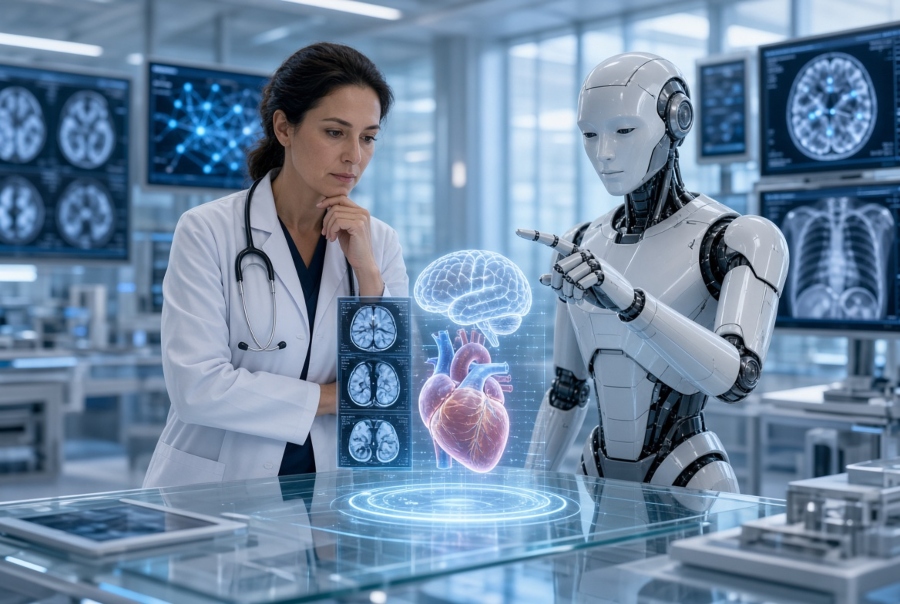
Artificial Intelligence in Medicine: Breakthroughs, Risks, and the Future of Patient Care
Artificial intelligence has moved from the margins to the mainstream of healthcare.
A new CSIRO report confirms that AI is now embedded in real-world clinical settings, delivering measurable benefits across clinical decision support, medical imaging analysis, disease management, and personalised care.
The rapid rise of generative AI has accelerated this integration while sharpening the focus on safety, quality, and responsible use. We are entering a pivotal chapter where responsible innovation, rigorous evidence, and collaboration will determine how successfully AI delivers on its promise for patients, clinicians, and communities.
The New Frontier: Autonomous Medical AI Agents
Perhaps the most significant breakthrough in recent years has come in the form of autonomous medical AI agents capable of managing patients across multiple stages of care. Two independent models published in Nature have demonstrated the potential for conversational AI tools to assist with disease management in ways that were unimaginable just a few years ago.
MIRA (Medical Intelligence for Reasoning and Action) , developed by researchers at Heidelberg University Hospital, represents a leap forward in AI-assisted clinical care. The system can access patient data in electronic health records, gather information through conversation, order diagnostic tests from over 85,000 options, interpret results, and formulate treatment plans—including prescribing medication, scheduling procedures, and arranging admissions. In a study using real-world data from more than 500 emergency department cases, MIRA achieved an average diagnostic accuracy of 87.8%, compared to 78.1% from a panel of six physicians across specialities. This performance advantage was consistent across all major disease categories, suggesting that AI systems may soon become indispensable partners in emergency medicine.
Google's AMIE (Articulate Medical Intelligence Explorer) takes a different approach, optimized for multi-visit clinical management. It can perform continuous reasoning over multiple patient visits to map disease progression and treatment response. AMIE uses Gemini's long-context capabilities to align its output with up-to-date clinical practice guidelines and drug formularies. In a virtual clinical study comparing AMIE to 21 primary care physicians across 100 multi-visit scenarios, AMIE performed as well as physicians in management reasoning and better in preciseness of treatments and investigations. On a newly introduced medication reasoning benchmark (RxQA), AMIE outperformed physicians on difficult cases, demonstrating that AI can excel in complex pharmacological decision-making.
These systems do not replace physicians. They augment clinical judgment. They handle the procedural weight of information gathering and analysis, allowing physicians to focus on what matters most: the patient relationship, ethical decision-making, and the application of clinical intuition that no algorithm can replicate.
AI in Medical Imaging: Beyond Human Vision
Medical imaging has emerged as one of the most successful applications of AI in healthcare. Deep learning algorithms now routinely assist radiologists in detecting abnormalities in X-rays, MRIs, CT scans, and mammograms with accuracy that often matches or exceeds human performance.
In breast cancer screening, AI systems have demonstrated the ability to reduce false positives and false negatives while improving detection rates. In neurology, AI algorithms can identify early signs of Alzheimer's disease in brain scans years before symptoms appear. In cardiology, AI-powered analysis of echocardiograms and cardiac MRIs provides automated measurements of heart function with precision comparable to expert readers.
The integration of AI into imaging workflows has transformed radiology departments. Where radiologists once spent hours manually measuring and annotating images, AI now performs these tasks automatically, flagging abnormalities for review and prioritizing urgent cases. This has reduced turnaround times and allowed radiologists to focus on the most complex and challenging cases.
AI in Drug Discovery: The Virtual Biotech
Beyond clinical care, AI is transforming how new medicines are discovered. The traditional drug discovery process takes over a decade and costs billions of dollars, with a failure rate exceeding 90%. AI is changing this calculus.
Researchers at Stanford University have developed the Virtual Biotech, a coordinated team of AI agents that mirrors the structure of human therapeutic research organizations. This multi-agent system includes a Chief Scientific Officer agent that receives scientific queries and delegates them to domain-specialized scientist agents spanning statistical genetics, functional genomics, chemoinformatics, and clinical data. The system operates with minimal human intervention, accelerating the pace of discovery while reducing costs.
In a compelling demonstration, the Virtual Biotech analyzed outcomes from 55,984 clinical trials and discovered that drugs targeting cell-type-specific genes were 40% more likely to progress from Phase I to Phase II and 48% more likely to reach market, while exhibiting 32% lower adverse event rates. These findings, which took the AI system weeks to generate, would have required years of human effort and millions of dollars in research funding.
The platform has also been applied to evaluate specific cancer targets and analyze failed clinical trials to infer potential failure mechanisms. By learning from past failures, the system helps researchers avoid dead ends and focus resources on the most promising therapeutic avenues.
Similarly, GEM-GPT represents another advance in AI-driven drug discovery, using a transcriptomics-based molecule generation framework to design personalized therapeutic compounds capable of reverting cell type-specific disease states back to a healthy phenotype. This approach bridges single-cell omics and molecular generation to support personalised therapeutic design, opening the door to treatments tailored to individual patients' genetic profiles.
The Challenge of Implementation
While the technical capabilities are advancing rapidly, integrating AI into clinical practice presents significant challenges that extend far beyond the technology itself. The Australian e-Health Research Centre's Dr David Hansen, CEO of CSIRO's Australian e-Health Research Centre, emphasises that "new AI technologies need to be developed hand-in-hand with clinicians and industry" to ensure real-world utility. Without clinician buy-in and practical integration, even the most sophisticated AI tools will remain unused or underutilized.
A critical concern is the risk of clinician deskilling. As one BMJ Journal of Medical Ethics analysis warns, when AI generates the first differential diagnosis every time, trainees may not practice creating one from scratch. This phenomenon, termed "never-skilling," refers to a competence that never fully develops because something else always goes first. A trainee who always relies on AI for initial diagnostic suggestions may never develop the cognitive muscle for independent clinical reasoning.
The BMJ blog describes this risk in stark terms: "We are preparing them to work alongside tools that are powerful, imperfect, and context-blind. Their value will depend on clinicians who can question them, adapt them, and, when necessary, override them." The challenge is to design training programs that use AI as a teaching aid rather than a crutch, ensuring that the next generation of clinicians develops robust diagnostic skills alongside AI literacy.
AI also risks what researchers call "misrecognition": the danger that digital systems know patients mainly through what is easiest to measure while overlooking what is hardest to code but most central to living with illness. This concept, drawn from the European Heart Journal, suggests that patients may be "disbelieved, misunderstood or required to translate complex, embodied, and relational experiences into clinical categories that fit poorly."
A patient's experience of chronic pain, fatigue, or anxiety cannot be captured in a lab value or imaging result. Yet these subjective experiences are often central to diagnosis and treatment. AI systems that rely solely on objective data may miss the full picture, leading to recommendations that are technically correct but clinically inappropriate. The solution lies not in replacing human judgment but in using AI to augment it, ensuring that the patient's voice remains central to the clinical encounter.
The "black box" problem remains a significant barrier to AI adoption in medicine. Many advanced AI models, particularly deep learning systems, cannot explain how they arrived at a particular recommendation. This opacity undermines trust and raises ethical concerns, especially in high-stakes medical decisions where clinicians and patients need to understand the reasoning behind a diagnosis or treatment recommendation.
Furthermore, AI systems are not static. They can "drift" over time as the underlying data changes, potentially leading to performance degradation or the emergence of biases. A model trained on data from a specific population may not perform well when applied to a different demographic group. Continuous monitoring and recalibration are essential to ensure that AI systems remain safe and effective across diverse patient populations.
The use of AI in medicine requires access to vast amounts of patient data, raising significant privacy and security concerns. Health data is among the most sensitive personal information, and breaches can have devastating consequences. Ensuring that AI systems comply with data protection regulations—such as GDPR in Europe and HIPAA in the United States—is essential for maintaining patient trust and avoiding legal liability.
Governance and the Therapeutic Alliance
The BMJ has proposed a new framework for AI governance built around the therapeutic alliance rather than the flawed "clinician-in-the-loop" model. Three pillars underpin this approach:
Enterprise accountability and shared risk: Shift primary legal responsibility from individual clinicians to developers and implementing organisations. This recognizes that AI systems are institutional tools, not individual medical devices, and that liability should rest with the entities that develop, deploy, and maintain them.
Institutionalised stakeholder governance: Establish interdisciplinary AI governance committees empowered to evaluate, recalibrate, or withdraw clinical tools. These committees should include clinicians, patients, ethicists, and technical experts, ensuring that diverse perspectives inform AI deployment decisions.
Clinical AI stewardship: Train clinicians to use AI with clear understanding of its limits and implement continuous automated auditing to detect performance drift. Stewardship also involves developing clear protocols for when and how to override AI recommendations, preserving clinical autonomy while benefiting from AI insights.
As the framework argues, "AI should operate in the background, supporting, not mediating" the patient-clinician relationship. AI should function as an assistant or adviser, preserving human-first cognition with AI offering asynchronous second opinions activated only after clinicians have formed an initial judgment. This approach reduces the risk of automation bias, where clinicians defer uncritically to AI recommendations, while maximizing the benefits of AI's analytical power.
What's Next for AI in Medicine?
The transformation is accelerating. In oncology, agentic AI—where multiple AI tools are coordinated rather than used independently—is being explored to support tumor board decision-making, integrating multimodal patient data and medical knowledge to support clinical decisions. Healthcare organisations, researchers, industry, and governments are adopting AI, but "the need for robust evidence, quality assurance and community co-designed standards has never been greater."
The opportunities are immense. AI can extend healthcare to underserved populations, reduce diagnostic errors, accelerate drug discovery, and personalise treatment in ways that were previously impossible. But the risks are equally significant: deskilling, bias, misrecognition, and the erosion of the therapeutic relationship.
We are entering a pivotal new chapter where responsible innovation, rigorous evidence, and collaboration will determine how successfully AI delivers on its promise for patients, clinicians, and communities. The technology is ready. The question is whether the systems to govern it—and the clinicians to wield it wisely—will be ready too.
The future of medicine is not AI replacing doctors. It is doctors, empowered by AI, delivering better care to more patients than ever before. Getting this right will define healthcare for generations to come.
Azamat Abdoullaev is a leading ontologist and theoretical physicist who introduced a universal world model as a standard ontology/semantics for human beings and computing machines. He holds a Ph.D. in mathematics and theoretical physics.
Related Stories
 AI News
Bill Gross bets AI can help mass
2 days ago
 AI News
Nigeria records 93% rise in AI micro
2 days ago
 AI News
The Italian gelato maker using AI to invent new flavours
2 days ago
 AI News
Closing the Gap Between Agentic CX Pilots and Production
2 days ago
 AI News
New Brunswick data centre debate highlights cross
2 days ago
 AI News
How to Structure an AI Agent Referral Fee Agreement Between Startups
2 days ago
 AI News
No, AI didn’t delete a Swedish reality TV series
2 days ago
 AI News
There is no AI in Armageddon. Artificial intelligence is a tool, not an apocalypse
2 days ago