
Boston Startups Reshaping Industries by Embedding AI Into Organizational DNA
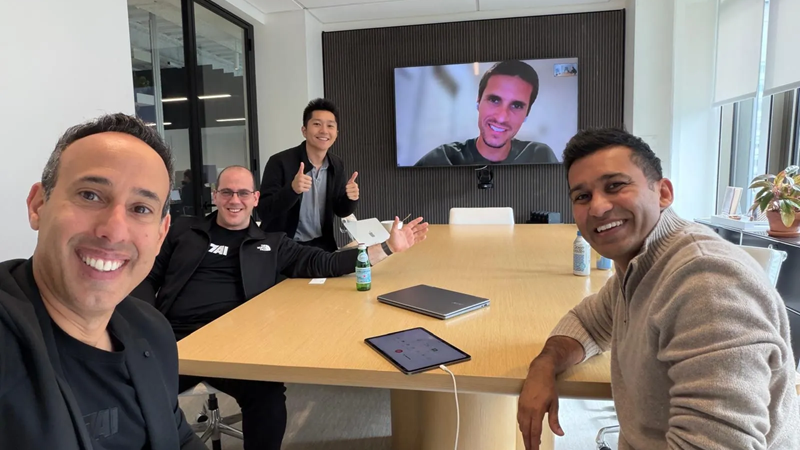
Boston’s AI startup scene is moving fast enough that even long-established software teams are being forced to rethink how they work. In a recent conversation with MGMT Boston, Jellyfish co-founder and CEO Andrew Lau argued that the real shift is not simply writing code with AI, but redesigning engineering organizations around it.
Lau said Jellyfish, founded in 2017 as a maker of engineering management software, now has visibility into more than 1,000 companies, 275,000 engineers and 90 million pull requests, giving the company a wide-angle view of how AI is changing software delivery. In an interview with McKinsey, he stressed that companies need to measure how AI affects development workflows, not just adopt tools and hope for gains. The challenge, he said, is organizational: teams must adjust roles, processes and decision-making if they want AI to produce meaningful productivity gains.
Jellyfish has raised over $100 million from backers including Accel, Insight Partners, Tiger Global Management, and Wing Venture Capital.
MGMT Boston’s latest episode with Lior Div, co-founder and CEO of 7AI, one of the more closely watched cybersecurity startups in the region, echoed the AI theme. The company, which emerged from stealth in February 2025 with $36 million, closed a $130 million Series A in December led by Index Ventures. That round was the largest Series A in cybersecurity history, with Blackstone Innovations Investments among the participants, according to Latham & Watkins.
Founded in 2024 by Cybereason co-founders Div and Yonatan Striem-Amit, 7AI is building autonomous AI agents to handle security operations at scale, from triaging alerts to correlating signals across cloud, email, identity and endpoint systems. Div said the demand from customers has been unlike anything he has seen in his career. According to MGMT Boston, early users include enterprises with 100,000 to 200,000 employees, and the company has already grown to more than 140 people, with plans to top 200 by the end of 2026.
What makes a company truly AI-native, Div argued, is not whether employees use AI tools. It is whether the organization is built around speed and accountability, with decisions pushed downward and teams expected to ship frequently. He said 7AI runs on a tight weekly cadence, with Friday demos effectively serving as a companywide checkpoint.
The Boston startup ecosystem is also producing companies aimed far beyond software. MGMT Boston highlighted Tessel, which is building a model of human physiology for drug development, and Qyn Labs, which is trying to create a more continuous way to measure hormones by combining home testing with wearable data. Adept Materials, meanwhile, has moved from lab work to its first product, a moisture-control paint and primer called Lilypad.
Taken together, the companies point to a broader local pattern: Boston’s builders are not just applying AI to existing industries. They are using it to rewire how those industries work.
[Noah Wire Services helped in the writing of this article.]
Related Stories
 AI News
China dismisses AI ‘fearmongering’ as spy chief warns of threat to Communist party rule
44 minutes ago
 AI News
Swiss SMEs Do Not View Artificial Intelligence as a Job Killer
45 minutes ago
 AI News
Guiding children to lead with artificial intelligence
45 minutes ago
 AI News
New warnings about the risks of AI to humanity revive a long-running debate
1 hour ago
 AI News
Vance downplays AI fears: Heritage Foundation warns against regulation
1 hour ago
 AI News
Data centre biggest Sask. investment in history
2 hours ago
 AI News
Trump says AI safety fears a 'hoax' as he rejects calls for greater safeguards
2 hours ago
 AI News
Tech CEOs call for AI regulation. Trump and Congress are not rushing to act
2 hours ago