
Biotech startup funding gap widens despite rebound in VC investment

Biotechnology venture capital funding continued a multi-year surge in the first half of 2026, as strong public market performance and a spike in dealmaking activity helped spur interest in privately held drug startups, BioPharma Dive data show.
Data compiled by BioPharma Dive indicate that at least 68 biotech companies banked more than $9.1 billion in venture capital funding between January and June. The total amount raised represents the highest first-half sum since the start of 2022, among companies backed by the 26 firms BioPharma Dive tracks.
Venture capital has “continued to go strong” despite the threat of a U.S. government crackdown on investments in Chinese drug assets and turmoil at the Food and Drug Administration, said Ben Zercher, a senior analyst at research firm Pitchbook. And most investments come in the form of “megarounds” worth $100 million or more. About 76% of the total funds raised in the first half were part of those larger financings, according to BioPharma Dive data.
Partly driving that momentum, some experts say, is the encouraging performance of initial public offerings. So far in 2026, 13 firms have brought in a combined $4.5 billion in IPO proceeds. Their median haul of almost $302 million is unusually large compared to prior years, and two companies, Parabilis Medicines and Kailera Therapeutics, broke sector records.
Those companies are faring well in the public markets afterwards, too. Most of those that debuted this year are trading above their original share price.
Dealmaking has also accelerated to one of its fastest starts in a long time. BioPharma Dive data show that 38 acquisitions have already been struck so far in 2026, putting the sector on its best acquisition pace in at least seven years. Almost two-thirds of those deals involved $1 billion in proceeds or more, and four topped $10 billion.
“The last few months have been reaffirming in terms of M&A,” Simeon George, the CEO and managing partner of venture firm SR One, said in a May interview. Though IPOs have been “a little more nuanced ... in the short term, the markets are a voting booth, and in the long term, they're weighing scales.”
Still, the venture funding tally this year has been partially inflated by a behemoth $2.1 billion funding round for AI drug discovery specialist Isomorphic Labs. And money isn't being doled out in the same way as it was before the bubble burst. Now, funding for startups searching for seed rounds — the crucial early capital necessary to get a company going — or biotechs led by first-time founders is not as abundant as it was five years ago, said Ashwin Singhania, a principal at Ernst & Young’s life sciences practice.
About two-thirds, or 42, of the venture rounds in the first half of 2026 went to a company that already had a drug prospect in human testing, according to BioPharma Dive data.
“I think that a grave concern to the biotech community is where is that next wave of early innovation going to come from, especially with the backdrop of what happened at the NIH,” Singhania said, referring to cuts to basic research funding that could have future consequences for the U.S. drug industry as far as a decade down the line.
Many of the companies that may receive venture dollars in place of seed-stage startups are built around ready-made drug prospects from China or elsewhere. Several, such as cAMPfield Therapeutics and Solstice Oncology, have started up this year. The flow of funding to those companies has sparked concerns about national security and market competition. But it’s also a reflection of a still-discerning investment climate, some say.
"For the right management team, with the right platform or asset, there could be an appetite [for investing],” said Doreen Levine, a partner at Ernst & Young’s Americas life sciences sector accounting group. “The VCs have the liquidity and interest to do it, it's just that they're being very judicious."
So far, those investors appear to be leaning on areas that might be considered safer bets. Immune and cancer-focused drugmakers made up more than 40% of the funding rounds in the first half, data show. And developers of biologics and small molecules both raised more than $2 billion, dwarfing the totals secured by cell and gene therapy makers or companies specializing in nucleic acid-based therapies.
For companies working on cellular or genetic medicines, the first half represented the continuation of a multi-year slump. They’re once again on pace to raise about $2 billion in 2026, similar to most years since 2022, according to BioPharma Dive data.
Pitchbook’s Zercher said the disappointing market performance of treatments like Casgevy, worrisome side effects seen in some clinical trials and “enhanced regulatory scrutiny” may be making investors wary of the space.
“With all the turnover that's going on at the FDA, it creates a perfect storm of, ‘maybe we just wait and see what's going on here before we size this bet on this market,” Zercher said.
Related Stories
 Business
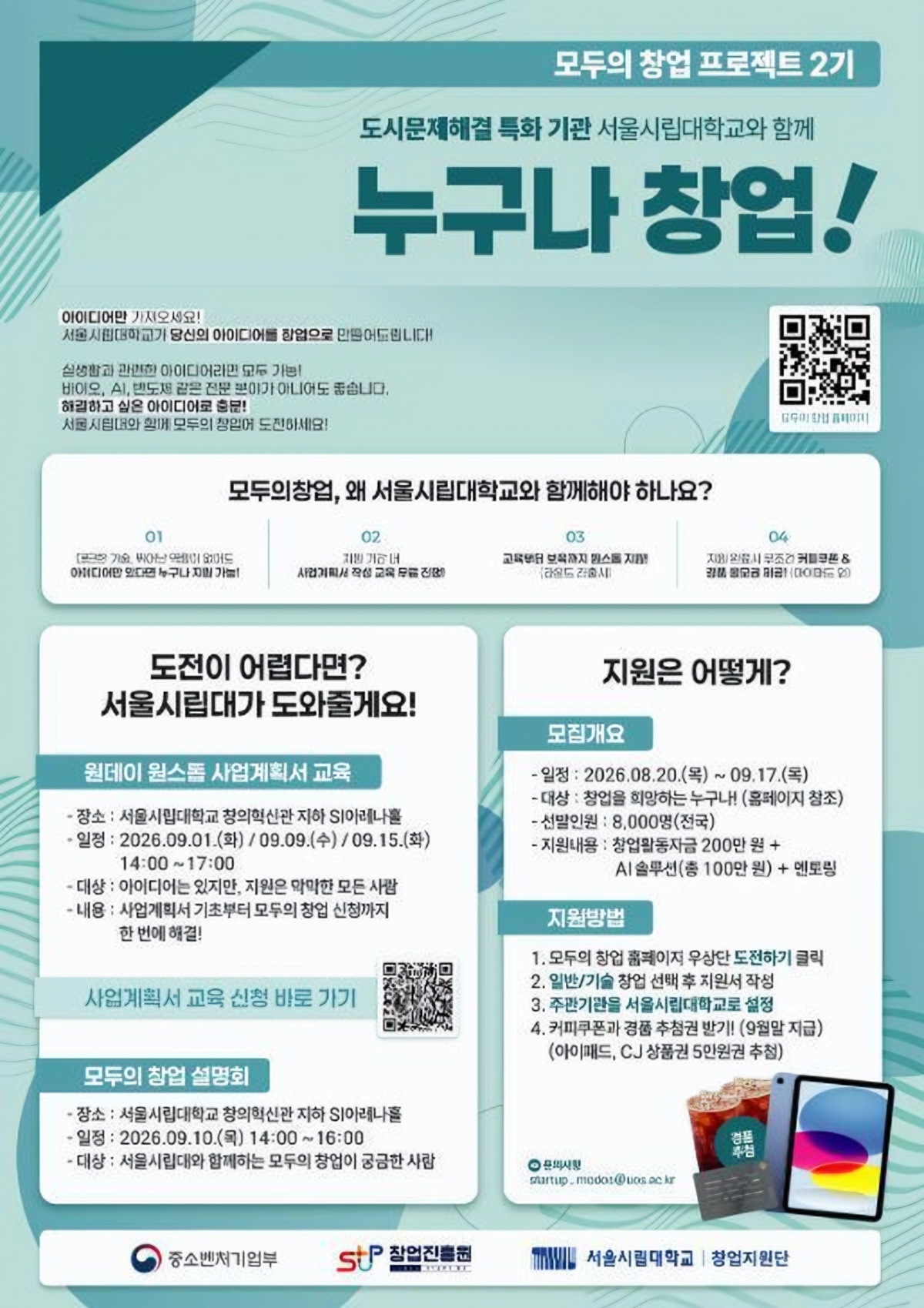
University of Seoul's Startup Foundation participates in entrepreneurship support project
39 minutes ago
 Business
University of Seoul's Startup Support Foundation participates in entrepreneurship project
3 hours ago
 Business
Trump says NBC’s Kristen Welker should face ‘punishment’ from FCC
5 hours ago
 Business
Nasa space telescope launches after surviving Trump budget cuts
9 hours ago
 Business
Attack mum's trauma of fighting early release plan
10 hours ago
 Business
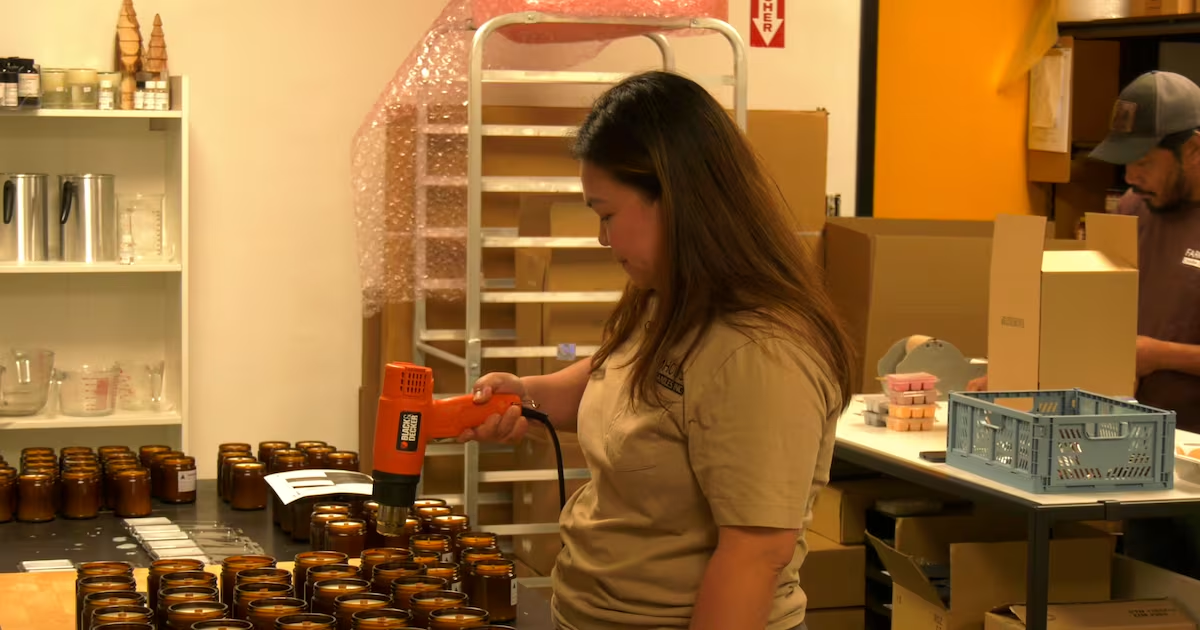
‘It’s going to be hard’: Canadian candle company halts U.S. sales due to tariffs
15 hours ago
 Business
States role to focus on building affordable homes
19 hours ago
 Business
THIS SMALL GAMING STARTUP JUST RAISED $18 MILLION
22 hours ago