
Banesh Prabhu on IntellectAI and Artificial Intelligence in Wealth Management

Banesh Prabhu on IntellectAI and Artificial Intelligence in Wealth Management
Banesh Prabhu of IntellectAI
Banks are beginning to move artificial intelligence beyond general-purpose chat tools and into the systems used to serve clients, manage risk and run operations. Wealth firms must do this without abandoning established platforms, weakening controls or giving relationship managers another disconnected layer of technology. IntellectAI, a business within Intellect Design Arena, provides technology for wealth management, capital markets and insurance. Its wealth proposition centres on eMACH.ai Wealth, a modular platform designed to help financial institutions modernise client and adviser journeys while continuing to use existing core systems. Banesh Prabhu, Chief Executive Officer of IntellectAI, sees the next phase of adoption in governed artificial intelligence (AI) agents, faster implementation and more personalised service. He expects different delivery models to emerge for high net worth and ultra high net worth clients, who will continue to value human relationships, and for mass-affluent investors, where a greater share of the journey may be automated.
Building a Modular Wealth Platform
Intellect Design Arena develops financial-services technology across transaction banking, corporate banking, supply chains, trade finance, core banking and lending. IntellectAI concentrates on wealth management, capital markets and insurance, with the capital-markets suite spanning brokerage, custody, transfer agency and fund accounting. Banesh estimates that the wider group employs about 6,500 people, including roughly 1,200 within IntellectAI, and the company says it serves more than 500+ customers across 60+ countries.
The wealth platform is built around eMACH.ai, a set of design principles whose name stands for event-driven, microservices-based, API-enabled, cloud-native and headless. Individual components can be assembled around a client journey and connected to internal or external systems through APIs. The front end can also change without a rebuild of the underlying product architecture.
Institutions with years of investment in legacy technology can modernise in stages. A firm might begin with an adviser workspace, onboarding or a servicing journey, then connect that component with its existing core platform.
“You do not need to transform the whole wealth business in one programme,” Banesh says. “The architecture works like building blocks. A client can choose the journeys it needs, connect them to the existing platform and modernise the business piece by piece.”
Giving Advisers a Better Working View
One early focus is the financial adviser, also described as the RM in many private banks. These employees drive revenue and hold the client relationship, yet they often prepare for meetings by drawing information from several systems. IntellectAI's approach is to compose the relevant workflow around the adviser rather than wait for a wholesale core-platform replacement.
AI can prepare client-specific material using risk information, previous interactions and the institution's own data. The adviser gets a quicker view of what has changed and which issues merit discussion before personalising the conversation. Similar capabilities can be applied to operations, know your customer (KYC) checks and compliance work.
Banesh describes the intended role as augmentation. “The adviser remains responsible for the relationship,” he says. “AI should give that person a level of preparation, personalisation and intelligence that would be difficult to produce manually for every client.”
Measuring Technology by Business Impact
Banesh judges a modular architecture against four outcomes: productivity, including the cost of technology delivery and day-to-day operations; risk and compliance; customer experience; and revenue. Weak data or limited platform capability, he notes, can expose a wealth business to regulatory failures and financial penalties.
A headless architecture can give clients, advisers and operations staff different interfaces while drawing from the same underlying services. Revenue gains might come from stronger adviser capacity, better client coverage or more effective use of data.
Those outcomes also shape how IntellectAI speaks to different decision-makers. Business leaders want evidence of growth or improved economics; operations teams need efficient, controlled workflows; and technology teams need an architecture that can connect with the institution's existing infrastructure and choice of cloud provider.
“The conversation has to end with business impact,” Banesh says. “We have to show the business manager what changes, the operations team how the platform can be run efficiently and compliantly, and the technology team how it fits with what the bank already has.”
Moving from Copilots to Governed Agents
Financial institutions have used machine learning and data science for years, but the arrival of widely accessible large language models changed the level of interest. Employees and executives could use products such as ChatGPT, Gemini and Claude directly, prompting boards to ask where similar tools might improve their own businesses.
Banesh compares the current moment with the early internet. New services showed what was possible long before institutions connected the systems, operating models and customer journeys needed for broad digital adoption. Expectations for AI have arrived quickly; reliable enterprise deployment is taking longer.
The next step is agentic AI, in which software agents carry out defined tasks alongside employees within governed workflows. Intellect’s Multidimensional-Multilayer System of Connected Knowledge (MSOCK) connects knowledge across business processes, policies, applications, APIs and code.. By making those relationships visible, it can help teams understand what a proposed change may affect before they implement it, and give AI agents more reliable enterprise context for their work.
Agents will still need supervision. Accuracy, permissions and performance must be monitored, particularly when the system touches regulated decisions or client money.
“We have spent our careers learning how to manage people,” Banesh says. “Now we also have to manage AI agents. That requires governance, performance measures and a clear understanding of when the human takes the decision.”
IntellectAI's first priority for the next 12 to 18 months is to use AI across the implementation, operation and support of its own products. The company wants existing customers to run their platforms more efficiently and new customers to reach production more quickly, particularly as financial institutions demand shorter delivery cycles and increasingly buy technology through subscription models.
MSOCK is one part of that delivery strategy, intended to make product knowledge easier for implementation teams to retrieve and use. Banesh expects clients to adopt these capabilities at different speeds, with some ready to use them in live work and others still testing where they fit.
Turning AI Investment into Outcomes
The second priority is to help clients choose among the many possible uses of AI. Some firms already have capabilities in production, while others are running pilots in response to board and executive pressure. IntellectAI plans to concentrate on a smaller set of projects with a defined return on investment and a practical route into day-to-day operations.
“There is a lot of noise in the market and a lot of pressure to do something with AI,” Banesh says. “The work is to bring that down to a small number of priorities, define the business impact and give the client a framework they can actually execute.”
Building Skills for AI Delivery
The third priority is people. IntellectAI is training its own employees to combine domain knowledge with AI tools and expects to help client technology and operations teams do the same. Banesh believes end-to-end financial workflows will still require employees who understand the product, customer and regulatory context, even when agents perform more of the underlying work.
Those teams will need to orchestrate a complete workflow, not simply use an AI tool in isolation. They will need technical fluency and an understanding of how the institution serves clients, handles exceptions and meets its obligations.
Serving the Next Generation of Wealth
The transfer of family wealth shapes Banesh's five-year view. He expects substantial assets to pass to women and younger family members, including members of Generation Z, whose investment experience and preferred methods of communication may differ from those of the current wealth holders. Firms already have reason to improve personalisation and financial education, even if the timing of individual transfers is uncertain.
For private banks, the HNW and UHNW relationship model may remain intact even as the work within it changes. RMs may need to engage family members with different objectives and less investment experience, and help them prepare for greater responsibility over the family's assets.
“Wealth is an emotive business because it is the client's money,” Banesh says. “Technology can make the adviser better prepared, but trust remains the single biggest driver of the relationship.”
A More Automated Mass Affluent Model
Banesh expects a different model for mass-affluent clients, many of whom need help investing smaller amounts towards specific goals. He believes digital systems will increasingly identify a curated basket of products for objectives such as retirement, education or buying a home, then deliver and service that portfolio through a largely automated journey.
Controls remain essential. The system still has to gather suitable information, apply product and risk rules, explain the proposition and handle exceptions. Automation makes it economical to offer a structured investment journey to clients who may not have a dedicated adviser.
Consolidating the Adviser Technology Stack
Many advisers still work across separate tools for client records, planning, risk, compliance, portfolio management and communication. Banesh has encountered firms, including in the United Kingdom, where an adviser may use more than ten small systems. He expects pressure to move towards fewer, better-connected platforms as institutions seek a consistent data view and lower operating costs.
The change could also alter competition between private banks and family offices. Family offices often compete on trust and the quality of their counsel. If larger institutions use integrated technology to improve service while controlling costs, some clients may see less reason to move to a smaller provider. Firms that retain fragmented systems, however, may struggle to match the speed and personalisation of more focused competitors.
“The end-to-end integration will become much more important,” Banesh says. “If the adviser is using ten different tools, there is a limit to how efficient or consistent the experience can be.”
Regulation and Human Accountability
AI regulation will become a larger part of wealth technology as use cases move closer to recommendations, compliance and client outcomes. Institutions will need to establish which decisions an AI system may support, what evidence is retained and who remains accountable. That work will sit alongside conventional model-risk management, data governance and cybersecurity.
Banesh does not expect the dominant model to be fully autonomous. He compares it with driver-assistance technology: systems will take on more work and improve the operator's awareness, but a person will remain responsible where the consequences require judgement. Progress will depend on technical capability and clear operating rules, not the number of pilots a firm can announce.
Getting Personal with Banesh Prabhu
Banesh was born and educated in Mumbai, then known as Bombay. He completed a bachelor's degree in finance and a Bachelor of General Law at the University of Mumbai, alongside the professional chartered accountancy qualification awarded by the Institute of Chartered Accountants of India.
His interest in technology emerged during his accountancy articles with Ford, Rhodes, Parks & Co., which was associated with Robson Rhodes in the United Kingdom. He worked on an early computer audit and saw how technology could change the speed and scope of work that had previously depended on manual processes.
“That first computer audit changed the direction of my career,” he says. “It showed me that technology could make work more efficient than we had imagined, and I kept returning to that question in each role that followed.”
His career went on to include American Express, 23 years at Citi and international responsibility spanning more than 55 markets. He later held an executive technology and operations role at Siam Commercial Bank, worked as a senior adviser to Boston Consulting Group and moved to the technology-provider side of the industry. He has spent the past several years with Intellect, where his remit has extended across banking, wealth and insurance technology.
Banesh is married and has a son who holds a master’s degree in engineering from Imperial College London and works as an options and derivatives trader.
Sport has remained an important influence. Banesh played field hockey and basketball, competed in sprint events and later gravitated towards racket sports when organising team games became harder. He continues to follow cricket and other sports closely.
He carries those sporting lessons into management. “Sport teaches you to handle winning and losing, and to understand that people bring different strengths to a team,” he says. “Those lessons stay with you when you are leading people in a business.”
He also takes satisfaction from entering fields outside his original qualifications, from technology and operations to insurance and newer forms of AI. An international career has reinforced a global outlook, while mentoring younger colleagues gives him a way to combine experience with skills and perspectives formed in a different generation.
Chief Executive Officer at IntellectAI
More from Banesh Prabhu, IntellectAI
Wealth Management Reimagined – Observations & Insights on Future-Proofing the Model
Intellect SEEC CEO Banesh Prabhu on FinTech Innovations for Wealth Management of the Future
Jupiter Asset Managment on Silver, AI and Next-Generation Demand
Hubbis Investment Forum – Hong Kong 2026
Hong Kong's US$2.9 Trillion Test: Can Momentum Become Durable Growth?
From Approved to Allocated: What Will Actually Enter Asia's Private-Client Portfolios in 2027?
The Discretionary Decade: Can Asia's DPM Breakout Become a Scalable Growth Model?
From Stability to Stewardship: Alfred Low on Lombard Odier's North Asia Proposition
Sep 21, 2026 Alfred Low of Lombard Odier
From Front-Office Friction to Practical Change: Finalix on Turning Banking Pain Points into Delivery
Where AI Can Help Wealth Advisers: Amanda Ong on Arta Finance’s Institutional Strategy
Sep 2, 2026 Amanda Ong of Arta Finance
Beyond the Balance Sheet: The Maturing of India's Family Office Market
Aug 25, 2026 Bryan Henning of Eton Solutions
From Pilots to Practical Scale: Prasanna Venkatesan on AI Transformation in Private Banking
Aug 5, 2026 Prasanna Venkatesan of Synpulse
Related Stories
 AI News
Trump Announces a National Force Dedicated to Artificial Intelligence
54 minutes ago
 AI News
Trump Proposes ‘AI Force,’ Says Artificial Intelligence Could Reach 25% of U.S. GDP
54 minutes ago
 AI News
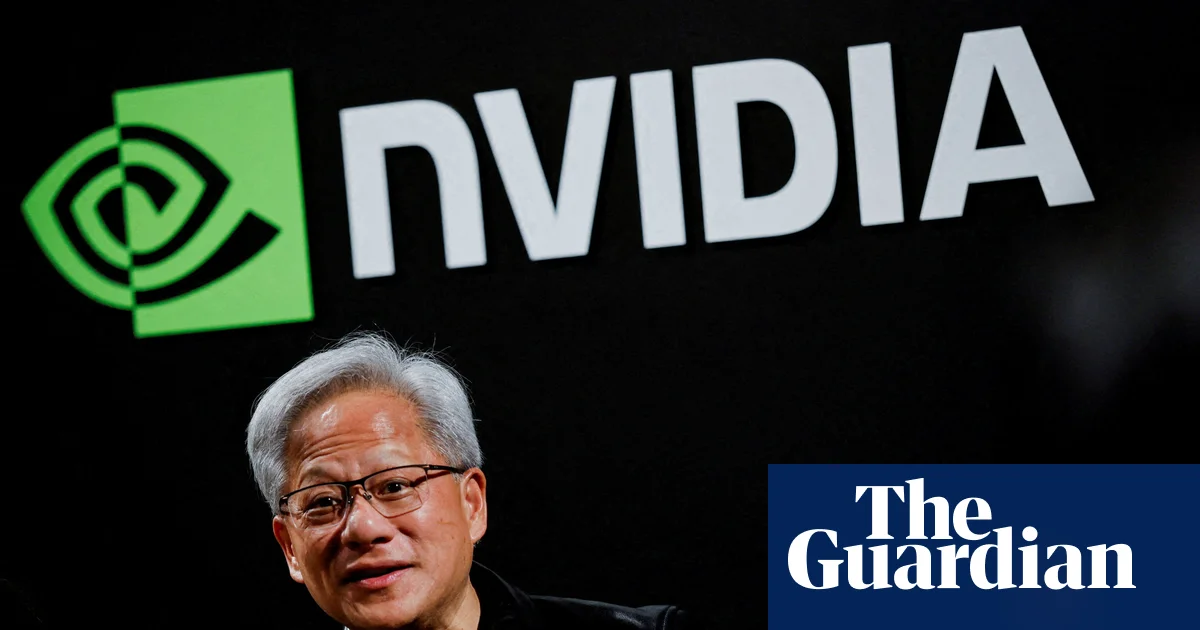
Nvidia boss says there is ‘0% chance’ AI destroys the world by 2030
54 minutes ago
 AI News
Monet masterpiece could sell for record €30 million
1 hour ago
 AI News
GPU Rental Crunch Forces Korean AI Startups to Drop Projects
1 hour ago
 AI News
Who gets ahead in the enterprise consulting business with AI now in the game?
1 hour ago
 AI News
Xunce Technology Launches TokenCloud, Plans Up To RMB12B AI Capex
1 hour ago
 AI News
AI investors in Asia seen shifting focus to earnings ahead of Xi
1 hour ago