
Asia’s Silent Tech Revolution Across Vietnam, China, India, and South Korea Poised to Reshape Factories, Smart Cities, Travel Trends, and the Future of Work Innovation and Global Technology Leadership

Asia’s Silent Tech Revolution Across Vietnam, China, India, and South Korea Poised to Reshape Factories, Smart Cities, Travel Trends, and the Future of Work Innovation and Global Technology Leadership – Here’s How
Across factories, utilities, and industrial zones, a quiet but powerful shift is underway. What once depended heavily on top-down planning is now increasingly shaped by people working directly on production lines and in technical teams. This shift is now a recurring theme in latest Asia tech news, where everyday operational improvements are becoming a major driver of industrial change.
Rather than waiting for large-scale reforms, workers and engineers are actively redesigning processes, improving systems, and introducing practical digital tools. The result is a faster, more adaptive form of innovation that is reshaping how industries function across the region.
Workers Are Driving Innovation From Within
One of the most striking changes is how much influence frontline employees now have in improving industrial systems. In many cases, the people closest to machines and workflows are the ones identifying inefficiencies first—and fixing them.
This growing role of employees reflects a broader shift toward tech workforce innovation Asia, where human experience on the ground is treated as a key source of technical improvement.
Instead of relying only on external engineers, companies are increasingly valuing insights from within their own workforce.
Manufacturing Is Becoming Smarter From The Inside Out
Industrial production is undergoing a major upgrade, but not always in the way people expect. It is not just about installing new machines—it is about improving how existing systems work through better coordination between humans and technology.
This evolution is strongly aligned with smart manufacturing Asia, where digital tools and human decision-making work together to improve productivity.
Across multiple sectors, factories are introducing:
These changes are helping companies reduce defects, save time, and improve overall reliability without completely replacing existing infrastructure.
Digital Systems Are Reshaping Entire Infrastructure Networks
Beyond manufacturing, public utilities and infrastructure systems are also being modernised. Water distribution, energy networks, and city services are increasingly managed through digital platforms that allow real-time monitoring and faster response times.
This shift reflects the broader momentum of digital transformation Asia, where traditional systems are being upgraded with connected technologies.
Some of the most impactful improvements include:
These upgrades are making infrastructure not only more efficient but also more resilient under pressure.
Artificial Intelligence Is Becoming Part Of Daily Operations
A major force behind this transformation is the increasing role of intelligent systems in industrial environments. What was once considered advanced or experimental is now becoming routine.
The rapid expansion of AI growth in Asia is visible in how companies are using AI tools for quality control, predictive maintenance, and operational monitoring.
Importantly, AI is not replacing workers in these environments. Instead, it is acting as a support system that helps them work more accurately and efficiently.
Industrial Change Is Creating A More Skilled Workforce
As technology becomes more integrated into daily operations, the nature of industrial work is also changing. Workers are no longer only operating machines—they are interacting with digital systems, interpreting data, and participating in process design.
This shift is at the heart of industrial automation Asia, where automation enhances human capability rather than eliminating it.
As a result, companies are investing more in training and continuous learning to help workers adapt to evolving technologies.
Everyday Improvements Are Driving Big Industrial Gains
While large technological upgrades often get attention, many of the most important changes are small and incremental. Across factories and utilities, minor adjustments are adding up to significant efficiency gains.
These practical innovations often come directly from employees who understand operational challenges firsthand.
Regional Mobility And Growth Are Also Fueling Interest In Asia
Alongside industrial transformation, there is growing global attention on why travel to Asia, as the region becomes a hub not just for tourism but also for technology, education, and industrial development.
People are increasingly drawn to Asia because:
This blend of cultural, industrial, and technological growth is making Asia one of the most dynamic regions globally.
What ties all these changes together is a shift in how innovation itself is understood. It is no longer confined to research labs or executive planning rooms. Instead, it is becoming a continuous, distributed process embedded in everyday work.
This is what makes latest Asia tech news so significant—it reflects a region where innovation is happening everywhere, not just at the top.
Conclusion: A Quiet But Powerful Industrial Shift
The transformation unfolding across Asia is not loud or sudden—it is steady, practical, and deeply rooted in everyday work. From factory floors to utility networks, people are finding better ways to solve problems using both experience and technology.
As reflected in latest Asia tech news, this is not just a technological upgrade. It is a structural shift in how industries operate, how workers contribute, and how innovation spreads.
With the rise of tech workforce innovation Asia, smart manufacturing Asia, digital transformation Asia, AI growth in Asia, and growing global interest in why travel to Asia, the region is steadily shaping a future where technology and human insight evolve together.
Tags: China Smart Manufacturing Shanghai, India Digital Transformation Bengaluru, South Korea AI Growth Seoul, Vietnam Tech Innovation Ho Chi Minh City
Related Stories
 Technology
HCMC K
28 minutes ago
 Technology
Two ANZ startups that raised $21 million this week
28 minutes ago
 Technology
$1.9 Million Federal Award Backs Michigan Tech’s Role in National Cybersecurity
29 minutes ago
 Technology
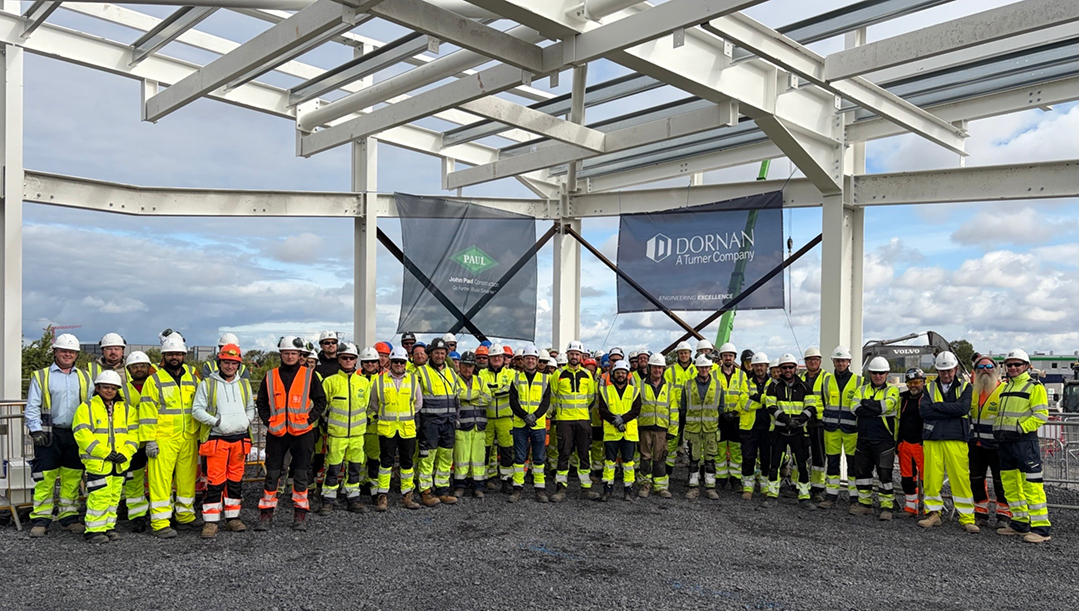
Dornan Marks Groundbreaking Milestone on Advanced Technology Project
1 hour ago
 Technology
Advantage celebrates 40 years with $10K startup tech prize
2 hours ago
 Technology
Chipmaker Marvell Edges Above Estimates But Stock Falls
3 hours ago
 Technology
Why Nvidia loves funding startups
4 hours ago
 Technology
Marvell Technology, Inc. Reports Second Quarter of Fiscal Year 2027 Financial Results
4 hours ago