
As Trump declares ceasefire over, Iran's leadership is divided over how it wants the war to end
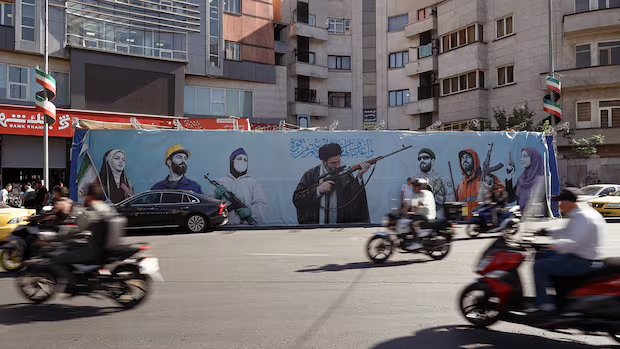
As Trump declares ceasefire over, Iran's leadership is divided over how it wants the war to end
Iran in the middle of weeklong funeral for slain supreme leader
Few will be surprised by Donald Trump’s apparent dismissal of the U.S. ceasefire with Iran in comments he made at a NATO summit in Turkey on Wednesday.
Nor will there be much surprise at the U.S. president’s language — calling Iranian leaders "scum" — or that both sides are blaming the other for breaching the truce.
Indeed, many analysts predicted that the vague details of the ceasefire announced in April would soon see it unravel.
Oil prices jump and stocks mostly fall after Trump says ceasefire with Iran is 'over'
U.S. launches fresh strikes on Iran, prompting Iran attacks in Kuwait, Bahrain
The timing of Trump’s latest comments, though, is significant.
They come in the midst of Iran’s weeklong funeral for former supreme leader Ali Khamenei, who was killed by U.S.-Israeli airstrikes in February, and just a day before the procession carrying his coffin is expected to reach his hometown of Mashhad for burial.
Many mourners in the crowds were carrying placards reading "Kill Trump" and urging Iranian leaders to seek revenge, not peace, after Khamenei’s death.
Those calls are expected to grow louder — and potentially amplify divisions within the Iranian leadership, as it seeks to navigate a way out of a conflict that has killed more than 3,000 Iranians and inflicted enormous economic damage, while addressing the sense of deep injustice many Iranians feel over what they see as an unprovoked attack on their country.
Massive crowds move through Iran and Iraq for Ayatollah Ali Khamenei's 6-day funeral procession
"There are different shades of hardliners," said Ali Ansari, an Iran expert and historian at St. Andrews University in Scotland, in an interview with CBC News earlier this week. "Basically all the non-hardliners are out [of any leadership roles.]"
Who is making decisions in Iran?
Ansari says the U.S. believes it's negotiating with one of the most pragmatic of those at the helm: parliamentary speaker Mohammad Bagher Ghalibaf, one of the chief Iranian negotiators, along with Foreign Minister Abbas Araghchi.
"He gave a very, very good speech about four or five weeks ago, where he said, 'We won the battle, because the Americans didn’t plan very well. But we can’t win the war, and that’s why we need to negotiate. We must negotiate from a position of strength.'"
But Ansari is skeptical of Ghalibaf's influence.
"I’m not sure he’s in the driving seat, however."
Ghalibaf and Araghchi, as well as Iranian President Masoud Pezeshkian, have been widely criticized by many ultra-hardliners for engaging in peace talks, and denounced as traitors at Iranian rallies in recent weeks.
The continued absence — at least in terms of physical presence — of the new supreme leader, Khamenei’s son Mojtaba, increases the sense of obfuscation at the heart of the Iranian leadership.
Reportedly seriously injured in the Feb. 28 attack that killed his father, Mojtaba Khamenei has thus far communicated only in statements, including one where he expressed doubts about the U.S.-Iran negotiations, while also signalling they could continue.
Scenes from Iran's days-long funeral for assassinated leader
Ansari says Mojtaba might metaphorically sit at the head of the table, but his continued absence means he lacks his father's authority.
"So all these other factions are there fighting [for control]."
Analysts believe Iranian authorities are divided between the economic imperatives of accepting a deal that could ease an economy crippled by years of U.S.-led sanctions and trying to hold on to the leverage that controlling the Strait of Hormuz offers.
"A sensible person will say yes, [accept an economic solution] because the economic situation is extremely bad," said Ansari. "On the other hand … there is a legitimate thing to say, ‘Are the Americans remotely serious about [an agreement]?’"
The hardest of the hardline factions will no doubt use Trump’s latest comments to argue that negotiations with the Americans are pointless.
In an interview with CBC News in Tehran last month, Ebrahim Rezaei, spokesperson for Iran’s national security and foreign policy committee, said he believes Iran is fighting an existential war against the U.S.
"We deem it very probable that the United States will attack us again," Rezaei said at the time, adding that Iran’s response to the U.S. war has only strengthened its position.
"We believe ourselves to be a mighty and powerful country," he said. "And we will not let the situation of the region return to what it was before the war, and … the American military should leave the Persian Gulf."
The Iranian authorities framed the funeral of Ali Khamenei, who ruled Iran with an iron grip for nearly four decades, as a referendum of sorts on the Islamic Republic.
They predicted the six-day farewell would draw up to 20 million people to the streets in an outpouring of support — an unfeasible goal, according to Ansari.
"I wouldn’t want to diminish the … sense of the crowds of loyalists, because they’re clearly there. But I don’t think this reflects any sort of referendum on the Islamic Republic."
Ansari says the amount of planning and effort authorities have put into the funeral is a message aimed at reassuring their base that the Islamic Republic is as strong as it ever was.
But he says it serves a dual purpose: it's also aimed at reminding the many opponents of the regime that the authoritarian state is undiminished by the war.
Iran is a country of more than 90 million people. And those opposed to the rule of the clerics are simply staying away from the funeral. Any possibility of open dissent is extremely limited in a police state that regularly employs brutal violence against those who criticize the government.
One Tehran resident who lost friends and family in the regime’s crackdown on anti-government protesters in January told CBC News in a voice message that the death of Ali Khamenei, a man who had long oppressed Iranians, was a comfort but not a cure. (CBC News is withholding his identity for his own protection.)
"The only thing that can slightly ease our pain is the complete overthrow of the Islamic Republic."
Senior International Correspondent
Margaret Evans is the senior international correspondent for CBC News based in the London bureau. A veteran conflict reporter, Evans has covered civil wars and strife in Angola, Chad and Sudan, as well as the myriad battlefields of the Middle East.
Related Stories
 World
World
Oceaneering Becomes Authorized Starlink Reseller
26 minutes ago
 World
World
The World of Motorcycling- News detail
51 minutes ago
 World
World
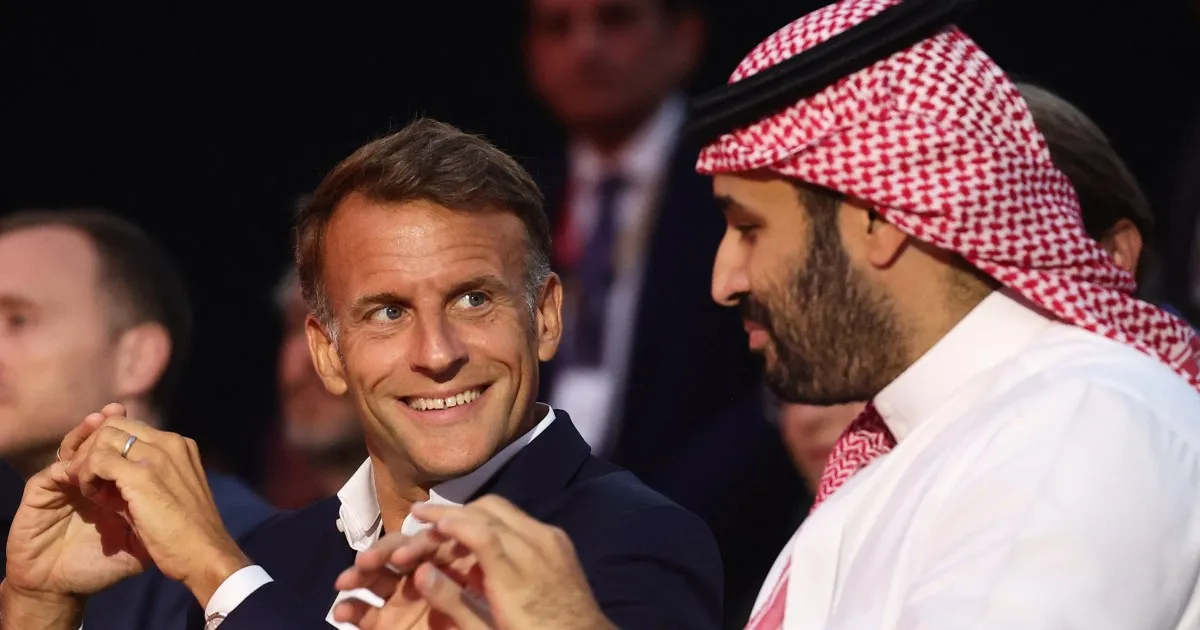
Saudi Arabia’s MBS visits Macron in France: What to expect
51 minutes ago
 World
World
How SMEs can grow internationally without opening local offices
56 minutes ago
 World
World
Iran vows to retaliate against countries that cooperate with fresh US sanctions
1 hour ago
 World
World
Opinion: When the world stops trusting us
2 hours ago
 World
World
Japanese lawmakers visit Beijing seeking to mend ties after fallout from Takaichi's Taiwan remark
2 hours ago
 World
World
Thousands endure 12 days without power in Gary, Indiana
3 hours ago