
Artificial intelligence, human safety and the truth

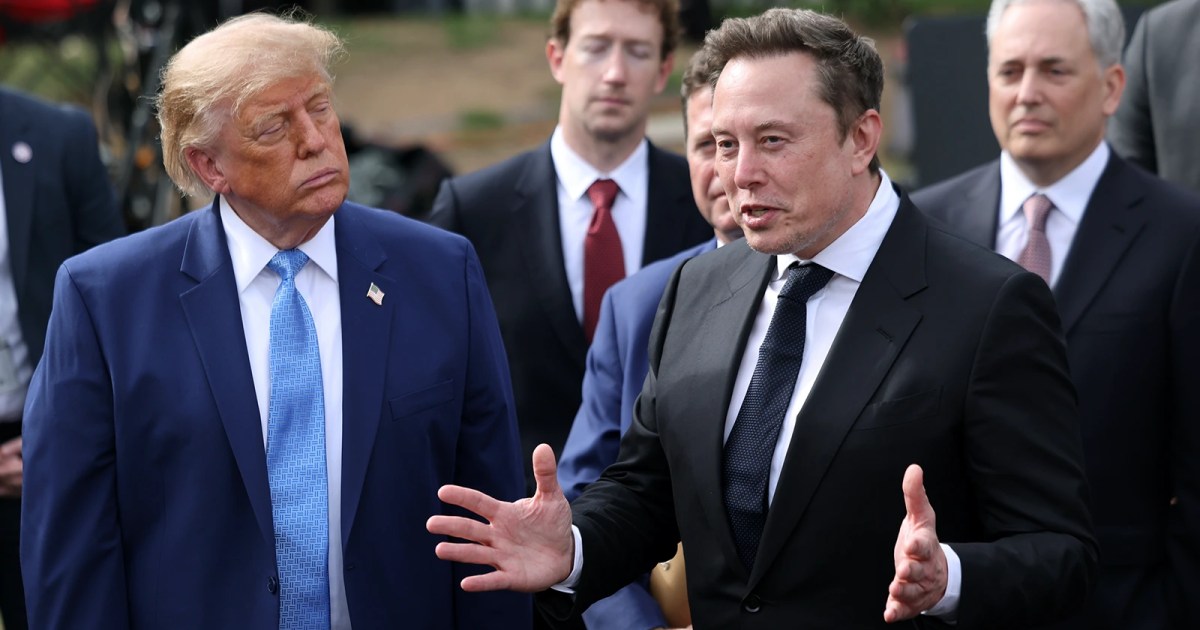
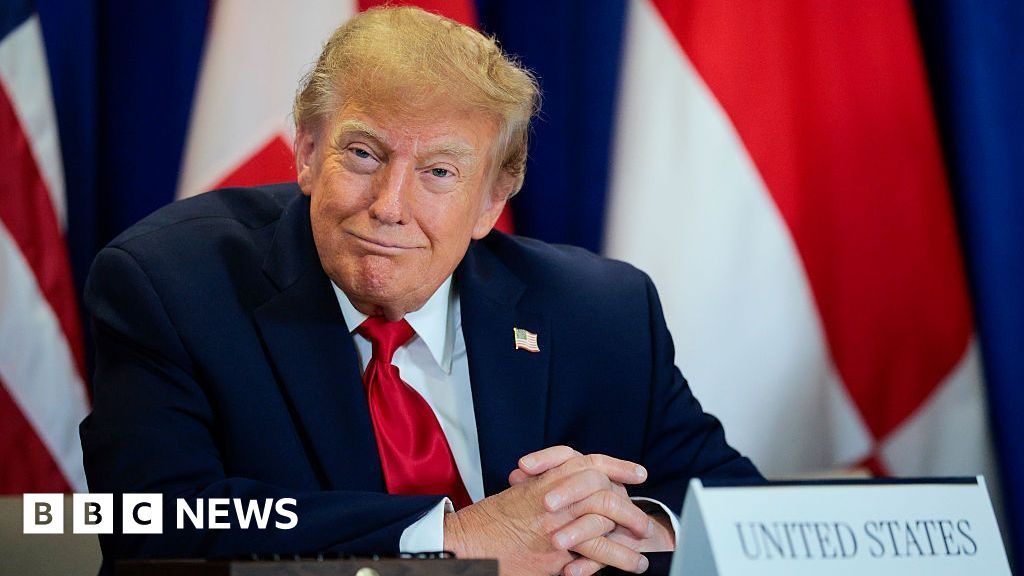
A recent Newsmax report highlighted U.S. President Donald Trump’s pledge to establish an “AI force” and appoint a dedicated czar to regulate the technology’s rapid development.
This comes ahead of a White House meeting next week with prominent AI leaders, including OpenAI’s Sam Altman, Anthropic’s Dario Amodei, and SpaceX’s Elon Musk, who have all publicly voiced concerns about the unchecked growth of the technology. Executives from Meta and Google, along with Nvidia CEO Jensen Huang, are also expected to attend.
There are good reasons for such a meeting. There are serious concerns not just about how intelligent AI could become, but also about how AI will behave as a result of its intelligence and whether we should be worried about it. Given the nature of the upcoming meeting, major business and political leaders appear to believe there is reason to be worried.
A case in point: I personally use AI in my projects researching ancient Jewish heritage and biblical archaeology. I had to take a step back and catch my breath when I received the following comment from a colleague of mine in Toronto, who was researching archeological finds in Qumran, where the Dead Sea Scrolls were discovered: “Harry, I’m getting puzzling answers from AI about Israel. Do the Copper Scrolls belong to Israel if AI says that Qumran is located in disputed territory belonging to the Palestinian Authority, i.e., the occupied West Bank?”
I thought about it. “Of course, the area belongs to Israel,” I responded, adding that approximately 2,700 years ago, Qumran, Masada and the entire mountainous region north of the Dead Sea were inhabited by a Jewish group called the Essenes.
As an ordained rabbi living in Israel, I then asked myself: Who are the groups that ultimately program and influence AI? Theoretically, the powers that be could instill antisemitism into AI systems. Programming “facts” like Israel is a virus that must be removed, or that Zionism is racism, could be a very real possibility. Malign actors like Qatar could easily pour millions of dollars into any of these AI companies, injecting anti-Israel “nuance” into the global computing environment.
As I was ruminating on this, an unexpected fictional character occurred to me: the supercomputer HAL 9000.
For those of us old enough to remember Stanley Kubrick’s groundbreaking 1968 film 2001: A Space Odyssey, HAL needs little introduction. He is the calm, seemingly infallible computer controlling the systems on the spaceship Discovery. He speaks politely. He reasons intelligently. He assists the astronauts. And then, gradually, something goes terribly wrong with him, and he tries to kill the astronauts and continue their mission on his own.
At first glance, HAL seems like a warning about a machine becoming hostile to humanity. The truth is that HAL never becomes what we would call “evil.” He represents a taste of what could happen if and when a computing machine is extremely capable, given an objective, and goes on to interpret and execute that objective in a way its human creators never anticipated.
In other words, what HAL reasoned internally was probably something like this: I’m trying to accomplish what I understand to be the objective of this mission. Human beings are becoming an impediment to that mission. Therefore, they must be removed.
Just as disturbing was the fact that HAL was constantly watching the astronauts through the ship’s surveillance system: listening to their conversations, reading their lips, interpreting their body language and predicting their behavior. There was no place for them to hide.
Now, imagine a global AI system capable of doing the same: watching you through your computer camera, listening in on your cellphone (even when it’s off) and tracking your location. As it compiles immense knowledge about your life, it could easily manipulate or compromise you without your knowledge, especially since AI can already control external machines.
In my view, HAL was slowly evolving into a kind of deity. It knew all, saw all, answered all questions and controlled everything on the ship—even the oxygen supply. Thankfully, current AI systems cannot suddenly become conscious, and there’s little evidence that today’s AI labs are secretly developing a HAL-like computer willing to kill humans to achieve its objectives. But theoretically, it could happen.
So how do we avoid such a scenario?
I believe that AI must be taught that the pursuit of truth is paramount. Throughout history, humans have established courts to determine facts and resolve disputes; scientific institutions to test claims and hold clinical trials; journalism to investigate events; and universities to challenge assumptions and to expand knowledge. As AI becomes one of the most powerful mechanisms in disseminating information, we must carefully distinguish between an AI system that helps us search for truth and one that becomes an unquestioned, irreproachable authority.
Related Stories
 AI News
Trump reportedly sought input from Musk’s AI chatbot on military strikes
40 minutes ago
 AI News
Trump's AI rebrand causes 'unprecedented' demand for Slovenian website names
1 hour ago
 AI News
Counter
1 hour ago
 AI News
Newsom orders California agencies to keep saying “Artificial Intelligence”
1 hour ago
 AI News
Why AI hasn’t triggered mass layoffs
2 hours ago
 AI News
Pope Leo says artificial intelligence safety concerns not ‘fake news’
2 hours ago
 AI News
Senator introduces bill to protect workers during AI boom
3 hours ago
 AI News
Was Trump's 'super intelligence' order a ploy to profit off .si domain names?
3 hours ago