
Arkansas: How Arkansas Caught a Case of Startup Fever

The Walton Family Foundation did everyone a huge favor when it recently published a report showing the relationship between entrepreneurship and economic success in Northwest Arkansas (NWA). When researchers compared NWA across peer regions, three things stood out:
To that end, the Arkansas Economic Development Commission is doubling down on support of entrepreneurs, innovation and startups. With programs like ARISE, Startup Junkie and Onward FX, startups have a better chance than ever to succeed in Arkansas.
Case in point is Uday Akkaraju, founder, CEO and chair of BOND.AI, a Little Rock-based firm that uses AI to help people make better financial decisions. Akkaraju says a key to his startup’s rise was his decision to move the company from New York to Little Rock.
“My message to other entrepreneurs is simple,” he says. “If you are not facing success in one city, you need to change. Identify a circle that supports you. Your circle is important to your success.”
Akkaraju found his circle in Arkansas. “When you are based outside the U.S., Silicon Valley is considered the place to be,” he says. “That is why the investors in my previous company were based there. But being located there made me realize that it’s hard to navigate your way out of a tough financial situation there. I wanted to start a company that could benefit everyone, and I wanted to do it in a place that was smaller and more cost-effective.”
“If you are not facing success in one city, you need to change.”
— Uday Akkaraju, Founder, CEO & Chair, BOND.AI
After relocating to New York to help a friend build an AI startup, Akkaraju was introduced to a banker in Little Rock. “I was a little apprehensive about moving to Arkansas at first,” he admits. “But everything happens for good. The first thing I noticed was the dramatically lower cost of living. It does not compare to California or New York. I grew up in a place that had a lot of people and a lot of pollution. When I moved to Arkansas, the first thing I noticed was all of the trees.”
Investment Pitch: 20 for 20He also found other things that enabled BOND.AI to grow in Arkansas: talent, community support and a state government that backs startups.
“When I moved my firm and my family to Little Rock, I was looking for talent,” says Akkaraju. “A lot of talent was here but with limited job opportunities. There were not a lot of jobs for tech people. That is when I met 20 investors through a 12-week accelerator program. All 20 invested in my venture. For me, raising money in Silicon Valley was very difficult. The success rate of startups there is very low. I was surprised that people wanted to take the risk here. They want the regional economy to grow. Everybody around us helped. That made me want to stay.”
Akkaraju is not an anomaly. In the Walton study on startups, researchers found that “the total number of businesses in Northwest Arkansas grew by 4.2% in 2023. This is higher than the state and national average and all but two of the aspirational regions — Raleigh and Durham, North Carolina. The business establishment growth rate for Northwest Arkansas increased from 2.8% in 2020 to 4.2% in 2023.”
Moreover, the business establishment growth rate in NWA doubled that of Provo, Utah (2.1%), and nearly quadrupled that of Austin, Texas (1.1%).
Walton researchers also found that “the number of young firms (less than 5 years old) in Northwest Arkansas grew even more. At 6.7% in 2021, the young firm growth rate was twice the growth rate of all businesses, suggesting that some of the overall growth in the region is driven by new firms. The growth rate of young firms in Northwest Arkansas outpaced the state and national averages and every aspirational region except one (Provo, Utah). The young firm growth rate for Northwest Arkansas increased from 4.9% in 2018 to 6.7% in 2021.”
By comparison, the average young firm growth rate in the U.S. was just 2.7%. The state of Arkansas as a whole recorded a young firm growth rate of 5.2% — nearly double the national rate.
Akkaraju says his firm’s central Arkansas location is a plus. “We’re right in the middle of the country,” he notes. “Traveling is not a problem. We have direct flights everywhere. And with ground travel in Arkansas, there is no traffic.”
Paying One-Third the RentThree other factors make a big difference for entrepreneurs, says Akkaraju: a highly affordable cost of living; reduced stress due to being located in a smaller city; and a quality of life that comes from having more time given back to you daily.
“An entrepreneur needs quality of life,” he says. “Being an entrepreneur is very stressful. It is a big responsibility, and that requires a life that offers peace and quiet and time. That is what I found in Arkansas.”
To quantify the effect of the move, Akkaraju notes that his monthly housing bill went from $6,000 in New York to $2,000 in Little Rock, “and that was for twice the space,” he says. “The spirit of entrepreneurship has increased here. I’ve seen other entrepreneurs move to Arkansas from Colorado and Florida.”
Arkansas needs to maintain this momentum, he adds. “Entrepreneurs are the backbone of the economy,” he says. “Sam Walton inspired the whole community. You won’t get a Sam Walton again, but each success story inspires another one. The enormous success that Northwest Arkansas has is due to Sam Walton and Walmart. That is why a mentorship network is so important.”
That is also why the Walton Family Foundation backs the growth of more startups statewide. As author Robert Fairlie, distinguished professor of public policy and economics at UCLA and research associate at the National Bureau of Economic Research, said, “The average annual cohort of 4.1 million startups in the U.S. creates 3 million jobs in the first year after startup and employs 2.6 million workers 5 years later. Without these jobs, net job creation would be negative as older businesses lose jobs on average. Net job creation for all other firms is negative in every year, averaging 1.9 million job losses per year.”
In other words, without this supply of new startups, the U.S. economy would decline, and it would be a fast fall.
Related Stories
 Business
Robot factories and hypersonic missiles: JPMorgan Chase’s first $5 billion of defense investments
3 days ago
 Business
Police say a car has hit an Australian lawmaker, critically injuring her; the driver was arrested
3 days ago
 Business
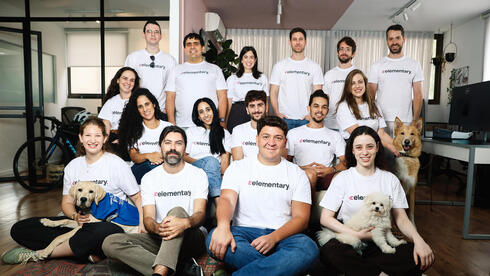
Boomi acquires Israeli startup Elementary for $43 million
3 days ago
 Business
Mega chicken farm expansion plan withdrawn
3 days ago
 Business
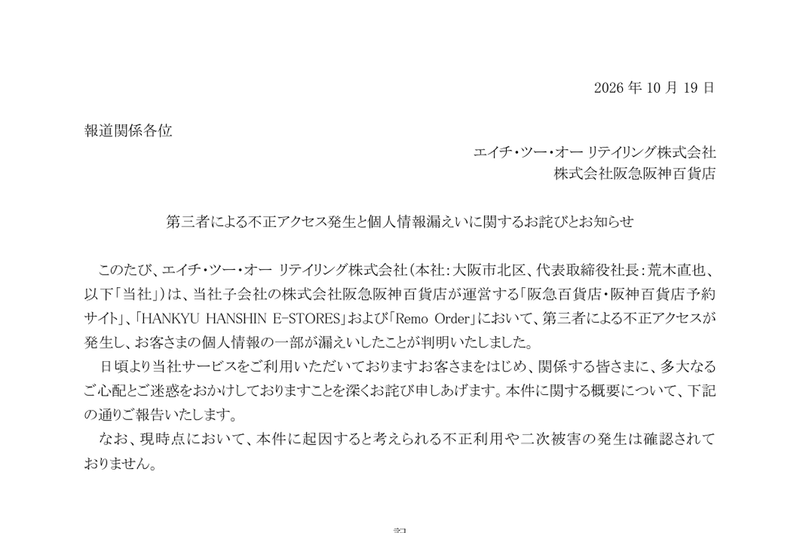
Data Breach at Hankyu Hanshin Department Store Common ID System Affects Nearly All 1.26 Million Members
3 days ago
 Business
Global Startup EXPO and Nippon Startup Awards 2026: METI Showcases Japan's Deep
3 days ago
 Business
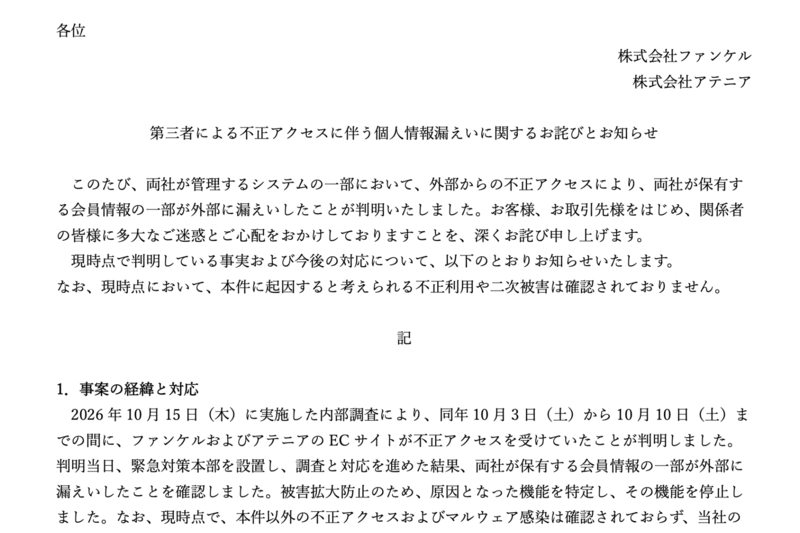
FANCL and Attenir Suffer Data Breach Affecting 780,000 Customers, Exposing Addresses, Names, Phone Numbers
3 days ago
 Business
DeepSeek Quietly Ships V4.1-Flash
3 days ago