
ANTITRUST NEWS: McDonald's sued for anticompetive use of artificial intelligence

By Kenneth H. Ryesky, M.B.A., J.D.
McDonalds president insisted that the $18 "Big Mac" at a Darien, Connecticut franchise was an outlier exception to the average price of $5.29.
A putative class action complaint has been filed in the federal district court of the Northern District of I ...
A putative class action complaint has been filed in the federal district court of the Northern District of Illinois alleging that the McDonald's restaurant chain coercively uses a pricing tool driven by artificial intelligence that results in the individual fast food restaurants, which are supposed to compete with one another by independently setting their own prices, effectively charging supracompetitive prices. The plaintiff is an individual who regularly eats at various McDonald's restaurants (Thomas v. McDonald’s USA, LLC, No. 1:26-cv-12149 (N.D. Ill. Oct. 2, 2026)).
Background. From a single restaurant founded in 1940 in San Bernardino, California, the now-iconic McDonald's fast food restaurant has evolved into one of the most recognizable brands in the world. Approximately 95 percent of its more than 45,000 individual McDonald's restaurants worldwide are franchise operations. The McDonald's corporate structure entails the parent McDonald's Corporation, its wholly-owned subsidiary McDonald's USA, LLC, (hereinafter, collectively referred to as McDonalds) as well as various subsidiary McDonald’s Operating Companies (McOpCos) that own and operate the approximately five percent of the individual restaurants not subject to a franchise agreement. The McDonald's restaurants serve an estimated 69 million customers worldwide every day.
One of those customers (Thomas), who frequently avails himself of fast food at the various McDonald's restaurants near his home, has filed a putative class action lawsuit against McDonalds, alleging that McDonalds illegally uses an artificial intelligence (AI) driven algorithmic pricing tool. While naming only the top parent McDonalds business entities as defendants, the complaint also alleges unnamed corporate and individual co-conspirators, including franchisees and McOpCos, who knowingly participate in the anticompetitive and unfair practices complained of. In the complaint, Thomas alleges that he "has paid different pricing for the same menu items at stores in close proximity and has suffered antitrust injury by paying supracompetitive prices for menu items at McDonald’s restaurants due to McDonald’s algorithmic price-fixing tool."
The pricing tool. In 2019, McDonalds acquired AI company Dynamic Yield (which McDonalds subsequently sold to MasterCard); McDonalds touted its acquisition of Dynamic Yield as an opportunity to "leverage knowledge of the customer and order patterns to provide a tailored experience in restaurants." McDonalds designed and developed its AI platform to gather and process global pricing data while McDonalds controlled Dynamic Yield, and used the platform to recommend pricing for the individual restaurants.
Even as it used its AI platform for price "recommendations," McDonalds has continued to insist, in its standard franchise agreements, franchise disclosure documents (FDDs), government filings, and public pronouncements that its individual restaurants (1) independently set their own prices; (2) compete with one another; and (3) are not agents of McDonalds.
The complaint asserts that notwithstanding its public and private statements to the effect that franchisees, not McDonald’s, set their own menu prices, McDonald’s has taken steps to coordinate the sharing of nonpublic pricing information among horizontal competitor restaurants and to pressure franchisees to set prices in accordance with its algorithmic pricing tool. Further, most recent McDonald’s Franchise Disclosure Document (FDD) requires franchisees to pool their data using a required and proprietary point-of-sale system. The FDD also advises franchisees of an annual fee for use of its “Pricing Engine.” McDonald’s lists the fee as optional, but in fact, franchises are expected to use it, according to the suit.
The complaint alleges that McDonalds pressures its individual restaurants to use the pooled data in its AI pricing platform in setting their prices to customers. Even prior to making the use of the pricing tools by the restaurants mandatory in January 2026, McDonalds tracked franchisees' deviations from the pricing tool suggestions and conditioned franchise renewal on implementation of the platform's pricing "suggestions."
The McDonald’s price-fixing scheme has resulted in raised prices for consumers at all McDonald’s restaurants. The higher prices are based on pooled nonpublic data used anticompetitively to increase revenues.
The statutory allegations. Thomas's complaint alleges that the use of the McDonalds artificial intelligence (AI) driven algorithmic pricing tool by McDonalds and its McOpCos violates (1) the Sherman Act [15 U.S.C. § 1]; (2) the Illinois Antitrust Act [740 ILCS 10/1, et seq.]; and (3) the Illinois Consumer Fraud and Deceptive Business Practices Act [815 ILCS 505/1, et seq.].
The two Sherman Act counts allege (1) a general conspiracy of "continuing contract, combination, or conspiracy to fix, raise, maintain, and stabilize the prices of menu items sold at McDonald’s restaurants in the United States by agreeing to price through a common algorithm using pooled competitor data and to adhere to its outputs" and (2) an illegal data exchange which "was not a freestanding sharing of nonpublic information, but the mechanism through which Defendants and their co-conspirators fixed prices. Each participant contributed its current, granular, nonpublic, store- and item-level sales and pricing data to a common engine."
Specifically, the information exchange count alleges:
This data exchange was not a freestanding sharing of nonpublic information, but the mechanism through which Defendants and their co-conspirators fixed prices. Each participant contributed its current, granular, nonpublic, store- and item-level sales and pricing data to a common engine. Each did so knowing that its direct competitors—other franchisees and McOpCos—were contributing their data to the same engine and receiving prices generated from the pooled data. Each agreed to use the engine’s outputs to set its own prices rather than pricing independently. The engine applied rules, such as the 30% rule, that conditioned one restaurant’s price increases on increases at competing restaurants. The exchange was therefore an agreement among horizontal competitors to fix, raise, and stabilize prices, and it is unlawful per se.
Attorneys: Derek Yeats Brandt (Clarkson Law Firm, PC) for Michael Thomas.
MainStory: TopStory Antitrust FranchisingDistribution IllinoisNews AINews GCNNews
Related Stories
 AI News
HPE supercharges ProLiant servers with AMD’s EPYC 9006 processors
8 minutes ago
 AI News
How Packaging Engineers Can Unlock AI’s Superpowers
9 minutes ago
 AI News
Anthropic is giving startups a free year of Claude Team and $1,000 in credits
1 hour ago
 AI News
Few CHROs say they feel very confident they can manage AI
1 hour ago
 AI News
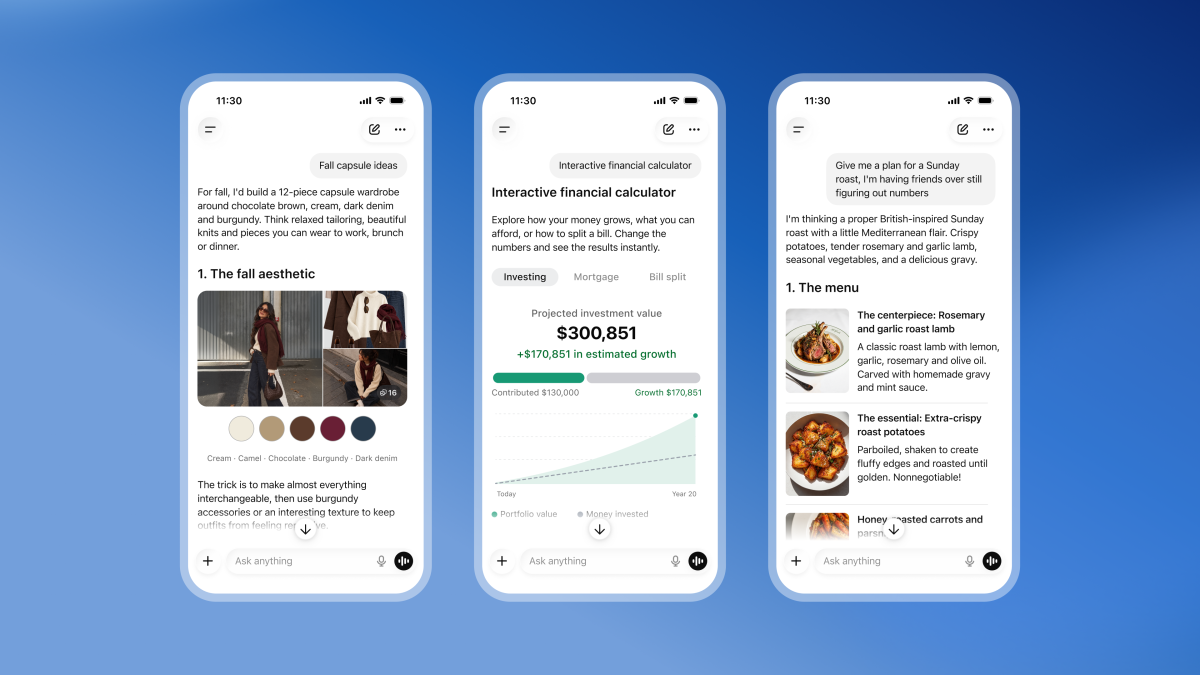
ChatGPT is getting a lot more visual, with the launch of a new interface
1 hour ago
 AI News
Manjeet Rege Publishes Two Books on Artificial Intelligence
1 hour ago
 AI News
Bell Canada plans to purchase 895 acres to expand AI data centre outside Regina
2 hours ago
 AI News
Discovering the value of humanistic inquiry
2 hours ago