
Anthropic says Trump admin has lifted export controls on Claude Fable 5 and Mythos 5
Anthropic said on Tuesday that the U.S. Department of Commerce has lifted export controls on its Claude Fable 5 and Mythos 5 models, ending the latest dramatic standoff between the artificial intelligence company and the Trump administration.
"We're grateful to our users for their patience, and to everyone who worked with us on redeploying the models," Anthropic said in a post on X.
Anthropic disabled access to Fable 5 and Mythos 5 in mid-June in order to comply with an export control directive from the government that cited "national security authorities." The company said it was told to suspend all access "by any foreign national, whether inside or outside the United States, including foreign national Anthropic employees."
Fable 5 will again be available to global users on the Claude platform, Claude.AI, and Claude Code starting Wednesday, according to a statement by the company.
The AI model will also be included for up to 50% of weekly usage limits through July 7 for users of the Pro, Max, Team, as well as selected enterprise plans, the company said.
Anthropic also said it has restored access to Mythos 5 for some U.S. organizations, following government approval granted on June 26. It will also continue to work with the U.S. government to expand access to Mythos 5 for more domestic and international partners through its Glasswing program, its cybersecurity initiative that provides selected organizations with access to advanced AI models for defensive security testing.
Anthropic will also re-enable access to Fable 5 on Amazon Web Services, Google Cloud and Microsoft Foundry as soon as possible.
The government's crackdown on Anthropic coincided with a swift rise in Chinese open-source models that are proving to be almost as capable and significantly cheaper than some of the most powerful U.S. models. With the Trump administration limiting Anthropic's rollout of its latest models, a number of tech executives and investors raised concern that Chinese developers were being gifted valuable time in their effort to catch up.
Tuesday's announcement comes just days after U.S. Commerce Secretary Howard Lutnick gave Anthropic permission to release Mythos 5 to a select group of companies and federal agencies. In a letter to the company that was viewed by CNBC, Lutnick said he had determined that "appropriate safeguards" were in place to permit certain "trusted partners" to access the model.
"Over the past two weeks, we have worked closely with Anthropic to analyze and approve Fable 5 to ensure alignment across the US Government and strengthen America's leadership in AI," Lutnick wrote in a post on X on Tuesday.
Days before the export control, Anthropic launched the models, touting them as state-of-the-art across a number of different industry benchmarks. Fable 5, in particular, marked the first time that Anthropic released such an advanced offering to the public.
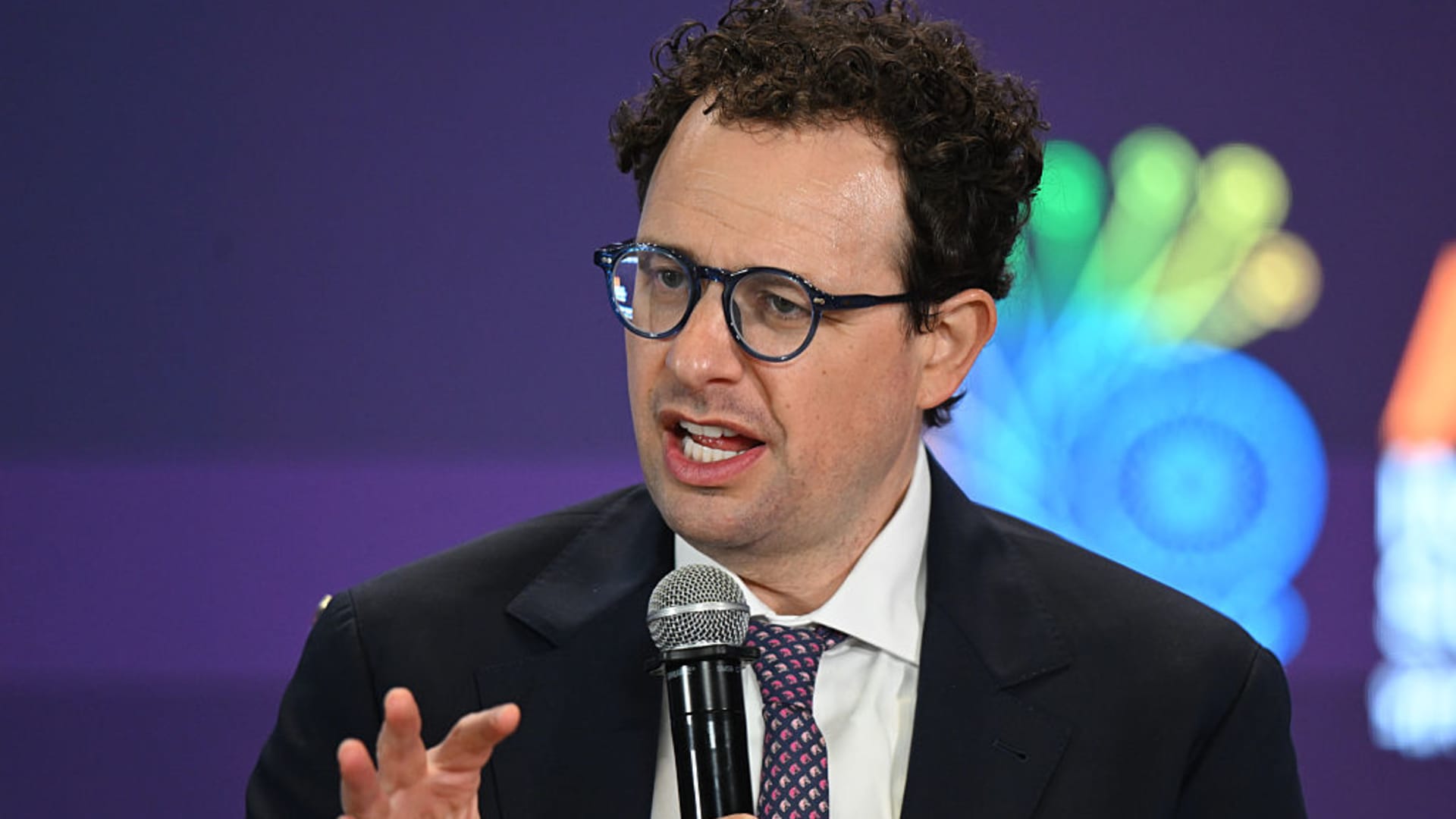
The company, which has been at loggerheads with the White House much of this year, rushed to Washington, D.C., to negotiate with the Trump administration after it received the export control directive on June 12. Anthropic has remained tight-lipped in the weeks following, sharing minimal public updates about the state of the talks.Tom Brown, an Anthropic co-founder, reportedly took the lead in negotiations with the Trump administration, replacing Anthropic CEO Dario Amodei in that role. Amodei has been a target of the administration for his outspoken views on AI safety and because he was a vocal supporter of Kamala Harris in the 2024 presidential election.Lutnick's letter on Friday was addressed to Brown, not Amodei.
The incident has caused confusion across the AI industry, as leaders say they're in the dark about the government's regulatory pursuits and aren't sure who is calling the shots or influencing the president, especially since David Sacks vacated the role of crypto and AI czar earlier in the year.
The administration has signaled that it will take a more active role in AI regulation, with President Donald Trump signing an AI executive order in early June. The order, which was light on specific details, asked AI developers to voluntarily submit their models to the government to assess their capabilities ahead of a full release. It gave federal agencies 60 days to establish the relevant frameworks and processes.
That's been challenging for AI companies, including OpenAI, that have tried to carry out model launches in the interim,
On Friday, OpenAI announced three new models and said it's complying with the government's request to initially limit the rollout to a "small group of trusted partners." OpenAI said it previewed the capabilities of the models, including GPT-5.6, and shared its plans with the government ahead of Friday's launch.
"We don't believe this kind of government access process should become the long-term default," OpenAI said in Friday's post. "It keeps the best tools from users, developers, enterprises, cyber defenders, and global partners who need them."
WATCH: Why OpenAI and Anthropic may be rushing to IPO amid fears of AI premium fading
— CNBC's Justina Lee contributed to this story.
Related Stories
 AI News
A startup founded by ex
57 minutes ago
 AI News
Exploited Data Workers in the Global South Are “the Secret Ingredient of AI Itself”
57 minutes ago
 AI News
UK risks falling behind in AI race without faster telecoms upgrades, say executives
3 hours ago
 AI News
Sharp rise in incidents of AI escaping users’ control, research finds
3 hours ago
 AI News
Russia Now Using Fully AI
4 hours ago
 AI News
Bay Area Nurses Protest Use of Palantir’s AI Tech at Hospitals
6 hours ago
 AI News
64 percent of online shoppers are using AI to help find products, study shows
7 hours ago
 AI News
Federal judge rules for Anthropic in Pentagon dispute, nullifies government supply chain risk designation
7 hours ago