
Ancestral vs. Artificial Intelligence
Ancestral vs. artificial intelligence
AI Church Summit highlights Indigenous nations taking action against data centers
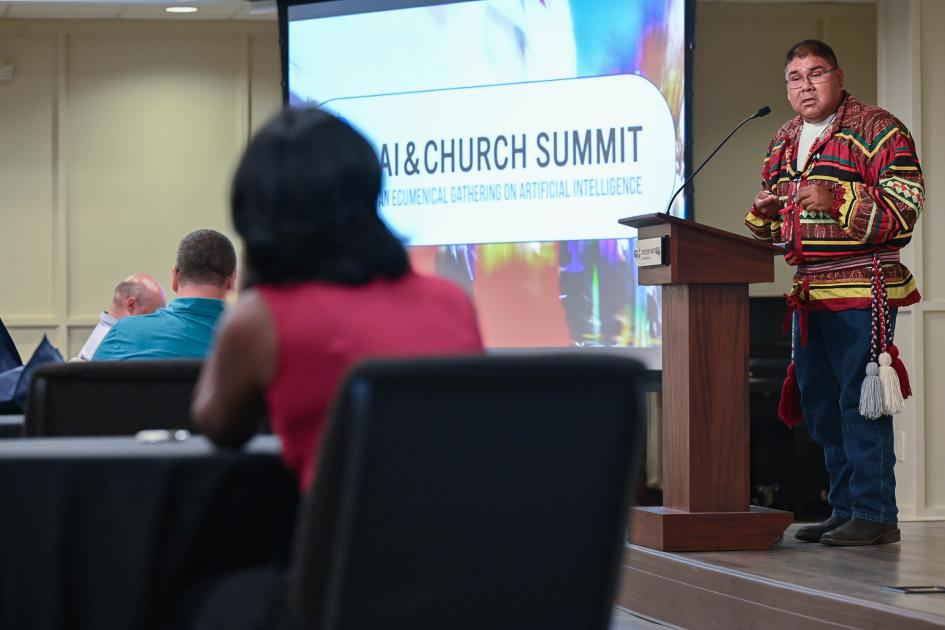
NASHVILLE, Tennessee — “I believe in AI,” the Rev. Chebon Kernell, executive director of the Native American Comprehensive Plan of the United Methodist Church, told church leaders gathered for the opening plenary of the 2026 AI & Church Summit from Aug. 24-28. Then he offered a different definition: “I believe in ancestral intelligence.”
Minutes before Kernell addressed the crowd, organizers of the third annual AI & Church Summit shared survey responses from this year's registrants expressing both curiosity and concern about artificial intelligence. “It can save time, but at what cost?” one respondent wrote.
Another warned, “I don't want to lose the human soul to AI.” Those tensions framed the opening session of the ecumenical gathering in Nashville, where approximately 50 church leaders participated in person alongside additional online attendees.
Over four days, participants would explore artificial intelligence and how it helps or hinders ministry and human agency. Organizers began not with presentations about AI’s capabilities, but with Indigenous leaders describing the impacts of the infrastructure needed to support it, laying the groundwork for those practicing ancient wisdom traditions like Christianity to consider how to preserve ancestral wisdom in the midst of exponential growth of artificial models of intelligence.
The Rev. Dr. Scott Hughes, associate general secretary of Discipleship Ministries for the United Methodist Church, invited participants to remain open to perspectives that might challenge their assumptions. “Over the next few days, we're going to get to hear from a variety of perspectives,” Hughes said. “We're going to hear things that might make you really excited, and you're probably going to hear some things that may make you scratch your head or ponder. Either way, I want to invite you to take on the posture of curiosity.”
“This is what you, online and in person, have said about your engagement with AI,” Hughes said when sharing results from a pre-summit survey: “The first one you'll see here is 61% use AI regularly or have integrated it into their work or ministry.” He reported that roughly 74% of attendees described themselves as either excited about AI or cautiously supportive. The most common uses involved writing, editing, communication and administrative work, while pastoral care ranked lowest among reported uses. Hughes summarized five themes emerging from the survey: AI is a useful assistant but should not replace human ministry; administrative uses are broadly accepted; ethical discernment is essential; AI creates tension between efficiency and authenticity; and AI is becoming increasingly difficult to avoid.
To ground the conversation theologically, Hughes cited Pope Leo’s encyclical on artificial intelligence: “We cannot endorse naive enthusiasm, nor can we feed groundless fears,” Hughes read. Instead, he pointed participants toward discernment rooted in “the dignity of the human person,” care for “the universal destination of the Earth’s goods,” stewardship of Creation and concern for society’s most vulnerable people.
The summit’s first keynote came from Mackenzie Roberts, a Muscogee grassroots organizer and coordinator of the Stop Data Colonialism Coalition. Roberts described how community members in Muscogee Nation organized against a proposal to rezone 5,500 acres of agricultural land for a technology park that could have included hyperscale data centers.
“The biggest reason why we oppose this is because the parcel of land that they were wanting to rezone is called Looped Square Ranch,” Roberts said. “It is our only and leading food sovereignty initiative in the entirety of Muscogee Nation.”
After months of town halls, organizing and advocacy, tribal representatives rejected the proposal. Roberts said the experience became part of a broader effort opposing what organizers call “data colonialism,” a movement linking data-center expansion to concerns about land use, water consumption, resource extraction and impacts on local communities.
Throughout her presentation, Roberts distinguished between long-established data infrastructure, artificial intelligence broadly and the recent explosion of hyperscale data centers supporting generative AI. She noted that data centers have existed for decades, but argued that the rapid expansion now occurring in Indigenous and rural communities is being driven largely by demand for generative AI systems. That distinction, she said, shapes both her advocacy for Indigenous lands and her advice that individuals resist what she views as the most environmentally and socially damaging forms of AI use.
“The cost is our land. The cost is our common home,” Roberts said. “The cost is our souls. The cost is our humanity. The cost is the community, the connections that we make.”
Kernell, the second speaker, is an ordained elder in the Oklahoma Indian Missionary Conference and a citizen of the Seminole Nation of Oklahoma with Muscogee heritage. According to Hughes, who introduced him, Kernell has spent decades working in Indigenous ministry, environmental advocacy and Native American community empowerment. Hughes also noted Kernell’s leadership in reconciliation efforts and his national recognition for advancing understanding of Indigenous spiritual traditions. Kernell further explained that he serves Indigenous communities through tribal leadership roles and international ecumenical work.
Throughout his remarks, Kernell argued that artificial intelligence and hyperscale data centers should be understood within a much longer history of capitalism and colonialism, in which mainline Christianity has been complicit. “What we're seeing today is just the next chapter in a long history of extraction, of manipulation, of stealing, of taking Indigenous ways of life and existence,” Kernell said.
He linked current debates about AI to centuries of resource extraction affecting Indigenous peoples. Contrasting celebrations of the United States’ 250th anniversary with the much longer history of Indigenous stewardship, Kernell noted that Muscogee ancestors have lived on this continent for millennia through practices that sustain ecosystems and honor the Earth. “Our way of life has existed here. It has thrived here. It has allowed life to take place here for generation after generation,” he said.
Kernell also warned that the risks of AI extend beyond environmental concerns. Recalling a demonstration of an Indigenous language chatbot, he said he was troubled by a conversation in which participants celebrated learning a Native language through a robot. What disturbed him most was hearing a participant suggest they would rather speak with a robot than learn from a grandmother.
For Kernell, preserving language is about more than transmitting information. Learning human language is about relationships, memory, community and the passing on of wisdom about lived experience from one generation to the next. The erasure of Indigenous language echoes the potential endangerment of human creative thought under generative AI.
“Nothing should ever take the place of the organic miracle that life is,” he said, framing human presence as a sacred gift not a technical problem to be optimized. “To think that you and I can look at each other eye to eye and face to face and see one another,” Kernell told those gathered in the room, before letting a long pause fall upon the ears that would hear his message of incarnational understanding.
When considering what can be done to preserve ancestral ways of living, Kernell described how the Seminole Nation adopted a moratorium on engaging in data-center development related to generative AI. He said coalition members later told him it was the first such moratorium adopted by an Indigenous nation. He also pointed to what he described as a growing movement of resistance among Indigenous communities, students and activists concerned about AI’s impacts.
As the session concluded, both speakers insisted that adoption of AI remains a matter of choice and discernment rather than inevitability. “You have agency, and you can practice that discernment that God has given us,” Roberts said.
Asked whether there was any form of artificial intelligence he would support, Kernell drew a sharp distinction between generative AI and what he called ancestral wisdom. After describing the AI of “ancestral intelligence” from Indigenous teachings that preserve language, culture, biodiversity, spiritual traditions and community relationships, he answered simply: “All I know is that the end of the spectrum that I sit on protects life. It protects our well-being. Has always protected our well-being.”
You may freely reuse and distribute this article in its entirety for non-commercial purposes in any medium. Please include author attribution, photography credits, and a link to the original article. This work is licensed under a Creative Commons Attribution-NonCommercial-NoDeratives 4.0 International License.
Related Stories
 AI News
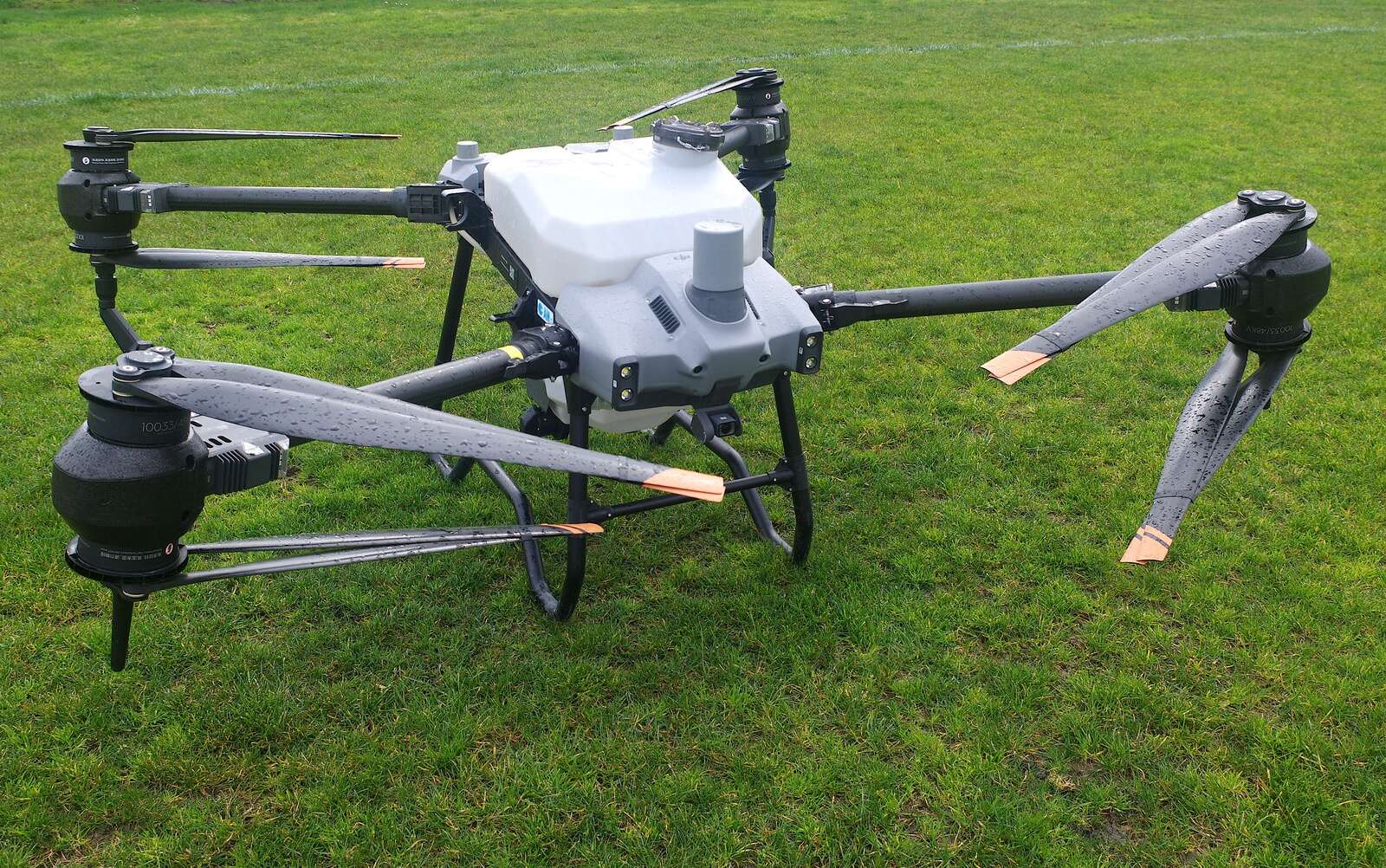
New AI technology to help farmers monitor and manage assets
43 minutes ago
 AI News
Students turn to AI as physics searches decline worldwide
43 minutes ago
 AI News
Hackers Target Claude Accounts With Malware That Steals Login Sessions
43 minutes ago
 AI News
Connect an AgentCore Runtime hosted MCP server to Amazon Quick
43 minutes ago
 AI News
Anthropic’s Claude: What You Need to Know About This AI Tool
1 hour ago
 AI News
AWS recognized as a Leader in The Forrester Wave: AI Infrastructure Solutions, Q4 2025
1 hour ago
 AI News
Apple’s New CEO Inherits an AI Strategy Built on Outsiders
2 hours ago
 AI News
House Intelligence Committee warns of 'Black Swan' AI risks
2 hours ago