
New AI technology to help farmers monitor and manage assets
New AI technology to help farmers monitor and manage assets
Charles Sturt University researchers have developed artificial intelligence (AI) technology that could assist Australia’s 80,000 farming enterprises which face challenges in monitoring and managing their assets in real time.
Hold tight - we’re checking permissions before loading more content
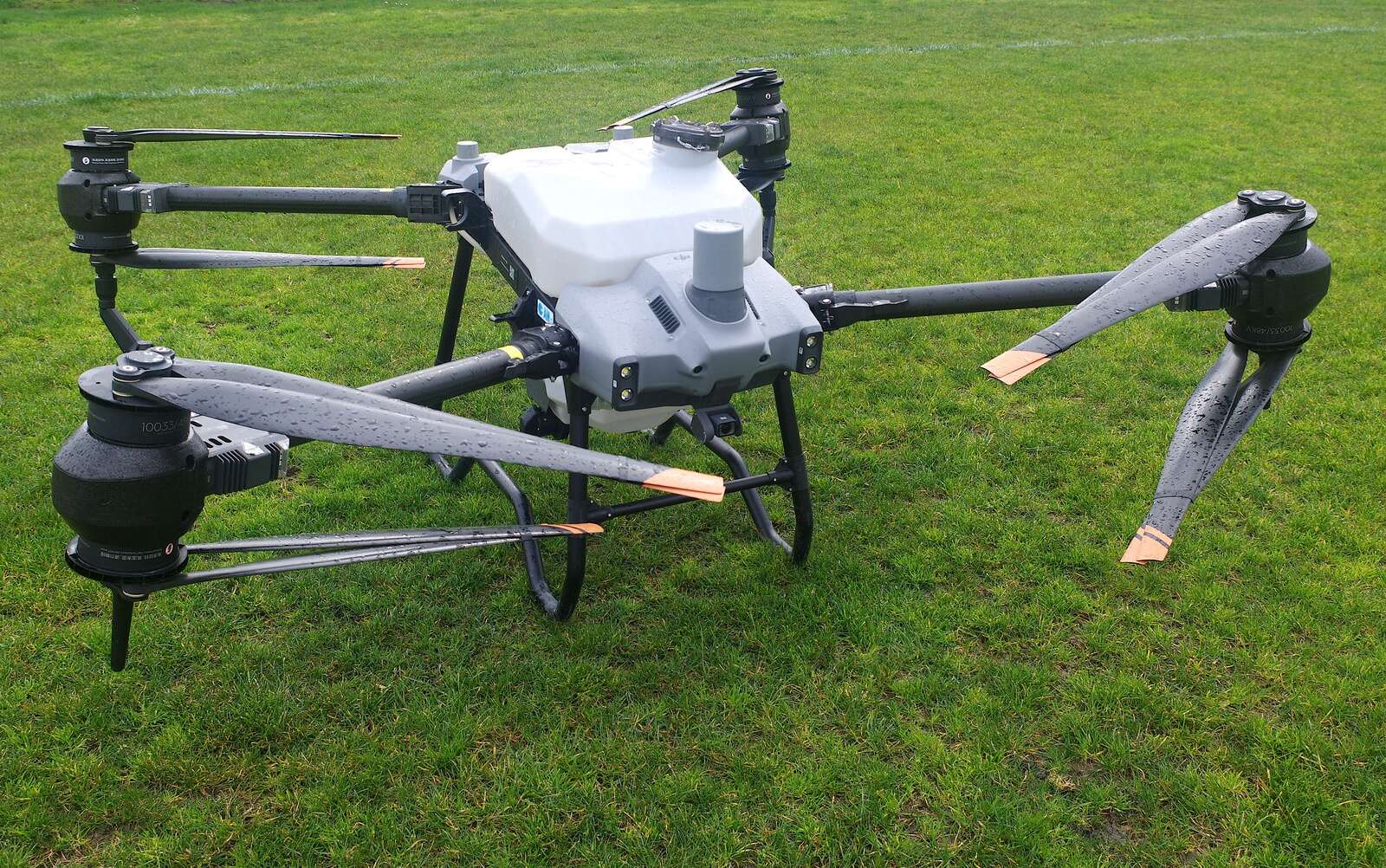
An AI-powered drone, called SkyEye, performs crop and livestock inspections which are analysed by AI to detect crop stress, weeds, pests and irrigation risks.
The idea was developed by Lihong Zheng, Professor in Computing at Charles Sturt University.
She got the idea for SkyEye while working on another research project for the former federal Department of Agriculture, Water and Environment.
"Many farms are too vast to inspect by hand. One farmer may manage thousands of hectares and checking it all costs time and fuel," Professor Zheng said.
"Data helps but it is often too delayed or scattered to act on. That is where SkyEye comes in."
SkyEye’s AI technology analyses video and images captured by the drone for soil fertility and moisture levels, pest and disease detection and livestock tracking.
The AI tool detects patterns and relationships in the imagery and makes recommendations to farmers, including how they can optimise the use of fertilisers and pesticides, predict yield and monitor livestock wellbeing.
SkyEye can provide live alerts and insights through an easy-to-use dashboard to help farmers make timely decisions.
Prof Zheng said SkyEye could have wide applications across Australia’s agriculture industry, which is set to make more than $100 billion this year through livestock, broadacre cropping and horticulture.
"SkyEye helps farmers make informed decisions,” Prof Zheng said
“It can optimise the use of water, fertilisers, pesticides, fuel and labour, reduce operational costs, improve productivity, and identify issues early to maximise yields.”
Related Stories
 AI News
Mainframe shops tap AI for system insights and recommendations
32 minutes ago
 AI News
OpenAI Brings Epic Health Records to ChatGPT for Clinicians
1 hour ago
 AI News
Pythian’s AI Model Via Google Gemini Drives ‘Million
1 hour ago
 AI News
The latest AI news we announced in August 2026
1 hour ago
 AI News
Pentagon official overseeing military AI sold millions worth of stock in AI firm
3 hours ago
 AI News
Anthropic Ships Claude Fable 5.1, More Than Doubling Its Predecessor on Key Benchmark
3 hours ago
 AI News
:Claude: Fable 5.1 and Mythos 5.1
4 hours ago
 AI News
OpenAI to launch new model with ‘stronger safeguards’ after hack
4 hours ago