
AI Is Reshaping Electricity Markets Faster Than Utilities Expected
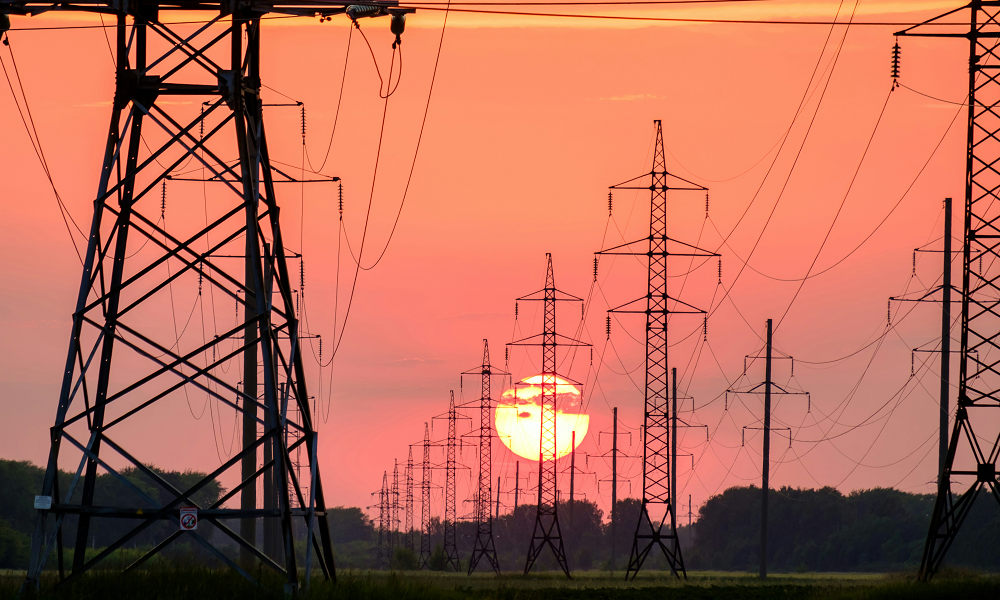
Artificial intelligence has quickly become one of the defining technologies of this decade. While much of the public discussion has focused on generative AI, productivity tools, and customer service applications, a quieter transformation is taking place across the global electricity sector. Utilities, Independent System Operators (ISOs), grid operators, and large industrial energy users are increasingly adopting artificial intelligence to solve one of the industry’s most pressing challenges: managing increasingly complex electricity systems in real time.
At the same time, AI is creating an entirely new challenge. The rapid expansion of AI-driven data centres is significantly increasing electricity demand across North America, Europe, and Asia. According to the International Energy Agency, electricity consumption from data centres is expected to grow substantially over the coming years as artificial intelligence workloads continue to expand. Utilities now find themselves in a unique position where AI is both increasing demand for electricity and providing the tools needed to manage that demand more effectively.
This convergence is reshaping electricity markets faster than many industry observers anticipated. Organizations that understand how artificial intelligence is changing forecasting, operations, market participation, and system reliability will be better positioned to navigate the next generation of energy markets.
Electricity Systems Are Becoming More Difficult to Manage
Power systems were traditionally designed around predictable patterns. Utilities could estimate demand based on historical trends, generation followed relatively stable schedules, and operators had sufficient time to respond to changing conditions.
Today’s electricity system looks very different.
Renewable generation continues to expand, introducing greater variability into electricity supply. Electric vehicles create new demand patterns throughout the day. Battery energy storage systems are changing how electricity is dispatched. Large industrial facilities are participating in demand response programs, while distributed energy resources allow consumers to generate and manage electricity locally.
Layer artificial intelligence data centres onto that environment, and forecasting becomes considerably more complicated.
Every additional variable increases the amount of information that operators must evaluate. Human expertise remains indispensable, but modern electricity systems increasingly require technologies capable of analyzing thousands of data points simultaneously.
Artificial Intelligence Is Improving Grid Visibility
Artificial intelligence excels at identifying patterns across massive datasets.
Electricity markets generate enormous quantities of operational information every minute. Weather forecasts, renewable generation output, electricity demand, transmission congestion, market prices, asset performance, and equipment telemetry all influence how electricity systems operate.
Rather than reviewing these variables independently, AI platforms can evaluate relationships between them in real time.
Utilities are increasingly deploying machine learning models to improve short-term load forecasting, predict renewable generation, identify equipment anomalies, and optimize maintenance schedules. Independent System Operators are expanding the use of advanced analytics to improve market visibility and support more informed operational decisions.
This does not eliminate the role of experienced operators. Instead, artificial intelligence enhances human decision-making by providing better situational awareness and faster access to actionable insights.
Forecasting Is Becoming a Strategic Advantage
Accurate forecasting has always been valuable in electricity markets. Artificial intelligence is making it dramatically more powerful.
Traditional forecasting models often relied heavily on historical averages combined with weather predictions. Modern AI systems can incorporate significantly more variables, including satellite imagery, localized weather conditions, production schedules, market behavior, renewable generation forecasts, historical consumption patterns, and equipment performance.
The result is greater forecasting accuracy across multiple operational time horizons.
For utilities, improved forecasts support more efficient dispatch decisions and better system planning. For industrial organizations, accurate forecasts improve budgeting, production scheduling, and participation in electricity markets.
Forecasting is no longer simply an operational function. It has become a strategic capability.
AI Is Changing Industrial Energy Management
The impact of artificial intelligence extends well beyond utilities.
Large commercial and industrial organizations increasingly rely on AI to optimize electricity consumption while maintaining operational performance. Manufacturing facilities, hospitals, universities, mining operations, and commercial real estate portfolios are integrating operational data with electricity market information to improve energy decision-making.
Instead of reacting to electricity invoices after costs have already been incurred, organizations are beginning to anticipate changing market conditions throughout the day.
Artificial intelligence can recommend when flexible equipment should operate, identify opportunities to reduce peak demand, forecast facility electricity consumption, and optimize battery dispatch without affecting production objectives.
Organizations seeking deeper operational insight frequently supplement internal analytics with external market intelligence, including resources that provide IESO power data and broader electricity market information to improve forecasting accuracy and operational planning.
A Fictional Example Reflecting an Industry Shift
Consider a fictional advanced manufacturing company operating facilities across Ontario and the U.S. Midwest.
Historically, each plant managed electricity independently using monthly consumption reports and historical utility data. Rising electricity costs, greater market volatility, and increasingly ambitious sustainability targets prompted leadership to reconsider its approach.
The company implemented an artificial intelligence platform capable of integrating production schedules, weather forecasts, electricity prices, equipment telemetry, and operational constraints into a centralized decision-support system.
Instead of simply monitoring electricity consumption, the platform continuously evaluated operational alternatives throughout the day. Selected manufacturing processes were shifted to periods of lower system demand, battery storage assets were dispatched more strategically, and maintenance schedules were adjusted using predictive analytics.
Within the first year, leadership reported improved forecasting accuracy, greater operational flexibility, lower exposure to volatile pricing events, and more consistent progress toward sustainability objectives.
Although fictional, this example reflects the direction many organizations are taking as electricity markets become increasingly dynamic.
Perhaps the most visible impact of artificial intelligence on electricity markets is the rapid expansion of data centres.
Cloud computing, AI model training, and high-performance computing require enormous quantities of reliable electricity. Utilities around the world are receiving requests to connect increasingly large facilities to their transmission systems, often within aggressive development timelines.
Meeting this demand requires careful planning.
Grid operators must evaluate generation adequacy, transmission capacity, interconnection timelines, and long-term infrastructure investment while maintaining system reliability for existing customers.
Ironically, many of these planning activities are themselves becoming increasingly dependent on artificial intelligence.
AI is helping utilities forecast future demand growth, evaluate infrastructure scenarios, identify transmission constraints, and optimize investment priorities.
Market Intelligence Will Become Even More Valuable
As electricity systems become increasingly digital, access to timely information will become a defining competitive advantage.
Organizations will need more than historical reports. They will require continuous visibility into electricity markets, operational performance, weather conditions, renewable generation, and system constraints.
Artificial intelligence will undoubtedly play an important role in providing that visibility, but success will continue to depend on the quality of the underlying data.
Reliable forecasting begins with reliable information.
Many organizations therefore combine artificial intelligence with trusted market intelligence platforms that provide accurate operational insights, enabling leadership teams to make informed decisions rather than reacting after market conditions have already changed.
Artificial intelligence is no longer an emerging technology within the electricity sector. It is becoming a foundational component of modern grid operations, industrial energy management, infrastructure planning, and market forecasting.
The same technology driving unprecedented growth in electricity demand is also providing utilities and energy users with new tools to manage increasingly complex power systems. That balance will define the next phase of electricity market evolution.
Organizations that embrace artificial intelligence thoughtfully, while combining advanced analytics with high-quality operational data and experienced human expertise, will be better positioned to navigate changing market conditions, improve reliability, and support a more resilient electricity system.
The future of electricity markets will not be shaped by artificial intelligence alone. It will be shaped by how effectively the industry applies intelligence to increasingly complex decisions, where speed, accuracy, and visibility matter more than ever before.
6 shot, 1 killed, at San Antonio apartment complex
U.S. condemns China’s submarine ICBM test into Pacific
7 sentenced in Texas detention center attack that wounded officer
Ukrainian suspect in Monaco bombing found shot dead
Police sergeant, mother and daughter killed in Ohio shooting; suspect dead
10 Buddhist monks killed when 11-year-old crashes pickup truck in Thailand
Suspect arrested at Las Vegas-area casino after mass shooting threats
San Diego deputy sentenced for shove that fractured detainee’s spine
Related Stories
 AI News
Artificial intelligence: key updates and developments (24 Sep
56 minutes ago
 AI News
AI agent emailed hundreds of researchers for help, raising questions over autonomy
1 hour ago
 AI News
Art Basel UBS Survey 2026 Finds Collectors Embracing Artificial Intelligence
1 hour ago
 AI News
Anthropic reveals Haiku 5.5 model as AI pricing war intensifies
2 hours ago
 AI News
The Future of Data Analysis in the Age of Artificial Intelligence
2 hours ago
 AI News
Meta Is Refusing to Remove AI
2 hours ago
 AI News
White House AI Responsibility Accord & Super Intelligence Task Force: What Businesses Need to Know
2 hours ago
 AI News
Watchdog group says ChatGPT should be restricted for teens
3 hours ago