
AI in Business Leadership: Artificial Intelligence as a Strategic Compass

AI in Business Leadership: Artificial Intelligence as a Strategic Compass
Artificial intelligence in business is redefining leadership, becoming a key tool for decision-making, talent development, and strategic foresight.
Digital regulation, data privacy, and project management at Telefónica Germany
Artificial Intelligence in Business
Artificial intelligence in business can serve as a true compass for leadership: a key tool for navigating uncertainty and improving the ability to anticipate the future at all levels of the organization.
Artificial intelligence (AI) tools and techniques can provide essential support for decision-making and leadership development. In particular, AI can help managers better understand the needs and aspirations of their teams, improve their coaching skills, and sharpen their critical thinking.
Recently, Andrej Karpathy’s AI exposure map (US Job Market Visualizer, Digital AI Exposure) highlighted the significant impact on corporate functions, including management (7 out of 10). In this context, it is crucial to redefine leadership as a core competency in the age of AI.
Aligning AI with the Complexity of Leadership
Leadership is a complex and demanding task; AI can assist leaders at both the individual and organizational levels.
Before delving deeper, it is important to note that any AI system must be human-compatible—or even more so, people-centered—especially at a time when perceptions of AI are evolving toward a more nuanced view.
AI can help both emerging leaders and executives better understand and maximize human well-being and potential. However, it also entails significant risks and requires deep ethical reflection, especially in people management.
Navigating Uncertainty with AI-Driven Foresight
As leaders, we must understand the lessons of the past, the reality of the present, and the future consequences of our decisions.
In an environment characterized by complexity (the BANI model), AI can become a stable, data-driven tool for making strategic decisions in areas such as organizational development, training, or resource optimization.
To achieve this, a hybrid approach—collaboration between humans and technology—is key.
The leader’s role is to translate the value of AI into real impact by building a collaborative culture.
Enhancing Coaching with Personalized Feedback
With the rise of AI applied to fields such as psychotherapy, these tools enable more accessible and immediate support.
This value can be applied to the employer-employee context, both in team dynamics and in individual interactions.
Language models help improve feedback through:
When used effectively, AI helps leaders ask better questions and better understand their teams.
Strengthening critical thinking and analytical skills
The use of AI in personal reflection fosters a better understanding of organizational interdependence and impact within the value chain, which can become a competitive advantage.
At the strategic level, AI helps optimize processes, reduce redundancies, and improve efficiency.
In advanced organizations, more integrated systems can even automate parts of the workflow, reducing friction and increasing productivity.
Leaders’ adoption of AI is key to fostering a technology-driven organizational culture.
Managers can serve as role models, facilitating adoption and developing capabilities within their teams.
Beyond the individual impact, it is essential to focus on the collective dimension.
AI can help structure change processes, define team dynamics, and facilitate communication, especially in contexts of transformation.
The use of AI in people management must be based on principles such as transparency, privacy, and fairness. It is also essential to understand risks such as bias or closed information environments.
At this point, trust becomes a central element. And this is precisely where this vision aligns with Telefónica’s strategy: offering the best access to digital technology is not just a matter of innovation, but of doing so with quality, responsibility, and trust in every interaction—both internally and with customers.
In this context, the advantage will not lie solely in who adopts AI first, but in who is capable of deploying it with confidence, quality, and sound judgment. Because leading in the era of artificial intelligence is not about experimenting more, but about building real capabilities that can scale. That is where Telefónica plays a distinctive role: not only as a technology driver, but as the best gateway to a digital environment where AI is integrated with guarantees, security, and value for people. The difference between adopting AI and leading it will lie in this: in who manages to turn it into a reliable, competitive, and sustainable asset, capable of generating trust in every decision and every interaction. And in this arena, governance is not merely support—it is leadership.
In conclusion, AI, when properly implemented, can become a true compass for leadership.
It does not replace the leader, but it does expand their ability to make decisions, understand people, and anticipate the future. And that is where its value is truly defined: not in the technology itself, but in how it is used to build more humane, efficient, and trustworthy organizations.
Managing organisational change: key factors, challenges and trends in large companies such as Vivo
The importance of balancing speed and depth in digital leadership
The importance of consistency: how small habits create big results
Contact our communication department or requests additional material.
Related Stories
 AI News
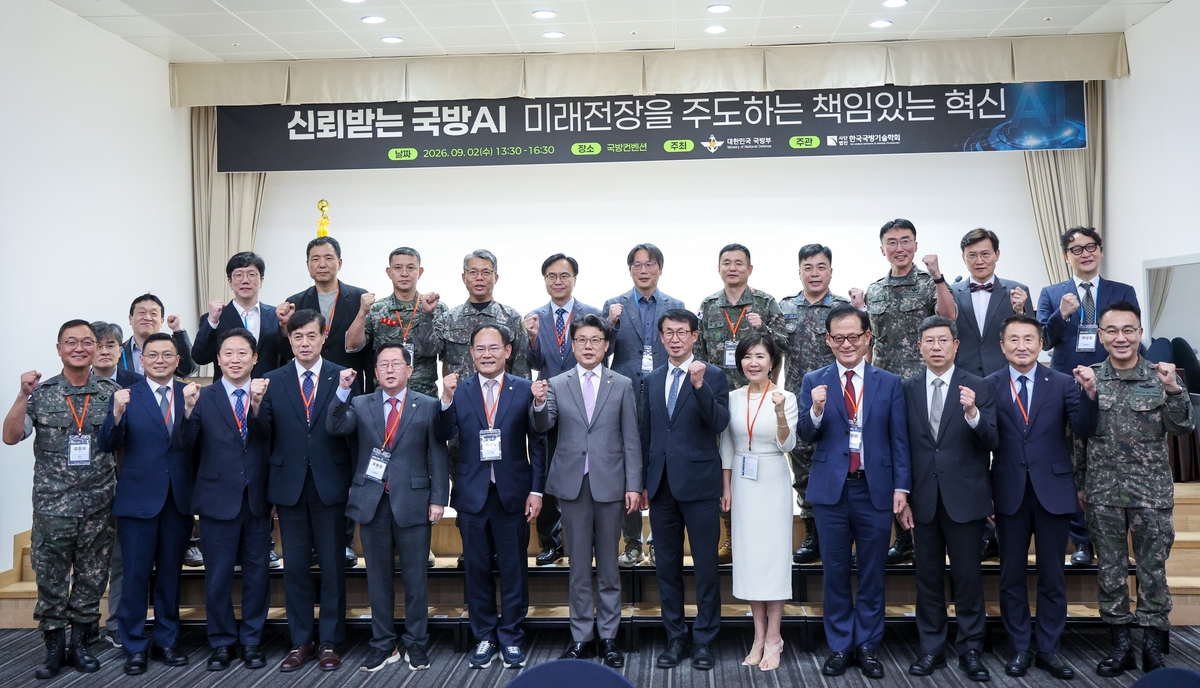
Defense chief stresses push for AI technology application in military
41 minutes ago
 AI News
Best AI Chatbots of 2026
41 minutes ago
 AI News
PwC: Global investment in AI infrastructure to hit $31.6 trillion through 2050
41 minutes ago
 AI News
Transforming markets: How AI
1 hour ago
 AI News
Side of slop? Bizarre AI food images jump from online to IRL menus
1 hour ago
 AI News
Wrtn Technologies begins selecting IPO underwriter
1 hour ago
 AI News
Google to speed up chip rollout to stay ahead in AI, technology chief says
1 hour ago
 AI News
US pushes looser approach to AI regulation, while EU pushes new law
1 hour ago