
Agentic AI is changing what the cloud is for
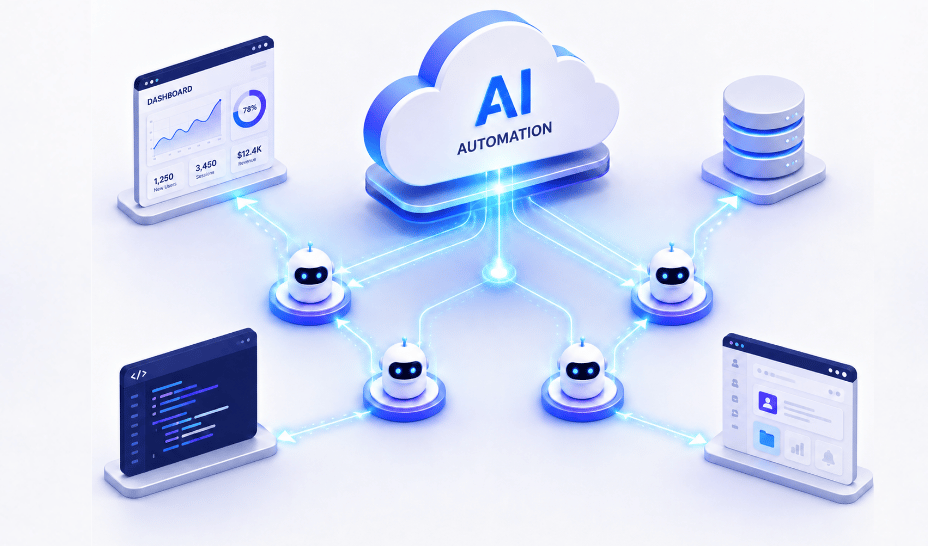
I spent a day at the Google Cloud Summit in London expecting to hear about databases and serverless architecture. Instead, the cloud itself felt like a minor footnote, briefly acknowledged near the registration desk. Almost every conversation on the exhibition floor focused on another topic: agentic AI.
The cloud has quietened down into the background. It is now just the execution layer for agentic systems. That forces a practical question: which decisions belong to humans, and which can we hand to autonomous software?
Yet, many European businesses still treat AI as a basic productivity tool to shave a few percentage points off their overheads. This defensive approach misses the broader structural opportunity. Agentic AI is a chance to redesign how operations work.
Instead of asking how AI can automate today’s workflows, organisations should ask a harder one: if working hours and the limits of human attention no longer applied, would they design those workflows the same way at all?
The current rush to deploy AI agents across enterprises is understandable, but it is driven by a basic error: the assumption that every existing workflow deserves an AI agent. Most organisations begin by looking at their current operations. They map their processes and ask how an agent can automate a specific task – this seems logical, but happens in the wrong order.
The first question, instead, must be: why does this process exist in the first place?
Many business processes were originally designed around constraints that no longer apply. They reflect limits of human capacity, organisational silos, manual approvals, and legacy technology. Wrap an AI agent around one of those processes, and you may increase throughput, but you have not improved the business. You have simply built a faster version of something that should not exist.
The point is to find where complexity can be removed and where the operating model itself should be redesigned, rather than keeping yesterday’s practices on life support with more expensive tooling. Define the business problem first. Question why the current workflow exists. Only then work out where autonomous software fits.
One statistic from the London summit: Europe accounts for only about 8% of global AI spending. The explanation behind this number is telling.
Too often, European businesses start with the technology itself. They invest in a platform and then search for a business problem to solve. However, those companies are not the ones succeeding. Those that achieve measurable results do the opposite. They start with a business problem first, and only then decide whether AI is the right tool to solve it.
Starting with the technology limits what can be achieved, and even more if its focus is merely cost-cutting. One speaker at the summit illustrated this contrast using two different financial institutions. A European bank focused on cutting operational costs to fund its new AI projects.
Meanwhile, a US bank used the technology to generate new revenue streams. They reduced manual touch-points to turn an expensive cost centre into an active revenue driver. Both institutions had access to the exact same technology. The difference lay entirely in their strategic ambition. Only one of them was asking, ‘How do we make more money with this?’
Stop using legacy systems as an excuse
Legacy systems are constantly blamed for stalling digital transformation, particularly in highly regulated sectors like FinTech. While older infrastructure presents real integration challenges, using it as an excuse for inaction is a strategic choice.
Every established organisation has core databases that cannot be replaced overnight. However, this does not mean every new operational model must inherit those same old constraints. Critical legacy infrastructure can be ring-fenced and left running to maintain stability, while new, autonomous operating models are built around them.
When organisations accept the messy reality of their legacy technology, they can focus their engineering efforts on redesigning the specific touch-points that deliver the highest business value. And again, instead of automating existing workflows, wouldn’t it be more efficient to identify where complexity can be removed? Simplified decisions and improved client outcomes will follow.
The cloud has always provided the basic computational infrastructure – while agentic AI redefines its purpose. Treating this shift as a minor automation project will only help you do the wrong things faster.
Redesigning the work itself is what changes the business, and if you don’t do it, a competitor likely will.
Related Stories
 AI News
The Kardashians Use Artificial Intelligence to Make a Weird Sketch
22 minutes ago
 AI News
The Congolese women urged to develop their own artificial intelligence applications
1 hour ago
 AI News
Opinion: Artificial intelligence already guiding the path to purchase
1 hour ago
 AI News
Trump says anyone who does not call AI 'super intelligence' is 'the enemy'
3 hours ago
 AI News
Trump says you're an 'enemy' of the White House if you don't support his AI rebrand
3 hours ago
 AI News
Trump gets mocked for saying those who say 'artificial intelligence' are enemies
4 hours ago
 AI News
Tool sprawl, AI complicate enterprise network operations
4 hours ago
Trump says anyone who does not refer to AI as ‘super intelligence’ is ‘THE ENEMY'
4 hours ago