
After 27 years in Malaysia’s startup trenches, Sivapalan bets on profitability over hypergrowth with Cypress Drive Ventures
After 27 years in Malaysia’s startup trenches, Sivapalan bets on profitability over hypergrowth with Cypress Drive Ventures
It can arguably be said that Dr Sivapalan Vivekarajah is the most positive person in Malaysia’s startup ecosystem, and indeed has been since he began involving himself in the ecosystem back in 1999.
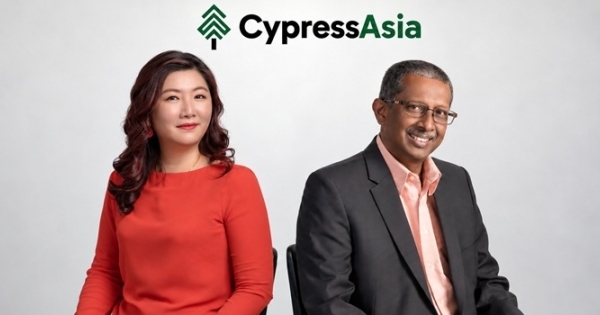
But before going into that history, consider the most recent example of that optimism. In 2025, Sivapalan suffered a deep disappointment when his application to become one of Jelawang Capital’s Emerging Fund Managers Programme partners was rejected. Did he sulk or rage? No. Instead, he channeled that disappointment into an energising force that has culminated in the launch of his own RM50 million venture fund, Cypress Drive Ventures Sdn Bhd. The management company is, Cypress Asia Sdn Bhd. Old-economy company New Hoong Fatt Holdings Bhd has come in as anchor LP with a RM20 million commitment, while Xelia Tong joins Sivapalan as co-founder.
That instinct to turn setbacks into forward momentum has been a recurring feature of Sivapalan’s journey in Malaysia’s startup ecosystem. The proof lies not just in the more than 50 startups he has invested in – directly as an angel investor or through ScaleUp Malaysia – but in how consistently he has put his shoulder to the ecosystem itself. He was a founding member of the Technopreneurs Association of Malaysia (TeAM) in 2003, went on to play a leadership role in the Malaysian Business Angels Network (MBAN), and was involved in a key government task force in 2019 looking at how Malaysia could strengthen its startup funding architecture.
Along the way, through Proficeo, the Coach & Grow Programme and other initiatives, he has mentored and coached a generation of Malaysian founders. To deepen his understanding of the venture capital and startup ecosystem, he even pursued a PhD at the University of Edinburgh in 2004, becoming the first student from Southeast Asia to enter the programme.
Then there is the written record. Sivapalan has authored or co-authored three books spanning innovation, startup valuation and the journey from startup to scaleup – a body of work that mirrors the issues he has spent much of his career thinking about: how entrepreneurs create value, how investors judge that value and what it takes to build companies that last.
Yet his optimism does not mean he is blind to Malaysia’s shortcomings. In this interview, Sivapalan is clear about why, after more than two decades of ecosystem-building, Malaysia has produced so few companies of genuine regional scale. He identifies three structural problems: inconsistent and sometimes poorly conceived funding policies; too few funds, many of them risk-averse; and the difficulty of expanding from Malaysia into a Southeast Asian region that is anything but a single, homogeneous market.
Different languages, cultures, regulations and affordability levels make regional expansion difficult and expensive, he argues, while the depth and consistency of capital available to Malaysian startups has too often fallen short of what is required. Carsome is one of the few Malaysian startups to build a genuine regional footprint, but Sivapalan points out that it raised almost US$200 million (RM818.62 million) to get there.
That diagnosis also helps explain the investment thesis behind the new venture fund. This is not a fund built around the familiar Silicon Valley playbook of pursuing market share at almost any cost. Sivapalan says the fund intends to invest in profitable startups, help them reach RM10 million in net profit and ultimately seek an exit through a stock-market listing. Founders looking for a quick ‘fund and flip’ outcome will not fit the thesis.
The shift reflects how much he believes the startup environment has changed. A decade ago, he says, growing markets, more opportunities and less competition meant a B+ founder could still build a successful company. Today, with capital harder to raise, growth slower, competition fiercer and artificial intelligence reshaping the technology landscape, he believes only A+ founders will succeed.
For someone who has spent more than a quarter-century encouraging entrepreneurs to build, invest and think bigger, Sivapalan remains unmistakably bullish. But the optimism now comes with a harder edge: build a real business, reach profitability, conserve cash and be prepared to play the long game.
The following is a Q&A with him on the motivation for his VC fund, the gameplan to create some hits, why Malaysia’s startup ecosystem, despite gradual progress, has been unable to create a breakout success that could spark the entire sector, and why corporate Malaysia has been a disinterested and distant party.
DNA: You have been part of Malaysia's startup ecosystem since 1999 — through TeAM, Proficeo, MBAN, the Coach & Grow Programme, the ministerial funding task force, ScaleUp Malaysia and now your own fund. After nearly three decades, Malaysia has produced only one clear home-grown unicorn, Carsome, despite billions of ringgit flowing into the ecosystem. What, fundamentally, did Malaysia get wrong — and, looking back, what did you personally get wrong in your diagnosis of the ecosystem?
Malaysia has three problems that explain why we don’t have more unicorns. Firstly, we have had wrong and inconsistent funding policies. To start, government funding was channelled through government agencies run by finance executives who did not have entrepreneurial backgrounds, let alone startup entrepreneurial experience. Hence, they didn’t understand how startups worked and tried to instil a Silicon Valley mentality without understanding that Malaysia is not Silicon Valley. This led to many failures. Secondly, funding was inconsistent. In some years you could get funding; in others, it was scarce. We also had too few funds, and many were risk-averse, so promising startups could not get the funding needed to grow. Without consistent availability of funds, startups cannot grow. Thirdly, the Malaysian market is too small, but going regional is complex because there is no single large, homogeneous market. Every market has different languages, cultures, regulations, affordability issues and other complexities, making it really difficult to scale regionally. Scaling into complex markets requires higher levels of funding, which was not available in Malaysia. Carsome was one of the few to establish a regional presence, but it raised almost US$200 million (RM817.18 million) in funding.
DNA: For years the explanation was that Malaysian startups lacked sufficient capital. But we have had government grants, government-backed VCs, angel incentives, ECF, Penjana Kapital and now Jelawang Capital. At what point do we have to ask whether funding is really the main problem? Could the deeper weakness be the quality and ambition of the companies we are producing, the size of their markets, or the inability of Malaysian companies to become regional leaders?
This has been partially answered above. Although we had many funds, these were spread over two-and-a-half decades and, when divided across say 25 years, the amount available was too small to cover the costs of going regional for perhaps 1,000 companies that could have done so. Some of these funds also never really deployed capital because they didn’t manage to raise the matching-fund commitments required by Penjana Kapital and Jelawang, because fundraising for VC funds is terribly difficult.
DNA: Corporate Malaysia seems to be the missing piece. You said in 2024 that after 25 years in the ecosystem you could not name even 10 large Malaysian corporations that had acquired startups in the previous five to ten years. Why have our PLCs and GLCs shown so little appetite to buy from, invest in or acquire Malaysian startups? Is this fundamentally about risk aversion, procurement culture and management incentives rather than a shortage of good startups?
Firstly, many VC-backed startups followed the Silicon Valley model of market share at all costs and ended up with big losses and no profits. This means that an acquirer not only has to pay for the acquisition but also needs to cover losses for an extended period. No one wants to do that or risk losing money for many more years. If founders had built profitable companies, there would be more acquisitions because the risk for an acquirer would be lower. Secondly, very few companies have large balance sheets – plenty of cash sitting around – so even if they could acquire, it would be in the low double-digit millions, which would not be a great exit for an investor. By low, I mean below RM20 million. Thirdly, most of our larger companies are in markets where they are oligopolies or protected by regulations, such as telcos and banking, and thus make the easy money already. There is no need for them to take on the additional risk of acquiring a startup.
DNA: That makes your new fund especially interesting because your LP is a Malaysian PLC. What convinced this company to commit capital when corporate Malaysia has historically been so reluctant to engage with startups? And do you want the LP to provide more than money, customers and distribution perhaps? If this works, is the model replicable across other Malaysian PLCs (although I think it will take at least five years to prove)?
We were lucky because our LP was looking to diversify its business. They are market leaders in automotive parts distribution and profitable, but made a strategic decision to diversify their investments. While they initially didn’t consider VC as a means to diversify, they liked our investment thesis and this convinced them to take a chance on us. There was also a lot of trust in us, perhaps because we have been in the ecosystem for such a long time. Deal flow was a strong point for us because of our deep networks and engagement in the ecosystem. Xelia and I collectively have almost 50 years’ experience in the ecosystem. Providing market access and customers would be a bonus.
DNA: There is an interesting contradiction in the exit story. You have moved away from the Silicon Valley “fund, grow and flip” model, and more recently argued that Malaysian founders should be willing to build profitable companies that can achieve sensible RM30 million to RM50 million exits. But if Malaysian corporations rarely acquire startups, who exactly is going to provide those exits? How will your fund underwrite its exit strategy if the domestic M&A market remains so weak?
Our thesis is to invest in profitable startups, take them to RM10 million in net profit and exit via a listing on the stock exchange. Thus, we will only invest in founders who are in it for the long game, are building enduring startups and have the ambition to list their company. Anyone who is in fund-and-flip mode does not fit our investment thesis. We choose the IPO route as an exit strategy because M&A exits are really tough to do.
DNA: Your own investment philosophy also appears to have evolved. In 2012 you wrote “Market trumps team”, arguing that investors should first find an enormous market and use their capital to build the management team. By 2019 you were advising angels that a strong founder was the best starting point for an investment. After an estimated 50+ personal and ScaleUp investments, where do you stand today — market, founder, business model, capital efficiency or something else?
The startup environment and opportunity have changed significantly between 2012 and the post-Covid period. A decade ago, it was much easier to build a scalable startup. Markets were growing, opportunities were aplenty and competition was lower. Today, all that has changed. It’s far harder to raise funds, markets are risk-averse, growth has slowed, there is a lot more competition and fewer opportunities, and AI has changed the tech industry significantly. A decade ago, a B+ founder could still build a successful business; today, only an A+ founder will do so. Great founders have always been important, but when markets are growing and competition is not deep enough, any hardworking founder could be successful. Today, only the best founders will be successful.
DNA: Before becoming a fund manager, you accumulated a substantial investment record — 16 personal angel investments and, according to your recent profile, 38 pre-Series A investments through ScaleUp Malaysia. What does that portfolio actually look like today: how many companies have failed, how many have raised meaningful follow-on rounds, how many have produced exits and, most importantly, how much realised cash has been returned to investors? Also, what lessons from the losers will directly shape this new fund?
I started investing as an angel in 2008 and my first investment failed quite fast. My second investment is still around today, even though I haven’t exited. Many of my angel investments failed, but the few that I exited already gave me a positive return, and I still have quite a few more to go. ScaleUp’s portfolio was also an early-stage portfolio, but I believe we have done well with it, as only about 20% have failed. We had a couple of exits and, with the 2020 portfolio, we are currently in exit mode, trying to secure more exits. Among those that failed, it was mainly because their business models didn’t quite work out or the market they were targeting had changed. The key is to have a strong financial model that can get you to cash-flow positive and profitability quickly – meaning in three years or less – so that you don’t run out of cash and die naturally. The companies in our portfolio that failed, in almost all cases, ran out of money.
DNA: You were criticising Malaysia's VC structure in 2018 - salaried government fund managers without carried interest, small funds, excessive risk aversion and too little private capital - and remarkably similar criticisms appear in a May 2026 article you wrote. Eight years later, why are we still having essentially the same conversation? Have initiatives such as Penjana Kapital and Jelawang genuinely changed the structure, or have we changed the names without solving the underlying problem?
I believe Penjana and Jelawang have very different models from the previous government funds because they are fund-of-funds models, where they match the funding of private VCs who are the ones managing the funds. These private VCs have more skin in the game and make money when they have successful exits. This motivates them to invest in the best deals. I believe we need to give Penjana and Jelawang more time to invest in more funds, but they also need to ensure the funds they invest in actually deploy capital and help startups grow.
DNA: You recently warned that Malaysia's early-stage “top of funnel” is drying up. If fewer new high-quality startups are being created, does Malaysia actually need more venture funds right now, or does it first need to rebuild the pipeline? Where will your fund find the next generation of genuinely investible companies, and what has to change in universities, Cradle, talent policy and corporate demand to replenish that pipeline?
Over the last 10 years, there has been a strong pipeline of companies that have already been through the mill and have built lasting businesses. It’s time we supported these founders. We still need to build the pipeline, and agencies like Cradle and MRANTI – and, to a smaller extent, MDEC, because its focus is on the later stages unlike Cradle and MRANTI – all have a role to play. Angels, too, have a role to play, and government policies such as the Angel Tax Incentive are equally important.
The first draft of this article was generated by AI with the writer responsible for the published version.
Related Stories
 Business
Leonardo DiCaprio, yes that Leo, announces investment in Swedish EnergyTech startup Elvy
2 hours ago
 Business
Dialog Axiata launches IESL National Startup Challenge in Sri Lanka
3 hours ago
 Business
Police accept Andrew search warrants were unlawful, court hears
4 hours ago
 Business
After eight years advising startups, Irtus Consolidated now wants to fund them
5 hours ago
 Business
From storefronts to startups: Student entrepreneurs grow their businesses at Mizzou
6 hours ago
 Business
French, Japanese scientists share Nobel Prize in Chemistry
7 hours ago
 Business
B.C. party leaders offer competing promises to small businesses
8 hours ago
 Business
ZAWYA: US business delegation explore technology investment opportunities in Jordan
9 hours ago