
4 Innovative Startups Tackling Global Food Waste
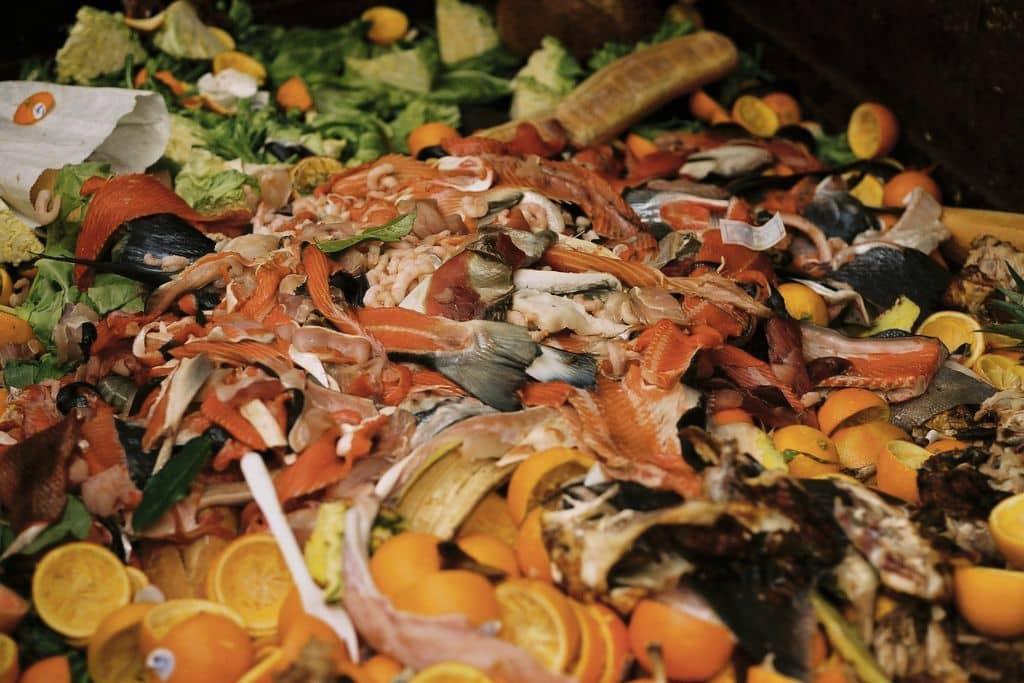
Around the world, entrepreneurs are committed to finding innovative ways to connect small farmers, markets, and consumers. These innovations work to reduce food waste and help feed those who might otherwise go hungry.
Hundreds of millions of people around the world go hungry every year, while billions of tonnes of excess food go to waste – food with potential to feed those hungry people. An estimated 645 million people experienced hunger in 2025, yet more than 1 billion meals are wasted daily – a reflection of structural inefficiencies in the global food supply chain.
Food waste also has detrimental impacts on our planet. The United Nations estimates that food loss and waste account for 8% to 10% of global greenhouse gas emissions, more than three times the gas emissions produced by the aviation sector.
Transforming food systems is essential to mitigating climate change and expanding global access to nutritious food.
Earth.Org looks at four rising startups leading the way.
AgroSustain has developed a product to delay the disappointment felt when produce begins to wilt or brown, making fresh food edible and desirable for longer. Created in Lausanne, Switzerland, Agrosustain’s natural biocoating extends the shelf life of fresh produce through both pre- and post-harvest mechanisms.
AgroSustain’s pre-harvest foliar spray, Tornado, works as a sealing agent that forms a protective coating on plant surfaces, which helps crops stay healthy during droughts and other environmentally challenging periods. Preliminary testing showed a 30% increase in tomato yields, a five-fold reduction of stress hormones in strawberries, and a 37% increase in grape yields.
Afondo, AgroSustain’s post-harvest odorless, tasteless, invisible coating, is composed of organic fungicides that preserve the quality of fruits and vegetables. This offers an alternative to conventional chemical post-harvest treatments used to make produce last longer. The product does not affect crop ripening and can extend shelf life by up to five weeks.
AgroSustain formulates specific post-harvest coatings for flowers, fruits, and vegetables, designed to maintain flavor and freshness. The company reports that these coatings reduce water loss in the supply chain by up to 50%.
Its products are being used in Europe, North America, South America, the Middle East, Asia and Africa. Environmentally-conscious distribution is also a company priority: AgroSustain prioritizes sea over air shipments to limit CO2 emissions, and it minimizes the use of plastic packaging across all its products.
Successfully incorporating technologies like AgroSustain’s into agriculture can help farmers increase productivity with fewer resources and generate less food loss before it ever reaches consumers. At the same time, moving away from harmful chemical treatments and toward natural methods of protecting crops offers an opportunity to build a food system that is not only more productive, but also more sustainable and resilient.
An estimated 30% to 40% of the produce in the US’ food supply is wasted. New York-based Matriark Foods seeks to reduce this loss by using upcycled foods to create nutrient-packed broths.
The company repurposes the parts of vegetables that are traditionally discarded, such as stems or peels, to create products like vegetable concentrate, vegetable harvest stews, and tomato purees. It partners with regional small- and mid-sized farms to obtain their excess or commercially unusable produce.
While aiming to increase the availability of healthy foods, Matriark Foods remains as environmentally-conscious as possible. Products are packaged with Forest Stewardship Council’s certified packaging, which ensures that packaging materials are sourced from responsibly managed forests. It also works with Planet FWD – a decarbonization software platform – to better understand its overall carbon impacts and measure each product’s carbon footprint.
The company reports that, since launching in 2019, its operations have resulted in a 7.8 million pound reduction in greenhouse gases, 362 million gallons of water saved, and 1.5 million pounds of vegetables prevented from going to landfills.
Matriark Foods also prioritizes making its products accessible regardless of consumer socioeconomic status. Therefore, it directs meals to food banks and emergency services. The organization also collaborates with community institutions to support agricultural education and resources, spreading its benefits across the region.
Matriark Foods was created by non-profit leader Anna Hammond, who has decades of experience working in the agricultural space. Hammond previously served as executive director of The Sylvia Center, an organization that focuses on culinary education for young people and families in New York. There, she expanded healthy eating and cooking programs in schools and community centers throughout the five boroughs of New York City. Matriark Foods’ status as a women-founded company is central to its brand identity, with the company actively mentoring and supporting other women-owned businesses.
In Africa, more than one billion people struggle to afford a nutritious diet. One in five of them are actively going hungry. Simultaneously, post-harvest losses across the continent near 50% due largely to inadequate storage, processing, and transportation systems.
In western Morocco, Larbi Alaoui Belghiti and Youssef Mamou created YoLa Fresh to transport and protect produce, aiming to reduce food waste and target inefficiencies within the continent’s agricultural system and form stable connections between food and people.
YoLa Fresh connects small- and medium-sized farmers with traditional fruit and vegetable retailers so produce is transferred in a more timely manner. The company operates a digital logistics platform that analyzes data to optimize supply chains and predict retailer demand. Projecting retailer demand for products allows YoLa Fresh to quickly source necessary inventory from farmers using a 12-hour window. Brisk turnaround means longer shelf life and reduced food waste.
By eliminating intermediaries in the food supply chain – like storage and processing – retailers benefit by paying less for produce, and farmers gain by maximizing their share of produce that reaches consumers. YoLa Fresh ensures that farmers are paid for their produce within a 24-hour window and benefit from direct partnerships with retailers, allowing them to commercialize their products in an unprecedented way.
YoLa Fresh enables retailers to sell produce at 10% to 20% below market rate due to consistent sourcing and reliable data. Retailers receive quality produce directly to their storefront. The YoLa Fresh supply chain is built to move over 1,000 tonnes of perishable goods daily, and the organization has a satisfaction fulfilment rate of over 99%.
Currently, YoLa Fresh operates solely in Morocco, but Alaoui Belghiti and Mamou have a track record of expanding business and scaling companies. Alaoui Belghiti, a tech entrepreneur, founded a company that provides warehouse and delivery solutions across Africa and served as CEO of Morocco’s leading E-Commerce platform, Jumia. Mamou was the managing partner at a venture capital fund, where he guided startup growth. Under the guidance and vision of Alaoui Belghiti and Mamou, YoLa Fresh is projected to expand outside of Morocco this year.
In Telangana, India, a hot pepper farmer sprayed his crop with 17 different synthetic chemicals to manage pests. His reliance on faux chemicals led to high residue levels, increased input costs, and negative impacts on soil health and biodiversity.
RegenCrops – a regenerative agriculture Artificial Intelligence application developed in Hyderabad, India – shifted this farmer’s trajectory. Regenerative agriculture allowed the farmer to maintain crop yields and health. By switching to a European Union-certified green-label insecticide and biological sprays to manage pests, the plant-derived insecticides controlled pests while enhancing plant resilience.
Regenerative agriculture helps restore soil health and mitigate climate impacts by focusing on soil regeneration, biodiversity enhancement, and reducing the inputs necessary in traditional farming.
The company identifies aspects of our broken agricultural system and suggests remedies to address them. It assists farmers by proposing solutions to combat specific problems they might face, and it provides training from experts for smallholder farmers to obtain a regenerative agriculture certification; they learn about effective, natural ways to improve soil health and adopt sustainable farming methods. RegenCrops also rewards regenerative farmers for capturing carbon by helping them earn carbon credits and connecting them with companies that are working to offset their carbon emissions.
The application benefits both suppliers and consumers. By using EU-approved biological inputs and natural buffer strips, RegenCrops helps farmers reduce synthetic chemical inputs and adopt organic-aligned practices. The company connects customers to safe, non-carcinogenic products and ensures transparency between food and fork.
Across model farm trials of hot pepper, tomato, turmeric, and rice in Hyderabad, RegenCrops reported a 76% reduction in chemical fertilizer and pesticide use, replaced by biofertilizers, biocontrols, and botanical extracts; an 85% reduction in pest and disease incidence through machine learning-based early detection, preventive protocols, and restored soil biological activity; and a 95% reduction in water use achieved through AI-optimized micro-irrigation scheduling that responds in real time to soil moisture sensor data.
Farmers were able to detect pests early on using the RegenCrops’ AI-driven image processing tool; strategically select plants to serve as a natural barrier for pests; and enhance crop rotation and diversification, disrupting pest cycles and improving soil health. RegenCrops allowed this farmer, and many like him, to build more resilient farms and reduce their waste.
Change starts on a personal level. While individual action can help reduce waste, innovative solutions that can be implemented at scale are essential to protecting the Earth and feeding its people.
The startups highlighted here demonstrate the potential of these solutions to transform how we produce, distribute, and consume food. To create lasting change, governments should fund and champion the innovations that can address food waste at scale.
This story is funded by readers like you
Our non-profit newsroom provides climate coverage free of charge and advertising. Your one-off or monthly donations play a crucial role in supporting our operations, expanding our reach, and maintaining our editorial independence.
About EO | Mission Statement | Impact & Reach | Write for us
Related Stories
 Lifestyle
Investigators hunt hackers who heated French supermarket fridges, sparking fires and spoiling food
9 hours ago
 Lifestyle
Erling Haaland: Man City star and father buy Abu Dhabi properties on Premier League club's development
22 hours ago
 Lifestyle
Hackers force French supermarket fridges to heat up to 50C in ‘unprecedented’ cyber
1 day ago
 Lifestyle
Fire destroys Marché des Enfants Rouges, ‘coolest market in Paris’
1 day ago
 Lifestyle
How Share-ify Helps Restaurant Teams Handle Food Recalls
1 day ago
 Lifestyle
Coming closure of another Winnipeg Giant Tiger store will mean 'less food in the fridge,' shopper says
1 day ago
 Lifestyle
Thanksgiving takes a bite out of Calgarian budgets
2 days ago
 Lifestyle
Social media helping new poets bypass 'establishment gatekeepers'
2 days ago