
1 in 3 US job listings go nowhere, creating a ‘ghost job economy,’ report finds
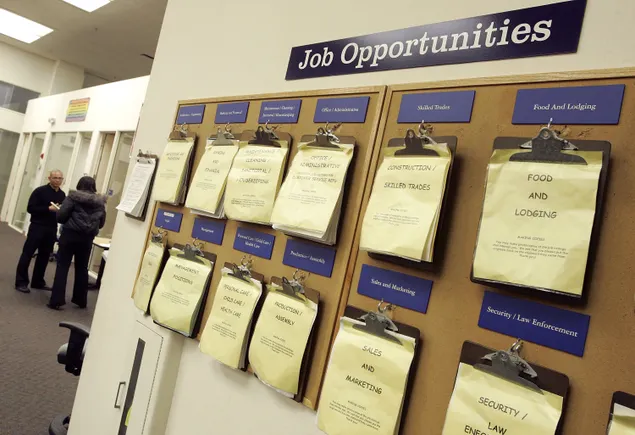
Nearly a third of U.S. job postings don’t result in an actual hire, creating a “ghost job economy” with millions of roles that never materialize, according to a Nov. 7 report from MyPerfectResume.
For instance, in June, employers reported 7.4 million openings but made only 5.2 million hires, leaving 2.2 million roles unfilled. Since 2021, this “phantom gap” between openings and hires has persisted at about 30% each month, the report found.
“The U.S. labor market has long been measured by the number of job openings, but a closer look reveals a troubling truth: Not all postings are real opportunities,” Jasmine Escalera, a career expert for MyPerfectResume, wrote in the report.
“For job seekers, that means wasted time,” Escalera added. “For policymakers, it means distorted data. For employers, it raises serious credibility issues.”
Ghosting, scams and discrimination appear to plague the job hunt, causing frustration for job seekers, according to a report from Remote.co. Ghosting and job scams, in particular, seem more prevalent than in previous years, a Remote.co expert said.
Based on data from the Bureau of Labor Statistics, job openings and hires closely tracked each other between 2010-2019, with a small gap typically under 10%. However, after the pandemic, openings spiked to record levels, while hires remained the same in 2021, with 38% of job postings going nowhere. Now the “ghost job rate” gap still remains at around 28% to 32%.
Sectors with the highest gaps include government (60%), education and health (50%), information (48%) and financial activities (44%). The lowest gaps occur in construction and hospitality, where hires tend to match or even exceed openings, the report found.
Notably, not every unfilled role is posted as a deliberate “ghost job,” Escalera wrote. Certain industries and employers may struggle to recruit qualified workers for real job openings; leave postings open to build candidate pools for future jobs; face administrative delays such as budget freezes or internal approvals; or post openings continuously for high-turnover roles.
“These limitations suggest the ghost job economy is a mix of intentional overposting and structural labor challenges,” Escalera wrote. “While not all postings are fake, the scale of the gap shows many workers are chasing opportunities that may never materialize.”
Beyond ghost jobs, candidates also say they’ve experienced career catfishing, where they’ve been deceived into taking a job that didn’t match the description, according to a Monster report. For employers, this can mean overselling company culture, benefits or role expectations, Monster researchers said.
Related Stories
 Finance
Five former B.C. Conservative MLAs form new provincial party
1 hour ago
 Finance
Trump’s ‘retribution’ could now include Falklands as favor to Milei
3 hours ago
 Finance
Should you act on these investing rules of thumb?
5 hours ago
 Finance
Canadian 'banking' company linked to sanctioned money
9 hours ago
 Finance
Romanian prosecutors indict influencer Andrew Tate for trafficking minors, money laundering
11 hours ago
 Finance
Argentina’s Milei escalates Falklands dispute, seizing on Trump comments
13 hours ago
 Finance
N.S. and N.B. gaming Crown corps fined for lax money laundering reports
14 hours ago
 Finance
Romanian prosecutors indict Andrew Tate for trafficking minors, money laundering
16 hours ago