
Writing and artificial intelligence
There is one skill that separates a professional racing driver from someone who simply sits behind the wheel: the ability to command speed at every moment, rather than be commanded by it. This is precisely why racing cars have no place for automatic transmission, because a driver who surrenders his judgment to a machine is no longer truly driving. He is merely a passenger, hoping the road does not curve without warning.
This is the very mindset every person must carry when sitting before an artificial intelligence platform. The human being is the driver; AI is the powerful, obedient gearbox. The more one commands one’s craft and knows its secrets, the more one can steer this tool and extract the best it has to offer. But the moment the grip on the wheel loosens, the mind is handed over to a machine that does not distinguish between right and wrong, a machine that only knows how to comply.
I paused for a long time over the position taken by Polish Nobel Laureate Olga Tokarczuk, who was awarded the Prize for Literature in 2018. She announced that she no longer sees a place for the great novel, the kind that demands years of contemplation and a deep excavation of the human condition, and that she has begun turning to artificial intelligence while abandoning the novel in favor of the short story.
I read this and felt something close to grief. We live in an age when many are already searching for justification to surrender, and I had not wished to see that surrender come from a Nobel laureate. The true work of the novel is not structure, plot, or character. It is the distillation of a life. This is why, when we read Dostoevsky, we feel the full weight of the tormented Russian soul; and when we turn to his fellow countryman Tolstoy, we feel as though we have entered an entirely different continent.
The same holds when we move between the labyrinthine Southern landscapes of Faulkner and the spare, unsparing directness of Hemingway. Creative writing, in any literary form, is not a style; it is the fingerprint of a soul. This is precisely the wall before which artificial intelligence will remain forever powerless. What Chekhov’s stories offer is not programmable data, but the way a physician witnessed the deaths of his patients and the silence of the Russian countryside.
What the Egyptian master Yusuf Idris, one of the most important founders of the Arabic short story, achieved cannot be in any database. It lives, instead, in a narrow Cairo street, in the glance of a man watching a young girl balance a tray of pastries on her small head. And what runs through Zakaria Tamer is a pain accumulated from the memory of Damascus’s old quarters, which emerges as words sharp as a razor’s edge.
Artificial intelligence cannot suffer. It cannot be struck with wonder at a sunset. And those who neither suffer nor wonder do not write literature; they arrange words. I agree with Tokarczuk that AI is a useful instrument for research, documentation, and scholarly study, and may even serve as a helpful brush in a writer’s hand. But I part from her sharply when she equates what an algorithm produces with what a living, suffering, dreaming soul creates.
The creative short story is not simply a short text; it is a compressed universe. And that compression is not something any artificial intelligence can manufacture. All honor belongs to the creative writer who takes a fleeting moment from life and transforms it into a scene that inhabits the reader’s memory for years. Every artificial intelligence platform in existence, taken together, could not write a single page that Marcel Proust set down in “In Search of Lost Time” that trembling before the taste of a madeleine dipped in tea, which opened for all of humanity a window onto memory and existence that has never since been closed. The machine preserves and executes. The creative writer alone “remembers” and inscribes, with the ink of pain, memories that are still alive.
Related Stories
 AI News
Egypt trials smart irrigation and artificial intelligence technologies to optimise water use in agriculture
30 minutes ago
 AI News
L&T Finance Ltd. Launches The Second Edition Of 'Pitch Point,' A Competition For AI Startups Ahead Of RAISE' 26
1 hour ago
 AI News
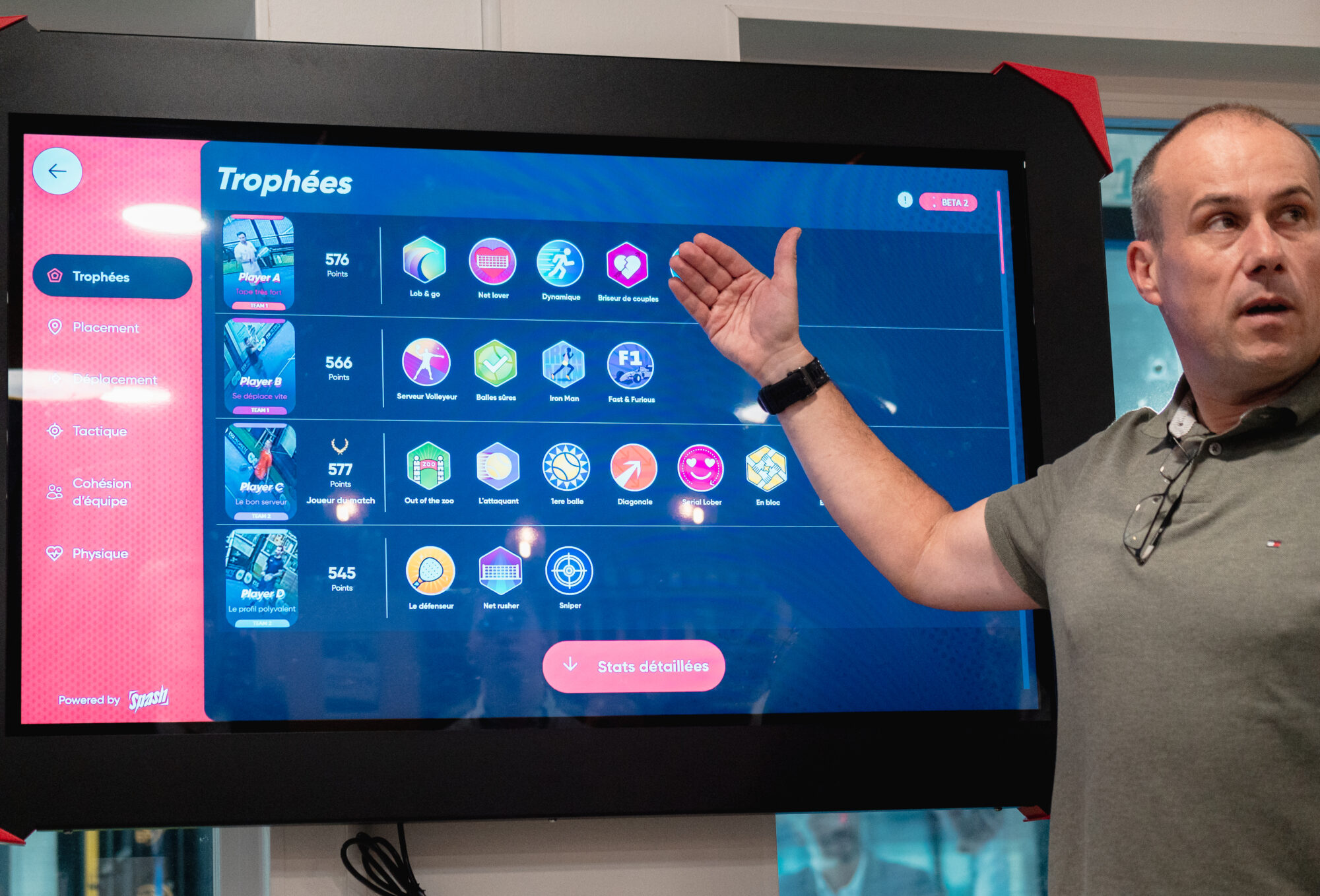
SPASH raises 2 million euros: artificial intelligence at the heart of its strategy for padel clubs
1 hour ago
 AI News
AI can’t just be built. It must be taught.
1 hour ago
 AI News
UC Santa Barbara taking a ‘base camp’ approach to artificial intelligence
1 hour ago
 AI News
Latest News In AI Chips
2 hours ago
 AI News
Britain steps up national defences against growing AI risks
2 hours ago
 AI News
Microsoft President Warns AI Is Less Regulated Than Milk, Washing Machines as He Pushes Governments Towar
2 hours ago