
With time running out, new poll suggests Alberta separatism support is slipping

With time running out, new poll suggests Alberta separatism support is slipping
Poll also suggests decline in people who say they feel mainly attached to Alberta
With a little more than three weeks to go until the Oct. 19 referendum, a new poll done for CBC News suggests support for separation has softened since spring.
Janet Brown Opinion Research, in a random survey of 1,200 Albertans between Sept. 8 and 21, asked respondents the same question they’ll face on referendum day: “Should Alberta remain a province of Canada, or should the government of Alberta commence the legal process required under the Canadian Constitution to hold a binding provincial referendum on whether or not Alberta should separate from Canada?”
Twenty-three per cent of respondents said they’d vote to start the legal process to hold a binding referendum, while 72 per cent said they’d vote to remain in Canada. Four per cent said they were unsure.
That stands in contrast to Brown’s poll in the spring, which asked Albertans if a referendum were held today on whether Alberta should separate from the rest of Canada, would you vote for or against separation?
Danielle Smith’s popularity dips as her party now tied with NDP in support: poll
The April survey found 27 per cent of respondents would vote for separation, while 67 per cent would vote against.
"It’s part of this overall trend that we’re seeing," said Calgary-based pollster Janet Brown.
“People are feeling more comfortable with Alberta’s role in Canada, more comfortable with Ottawa, more comfortable with the prime minister.
“And all of those things seem to have caused a slight dip in the proportion of Albertans ready to vote to separate,” said Brown.
The survey has a margin of error of +/- 2.8 percentage points, 19 times out of 20.
Over the past months, the remain and leave sides have sought to win over hearts and minds with advertising and large rallies. They’ve criss-crossed the province in RVs decorated with maple leafs and Alberta flags, delivering lawn signs to front yards in cities and small towns.
But according to Brown’s polling, how Albertans feel about the prospect of separation has been largely baked-in for years.
“There’s a slight decline in people who are interested in the separatist option, but these numbers have been very consistent over time,” Brown said.
Lori Thorlakson, a political science professor at the University of Alberta, said as referendum day approaches, the meaning of the separatism question may be changing.
“This most recent shift, I think, really reflects that people are focusing more on what it would actually mean if we were to leave Canada,” she said.
A majority of respondents across the province voiced support for remaining a province of Canada.
Support was highest to remain in Canada in Alberta's big cities, at 74 per cent. In small centres, including in smaller towns and rural areas, support to remain in Canada sat at 69 per cent.
Attachment to Alberta and Canada
Since 2020, Brown has also been asking Albertans whether they feel more attached to the province, more attached to Canada, or attached to both equally.
Her most recent polling saw a decline in people who said they felt mainly attached to Alberta, and a corresponding increase in people who said they felt mainly attached to Canada or attached to both equally.
Some of that could be attributed to Alberta’s relationship with Ottawa, in Brown’s view. Last month, the federal government moved toward listing the West Coast pipeline as a national interest project ahead of an Oct. 1 deadline.
Brown believes the increased positive feelings Albertans have for Canada could also be attributed to the ongoing trade war between Canada and the U.S. and tensions with U.S. President Donald Trump.
“It’s made Albertans more focused on their Canadian identity,” she said.
The polling found that 23 per cent of respondents said they were more attached to Alberta than to Canada, down from 33 per cent in April 2026.
Forty per cent of respondents said they were more attached to Canada than to Alberta, up from 34 per cent in April 2026.
The polling also focused on the partisan divide found around the separation question.
At 98 per cent, nearly all respondents who said they would vote for the Alberta NDP if an election were held today said they wanted to stay in Canada.
But among those polled who said they would vote for the United Conservative Party, 53 per cent said they would vote for the separation option, while 40 per cent said they’d vote to stay in Canada.
“That really speaks to the very delicate line that the premier is walking right now,” Brown said. “A bare majority of the people who say they would vote for her party in the next election, they are separatists.
“The premier has taken the ‘stay’ side. That’s making her job very difficult at the moment.”
With sentiment seemingly baked in and with few undecideds remaining, Brown said she anticipates that the final weeks of the campaign are likely to revolve around mobilization, rather than persuasion.
“The game will be about both sides trying to make sure they get their voters out to vote on this referendum,” she said.
Separatist groups have spent recent weeks trying to make their case with voters. As referendum day has drawn closer, separatist group Let Alberta Decide has ramped up its messaging on social media, attempting to gear its campaign toward different demographics.
Speaking to CBC News in late August, Let Alberta Decide leader Keith Wilson said that while he’s not entirely convinced the polls over past months have been accurate, his group assumes they are from a strategic point of view.
“We see this with our signs as well. People are concerned about sharing with other people that they support a better deal for Alberta, or that they support Alberta independence,” Wilson said. “There’s a lot of polarization in our politics, as we know.”
Stephen Carter, a federalist with the group Alberta’s Voice, has said he’s worried about voters seeing consistent polls showing low support for separation and then staying home on referendum day.
"If it's close, we deal with this forever. And that’s the worst-case scenario,” he previously told CBC News.
Other polling across past months has been consistent with Brown’s findings, largely showing that the two sides in the separation debate have been entrenched, with the majority wanting to remain in Canada.
The CBC News random survey of 1,200 Albertans was conducted using a hybrid method between Sept. 8 and Sept. 21, 2026, by Edmonton-based Trend Research under the direction of Janet Brown Opinion Research. The sample is representative of regional, age and gender factors. The margin of error is +/- 2.8 percentage points, 19 times out of 20. For subsets, the margin of error is larger.
The survey used a hybrid methodology that involved contacting survey respondents by telephone and giving them the option of completing the survey at that time, at another more convenient time, or receiving an email link and completing the survey online. Trend Research contacted people using a random list of numbers, consisting of 30 per cent landlines and 70 per cent cellphone numbers.
Telephone numbers were dialed up to five times at five different times of day before another telephone number was added to the sample. The response rate among valid numbers (i.e., residential and personal) was 11.3 per cent.
Joel is a reporter/editor with CBC Calgary. In fall 2021, he spent time with CBC's bureau in Lethbridge. He was previously the editor of the Airdrie City View and Rocky View Weekly newspapers. He hails from Swift Current, Sask. Reach him by email at joel.dryden@cbc.ca
Related Stories
 Canada
Michael Higgins: Canada's unimaginative media can't get enough of these academics
2 minutes ago
 Canada
Cheap Leafs aren't the only big news coming from Nissan Canada
2 minutes ago
 Canada
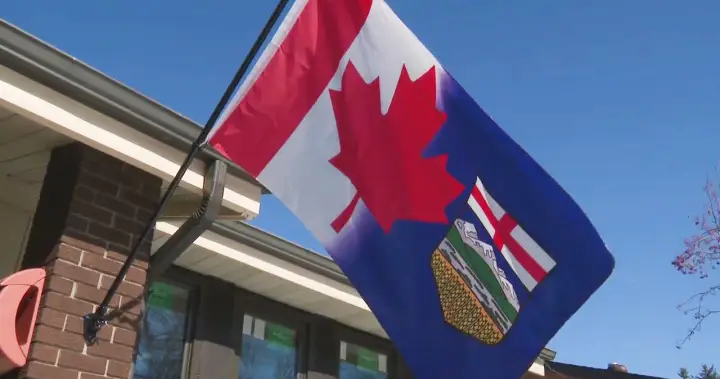
As referendum looms, 70% of Albertans want province to remain in Canada
2 minutes ago
 Canada
What Canadians should know about cellphone searches at U.S. border
2 minutes ago
 Canada
N.B. population rises as StatsCan revises estimates that showed decline
1 hour ago
 Canada
What are young people's top municipal election issues?
1 hour ago
 Canada
News of the day: Lower gas prices, world's weakest housing markets, retail sales drop, Anthropic expands in Canada, portfolio positioning and more
2 hours ago
 Canada
Expat throws a pro
2 hours ago