
Why Founders Are Betting On Startups To Get You Offline
ATLANTA, August 24 (Hypepotamus) - Over the last several months, I’ve noticed a pattern in my inbox and in the conversations I’m having with founders.
And that’s the fact that more of them are pitching tech companies designed to get people off their phones and into the real world.
It’s not exactly an anti-tech movement. These startups still deliver a software or data product to their customers. But instead of maximizing screen time or selling some sort of efficiency, these founders are pitching a technological fix to finding a new friend, connecting with a potential business partner, or discovering something new in their city.
There isn’t one clear vertical that these startups all fall into. But as I’ve talked to these founders, I’ve heard variations of “community tech,” “IRL tech,” and “phygital” (a combination of physical and digital experiences). But whatever you call it, it’s easy to see the appeal. As building software gets easier with AI, founders are increasingly focused on problems that software alone cannot solve.
Gridline helps advisory firms launch, operate, and scale private market investment programs through one integrated platform.
Building Community Is Still Hard In The AI Age
Atlanta entrepreneur Adekunle Ayodele has seen how the reality of building community has evolved over the years.
A decade ago, he said, entrepreneurs often followed a product-first model: build something, then find an audience and community around it. Now he increasingly thinks about the “ACP” model: audience, community, then product.
“Now with AI, you can literally build anything. But that doesn't mean you should build anything,” Ayodele told Hypepotamus. Building a trusted community becomes the “moat” for an entrepreneur as they go on to build their business. “AI can replace a bunch of things, but what it will not replace is community, and what it will not replace is trust,” he added.
Charlotte-based Linxy founder Joel Puthoff sees another force driving community-first or community-focused businesses.
“People are parsing through this Information Age we live in, trying to find something authentic and real and meaningful,” he said. That has helped drive opportunity for companies like Linxy across the Southeast.
Some of the startups to watch in this category are building for professional networking. Others, to combat loneliness.
Ayodele, who previously worked at Cisco and Meta, first launched Atlanta-based Mixle a decade ago. The startup eventually shut down amid the COVID slowdown, but Ayodele relaunched it late last year after realizing no platform had solved the problem around finding meaningful professional connections. Now, Mixle adds more “context and intent” to networking, helping people meet others based on what they are looking for in the moment. The company has also launched Mixle Events, which brings event agendas, speakers, sponsors, announcements, meeting rooms and attendee engagement into one platform while providing organizers with data about how attendees interact.
There are other founders in Atlanta, like Ethan Cortazzo of Get Networked, also thinking about improving how in-person events get organized and created. Get Networked helps hosts, communities and businesses create, manage and monetize in-person experiences.
Linxy, run by Puthoff, works as an “IRL Experience Marketplace” that helps organizers, venues, and communities transform events into real-time ecosystems that drive meaningful relationships.
Then there is Miami’s Plus 1, building around friendships and social groups, Tampa-based Krew Social, Charlotte-based VRV Athletics, and Atlanta-based Tapn.
A new player in the space include Ode, founded by Georgia Tech student Aditi Sharma, a platform designed to bring people together to create “high-intent, spontaneous, platonic, real-world connections.”
Then, of course, there are the dating apps. Now, I’ve seen countless founders try to build alternatives to Tinder and Bumble. But today, those building tech for singles are explicitly trying to move beyond endless swiping and toward real-world interactions. In the Southeast, that includes Nashville-based Find, Atlanta-based Destyn, and Atlanta-based Switch.
Can IRL Tech Reach Venture Scale?
Now the question is: Can these community-focused, tech-enabled companies be scalable?
Puthoff, with the Charlotte-based startup Linxy, said his company is seeing traction from a wide range of customers, including inbound interest from convention centers, hotels, sports arenas, conferences, festivals and universities.
All of those places are dealing with an engagement problem.
Event organizers need sponsors. Sponsors want to see ROI on their dollars spent on an event. And attendees increasingly want to participate rather than simply feel like part of an audience, Puthoff said. He said Linxy's investor interest has been driven not simply by its mission around connection, but by product differentiation and, most importantly, that traction seen across different verticals.
There’s another type of business at the intersection of tech and IRL experiences. And those are physical places that use a tech layer to scale.
That model has clearly caught the attention of Atlanta Ventures. While they have invested in many SaaS and B2B companies over the years, the firm’s portfolio now also includes in-person experience businesses like Intown Golf Club and The Perlant, both social clubs with locations in Atlanta and Nashville (The Perlant recently announced its expansion to the Music City).
While the physical spaces are what consumers know about the two brands, Atlanta Ventures’ VP of Marketing & Community Jacey Cadet told Hypepotamus that the tech behind the scenes is what makes the business scalable.
“It's not the flashy part, it's the part that lets you run an in-person business like an operator instead of just hoping people show up,” she added. “The companies we get excited about aren't tech companies pretending to be in-person, they're in-person businesses using tech to actually understand their customer. That's a different thing.”
Still, she knows the metrics around those types of businesses can be more difficult to measure than a startup that is just selling SaaS subscriptions.
“We're looking for something that keeps people coming back that isn't just "the space is nice." Membership, community, some kind of recurring reason to show up. A pretty room is easy to copy. Loyalty isn't,” she added.
See more Hypepotamus stories in your search results
➡️ Add Hypepotamus to Google
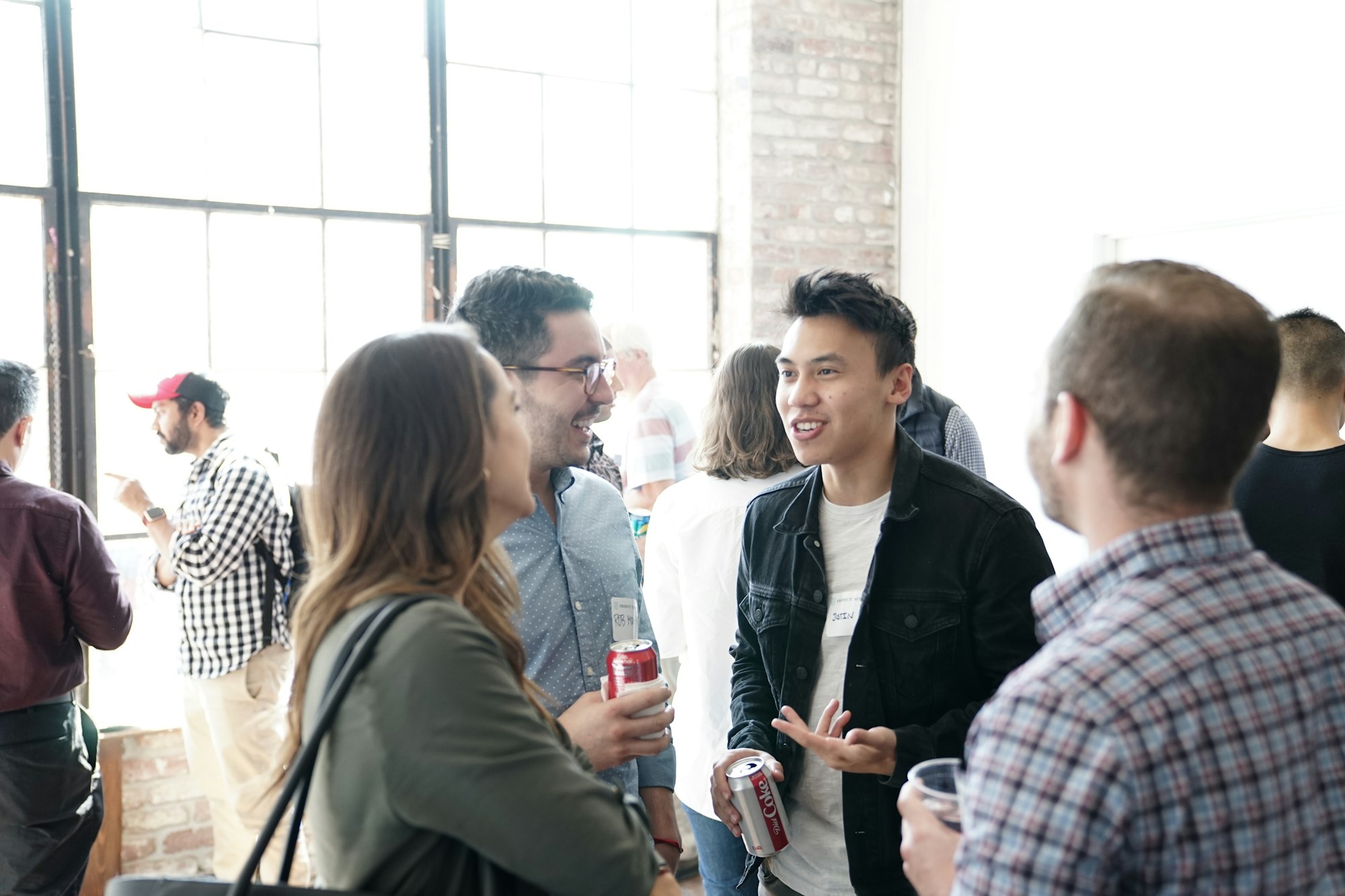
Featured Photo by Product School / Unsplash
Related Stories
 Technology
Chipmaker Marvell Edges Above Estimates But Stock Falls
12 minutes ago
 Technology
Why Nvidia loves funding startups
1 hour ago
 Technology
Marvell Technology, Inc. Reports Second Quarter of Fiscal Year 2027 Financial Results
1 hour ago
 Technology
First Thing: Meta agrees to make sweeping changes to apps for teens
2 hours ago
 Technology
YZi Labs invests $12M across 24 startups in EASY Residency Season 4 cohort
2 hours ago
 Technology
Kitchener, Ont. company creates technology that lets vehicles ‘talk’ to traffic lights
2 hours ago
 Technology
Russia says UK ‘playing with fire’ amid reports CIA chief has warned Kremlin not to attack Nato
4 hours ago
 Technology
CesiumAstro Buys 1Aardvark in Third 2026 Deal
4 hours ago