
Why AI Is Making Product Creation Easier and Building a Business Harder
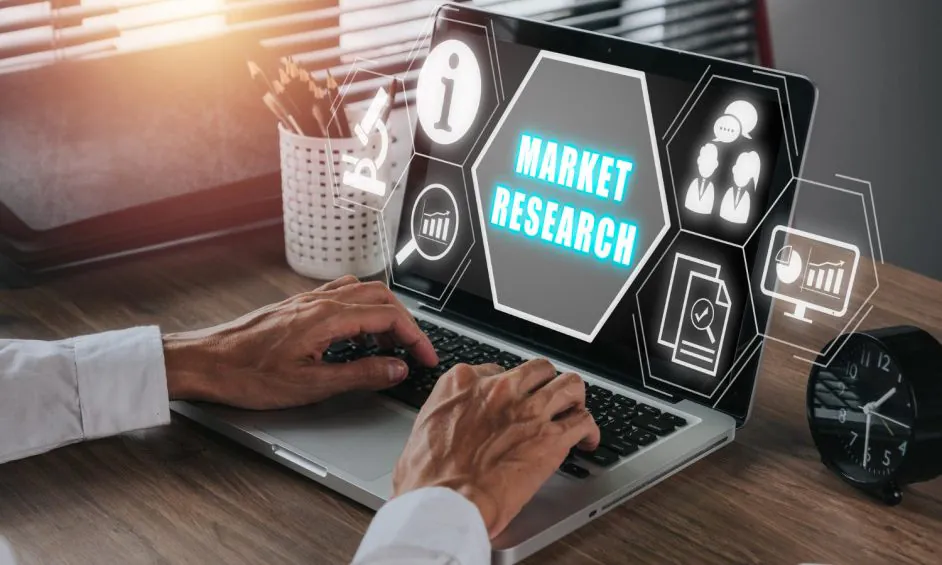
We find ourselves in a reality where creating digital products is no longer a privilege of large companies. Today, a single person with a laptop and access to AI tools can build an MVP, test an idea, write code, and prepare a product for market launch in just a few days. Until recently, accomplishing the same would have required months of work and the involvement of specialists across multiple disciplines.
At first glance, this should have ushered in a golden age of entrepreneurship. Yet I increasingly observe the opposite trend: for startups, attracting an audience and winning market share is becoming more difficult. AI changes the rules of competition.
We were raised to build, not to sell
To understand why this is happening, it helps to step outside the usual conversation about technology. For thousands of years, humanity lived in an agricultural world where physical labor was the primary source of value. Then came the Industrial Revolution, shaping a model of society that defined both the economy and the education system for more than a century.
Our parents were engineers, accountants, and other professionals. They were taught to acquire a profession, become skilled specialists, and build careers within large organizations. Most of them never had to create a company from scratch.
In many ways, we were prepared for the same world. We learned how to write code, design buildings, and treat patients, but rarely how to find an audience or turn a technology into a business. For the first time, innovation has given millions of people the ability to create products on their own, yet most of us are still shaped by the mindset of the previous era. We have gained the tools of entrepreneurs while retaining the habits of specialists.
I often find myself reflecting on the projects I worked on early in my career. I believed that coming up with a great idea and executing it before anyone else was enough. The logic seemed straightforward: if a product solves a real problem, the market will eventually recognize its value.
One of the first projects I worked on in the mid-2000s was focused on multi-factor authentication. Back then, people frequently used internet cafés, logged into accounts from shared computers, and password theft was a common problem. It seemed obvious to me that account access should be verified through a mobile device. Today, that idea feels so natural that we take it for granted, but at the time, it was often met with confusion. I presented the solution to various companies, explained the security risks they faced, and could not understand why it generated so little interest.
Looking back, I can see that some of the projects I worked on early in my career later appeared in other companies and eventually became successful businesses – sometimes even billion-dollar industries. At the time, that felt unfair. But it taught me an important lesson: ideas are rarely unique. If an idea occurs to you, there is a very good chance that someone else, somewhere else in the world, is thinking about the same thing at roughly the same time. The difference lies in the ability to bring that idea to market, communicate its value, and find people willing to pay for it.
Entrepreneurship makes all the difference
Over the years, while working with AI companies at Keymakr, I have seen many teams build high-quality products, prepare datasets, train models, and solve extremely complex engineering challenges, only to run into a much more fundamental question: how do you communicate the value of your solution to customers and integrate it into a real business process?
The consequences were often reflected in the fate of those startups. Some gradually grew into successful companies and secured their place in the market. Others – despite what I considered brilliant ideas – never managed to turn their innovations into actual market demand.
I also have a great example that happened recently. After leaving her previous startup, one of my friends started a new venture. At the time, she had no engineering team, no finished product, and not even an MVP. What she did have was a clear understanding of the problem she wanted to solve and the ability to communicate that vision convincingly to the market. Within a few months of speaking with investors, her startup was acquired before the underlying technology had even been fully developed. That is how people with a natural entrepreneurial instinct operate. Add a bit of luck to the equation, and you get the kind of combination that can lead to remarkable success stories and multi-million-dollar deals.
The interesting part is that all these stories are about entrepreneurship and… scarcity. AI removes almost all constraints, creating entirely new market dynamics. And one of the most interesting consequences of this is what I call product inflation. Markets are beginning to face an oversupply of products. Where people once chose between a handful of solutions, they now choose between hundreds. In some cases, they stop choosing altogether and simply create the tool they need themselves. The cost of development is falling, but the cost of attention is rising.
This transformation extends beyond products themselves. As technologies become more sophisticated, increasing value is being created by the services that help these technologies evolve, deploy, and scale.
This shift is particularly visible in robotics. At Introspector, for instance, we work with companies developing solutions for Physical AI, the most discussed technology sector today. Yet even in this space, value is created not only by the products themselves, but also by the services and infrastructure that enable those products to improve and mature. The creation of unique, custom datasets becomes just as important to the ecosystem as the models or robotic platforms themselves.
At the same time, we are likely to see the rise of more solopreneurs – entrepreneurs building fully fledged companies without traditional teams. But this will only further increase the number of new products and service suites entering the market every day.
But this does not mean competition will become easier. We may be entering an era where the greatest concentration of entrepreneurial talent in history competes for the same markets, customers, and attention.
The winners will not be determined by who had the best idea. They rarely are. They will be determined by who can better understand people, move faster, communicate value more clearly, and execute more effectively. The tools are becoming available to everyone. What people do with them is what will make the difference.
Michael Abramov is the founder & CEO of Introspector, bringing over 15+ years of software engineering and computer vision AI systems experience to building enterprise-grade labelling tools.
Michael began his career as a software engineer and R&D manager, building scalable data systems and managing cross-functional engineering teams. Until 2025, he has served as the CEO of Keymakr, a data labelling service company, where he pioneered human-in-the-loop workflows, advanced QA systems, and bespoke tooling to support large-scale computer vision and autonomy data needs.
He holds a B.Sc. in Computer Science and a background in engineering and creative arts, bringing a multidisciplinary lens to solving hard problems. Michael lives at the intersection of technology innovation, strategic product leadership, and real-world impact, driving forward the next frontier of autonomous systems and intelligent automation.
Related Stories
 AI News
Bill Gross bets AI can help mass
4 days ago
 AI News
Nigeria records 93% rise in AI micro
4 days ago
 AI News
The Italian gelato maker using AI to invent new flavours
4 days ago
 AI News
Closing the Gap Between Agentic CX Pilots and Production
4 days ago
 AI News
New Brunswick data centre debate highlights cross
4 days ago
 AI News
How to Structure an AI Agent Referral Fee Agreement Between Startups
4 days ago
 AI News
No, AI didn’t delete a Swedish reality TV series
4 days ago
 AI News
There is no AI in Armageddon. Artificial intelligence is a tool, not an apocalypse
4 days ago