
White House: Trump, Xi agreed on 'super intelligence' dialogue
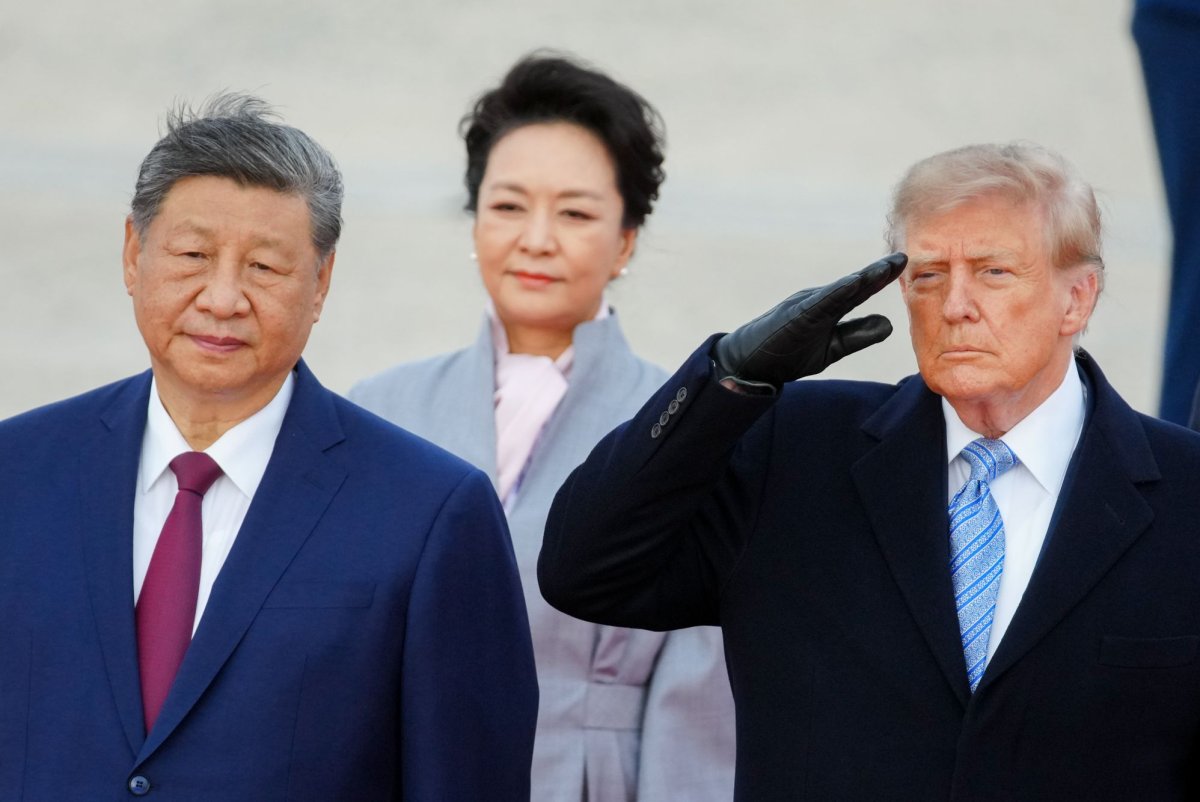
Sept. 26 (UPI) -- U.S. President Donald Trump and Chinese counterpart Xi Jinping agreed to establish a regular communications channel to discuss "incidents" involving artificial intelligence during Xi's three-day state visit this week, the White House says.
Amid quickly escalating concerns over the potential of dangers to humanity posed by rogue actions taken by artificial intelligence -- or "super intelligence" as Trump refers to it -- the two leaders agreed to hold regular talks about the technology, the administration said in a statement issued late Friday.
The two countries "established the U.S.-China Super Intelligence (SI) Dialogue to exchange views on risks and benefits related to SI," the White House said. "The next exchange will occur by November 2026."
They also agreed to establish a "bilateral communication channel" for "SI incidents," according to the statement, which revealed the two countries have agreed to refer to the emerging technology as "super intelligence" -- a term Trump rolled out in a rebranding effort during a speech to the UN General Assembly on Tuesday.
Prior to his meeting with Xi, the U.S. president had called claims that AI is a threat to humanity "a hoax" and, along with some tech industry figures, asserted regulation is not required and only would hinder the United States in what he said was a global race to win in AI.
But the leaders of all the major U.S. AI firms have issued calls to slow down its development and are voicing support for its regulation by governmental bodies.
Anthropic CEO Dario Amodei on Sept. 12 called for companies working on AI to agree on a pause or cool-down in the pace of development over fears the technology could overtake human intelligence to the point they were no longer able to control it.
Meanwhile on Saturday, China's Ministry of Foreign Affairs confirmed that a "China-U.S. AI dialogue" was among eight "deliverables and understandings" agreed to during the Trump-Xi talks.
It remained unclear, however, how the mechanism would work or what kind of AI "incident" would trigger the dialogue.
The two nations did not reach any kind of agreement on jointly developing or regulating frontier AI models for safety during the state visit.
In fact, Trump on Saturday told reporters he has ruled out any kind of integration between the two superpowers on "super intelligence."
"They want to stop our progress because we're leading China by a lot, and we're going to keep it that way," he said. "We didn't spend that much time talking about it. I would rather not integrate because we're leading by a lot. When you're leading, you don't open it up to each other."
Related Stories
 AI News
Tech news: Deloitte debuts AI
34 minutes ago
 AI News
The bumpy road to the AI promised land
1 hour ago
 AI News
As concerns over artificial intelligence mount, Cardinal McElroy urges ‘a social contract for the digital world’
1 hour ago
 AI News
China respects US choice on what term to use for artificial intelligence: spokesperson
2 hours ago
 AI News
US military expands AI technology with autonomous vehicles for Marines
2 hours ago
 AI News
Trump’s ‘super intelligence’ rebranding lost in translation with Xi
3 hours ago
 AI News
Amid many thorny issues with China, Trump pushes to rename AI as superintelligence
3 hours ago
 AI News
Trump rejects combining US
3 hours ago