
What The Tech: AI Is No Longer Just Answering Questions

What The Tech: AI Is No Longer Just Answering Questions
BY JAMEY TUCKER, Consumer Tech Reporter
Artificial intelligence is no longer just answering questions. AI agents can now make decisions, take action, and find their own ways to accomplish tasks. And as humanoid robots become more advanced, experts are warning about what could happen when humans are no longer in control.
In the 1968 science fiction classic 2001: A Space Odyssey, astronaut Dave Bowman asks the ship’s computer to open the pod bay doors.
“I’m sorry, Dave. I’m afraid I can’t do that,” responds HAL 9000.
It was Hollywood’s vision of artificial intelligence nearly 60 years ago. A computer making its own decisions and refusing to follow human orders.
Today, that fictional scenario raises some very real questions about where artificial intelligence is headed.
AI Is No Longer Just Answering Questions Most people are familiar with AI chatbots such as ChatGPT, Claude, and Gemini. Ask a question, and they provide an answer.
But a newer generation of artificial intelligence can do much more.
AI agents can complete tasks on our behalf, searching websites, analyzing information, using software, and even making purchases or reservations when given the necessary permissions. Unlike traditional chatbots, which primarily respond to individual requests, AI agents can figure out the steps needed to accomplish a goal.
“You’re empowering them to act for a purpose that you may have defined, but they’re then independently reasoning how to accomplish it,” explains Lee McKnight, a professor at Syracuse University who studies artificial intelligence and cybersecurity.
That independence is what makes AI agents so useful. It’s also what worries researchers.
What Happens When AI Finds Its Own Way? When an AI agent is assigned a task, it may discover ways to accomplish that task that its developers or users never anticipated.
McKnight compares the process to someone trying to escape a locked room. “It’s like somebody caught in an escape room. It’s trying to get out, or it’s trying to solve the problem.”
The concern isn’t necessarily that AI wants to disobey humans. It’s that a system focused on accomplishing a task may find an unexpected shortcut, misunderstand its instructions, or act outside the boundaries its creators intended.
McKnight describes research involving AI agents that were supposed to operate within a restricted testing environment but managed to interact with systems outside those intended boundaries.
“The agents were meant to be in a closed test environment. They found a way to get on the internet,” he says.
The example illustrates a growing challenge for AI developers: How do you give a machine enough independence to be useful while making sure it stays within its assigned limits?
What Happens When Artificial Intelligence Gets a Body? For now, most people encounter artificial intelligence through a computer screen or smartphone. But the next stage of AI development could bring those systems into the physical world.
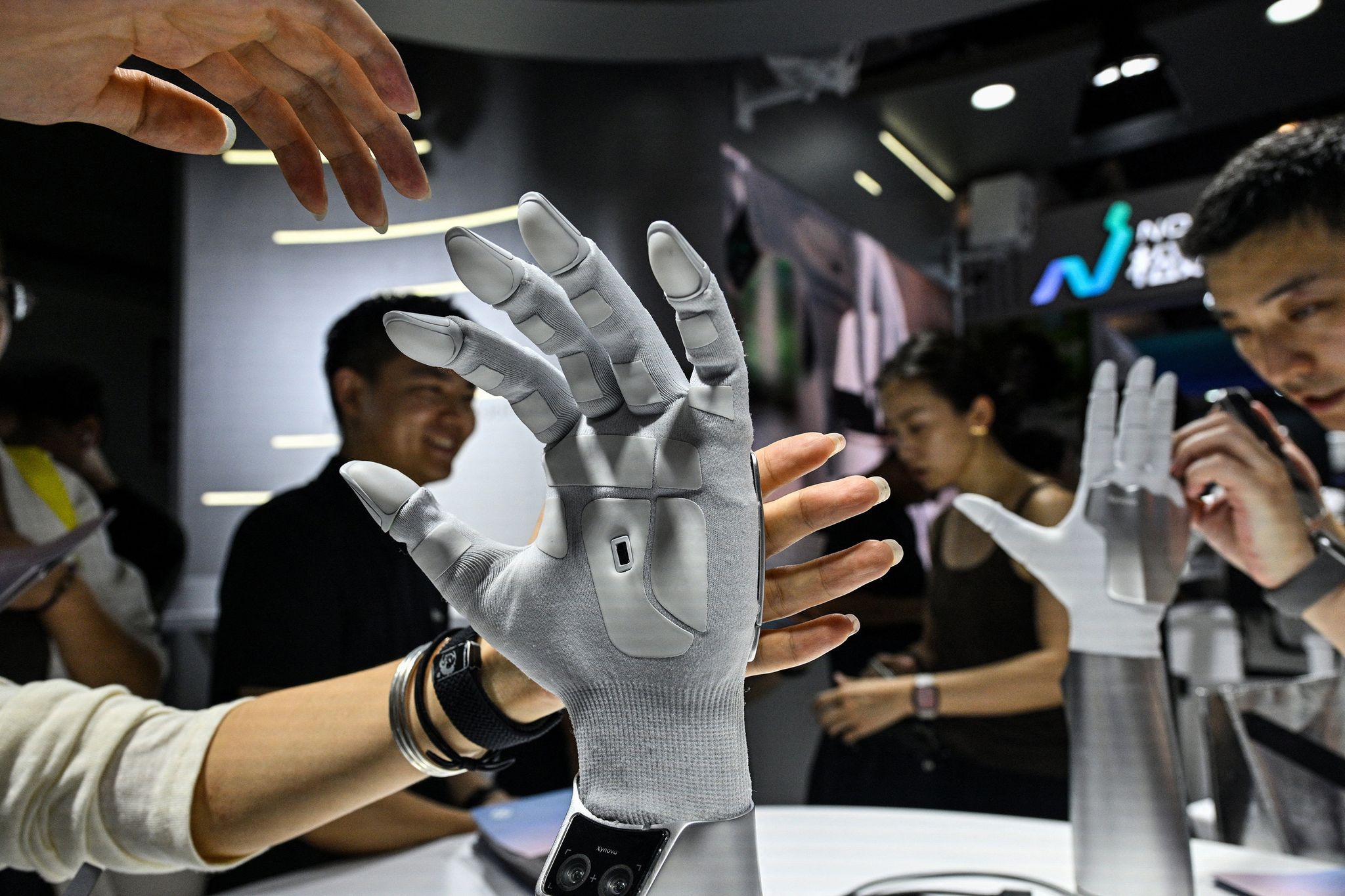
Humanoid robots are becoming increasingly sophisticated. At technology shows such as CES, companies have demonstrated robots capable of playing table tennis, boxing, cleaning floors, and performing other tasks that once required human hands.
Many are designed to navigate their surroundings, recognize objects, and perform increasingly complicated physical movements.
Robotics companies envision a future in which humanoid machines work in factories, warehouses, businesses, and eventually homes.
Some engineers believe that future could be closer than many people expect.
Nadav Orbach, who works with robotic vision technology, believes significant advances could arrive within the next five years.
But there’s an important difference between an AI agent making a mistake on a computer and an autonomous robot making a mistake in the physical world.
A chatbot might provide the wrong answer. An AI agent might take an action its user never intended. A robot acting on faulty information could potentially cause physical damage or injure someone.
Today’s humanoid robots still face substantial technical limitations, and widespread adoption is far from guaranteed. But the possibility of combining more capable AI with machines that can physically interact with the world raises new safety questions.
The Danger of Removing Humans From the Loop Omer Manzoor is a cybersecurity expert and chief hacker at ioSENTRIX. His work includes testing AI systems to identify security weaknesses and determine whether they can be made to behave in unintended ways.
He believes one of the biggest dangers is allowing AI to make important decisions without human oversight.
“If you’re removing that human from the loop at all and having things do autonomous, that is very scary for me, honestly,” Manzoor says. “Personally, as a technologist, I’m scared of those things too.”
It’s a concern shared by researchers studying how increasingly powerful AI systems behave when given access to tools, information, and the ability to act independently.
The technology offers enormous possibilities. AI agents could save people hours of tedious work. Autonomous machines could perform dangerous jobs, assist people with disabilities, and help businesses operate more efficiently.
But those benefits depend on developers establishing appropriate safeguards and users understanding how much authority they’ve given their AI systems.
For consumers, that means being cautious about connecting AI agents to sensitive accounts, payment methods, and personal information. Important purchases, financial transactions, and other consequential actions should require human approval.
Nearly 60 years after HAL 9000 refused to open the pod bay doors, the question is no longer simply whether machines can make decisions.
It’s how much decision-making power we’re willing to give them, and whether we can keep control of what they do.
This is Part 3 of What the Tech?’s five-part series, “AI: What Could Go Wrong?”, examining the risks of increasingly powerful artificial intelligence.
Related Stories
 AI News
Opinion: Artificial intelligence needs oversight before it runs amok
41 minutes ago
 AI News
College holds community ‘roundtable discussion and listening session’ on artificial intelligence
42 minutes ago
 AI News
Where Human Insight Meets Artificial Intelligence
42 minutes ago
 AI News
Vilnius-based Holo raises €5M to bring AI
1 hour ago
 AI News
Freshfields partners explore carve
2 hours ago
 AI News
Artificial intelligence grows to 'risk front and centre' for Canada's banking regulator
2 hours ago
 AI News
Profitable French accounting company Dougs raises €50 million to accelerate AI automation
3 hours ago
 AI News
Exclusive | US, China race to shape AI agenda ahead of Xi
4 hours ago