
U.S. may seek win with Mexico in wake of collapsed trade talks with Canada, says ex
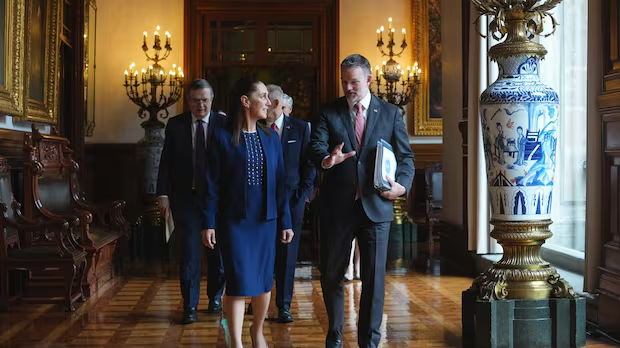
U.S. may seek win with Mexico in wake of collapsed trade talks with Canada, says ex-negotiator
Meanwhile, Mexico's secretary of economy says it's in everyone's interest to find common ground
The collapse of trade talks between Ottawa and Washington could see U.S. negotiators try to "aggressively" secure a win with Mexico in their ongoing bilateral talks, says a former Mexican trade negotiator.
Kenneth Smith Ramos, Mexico's former chief technical negotiator during the initial 2017 to 2019 Canada-U.S.-Mexico Agreement (CUSMA) negotiations, says he expects the U.S. to try to fashion a framework agreement with Mexico before the end of the year, pushing resolutions around thornier matters into 2027 — like the U.S. seeking to put restrictions around Mexican agricultural exports.
"It is a possibility that in the upcoming [negotiating] rounds, weeks or months … that the U.S., for political reasons, like it did with the European Union … comes out and says, 'we have a framework agreement,'" said Smith Ramos, a partner with Mexico City-based Agon, a corporate consulting and legal services firm, in an interview with CBC News.
Trump's top trade negotiator disputes Canadian assertion that U.S. made last-minute demands
Canada, U.S. far apart on tariff deal as deadline looms: sources
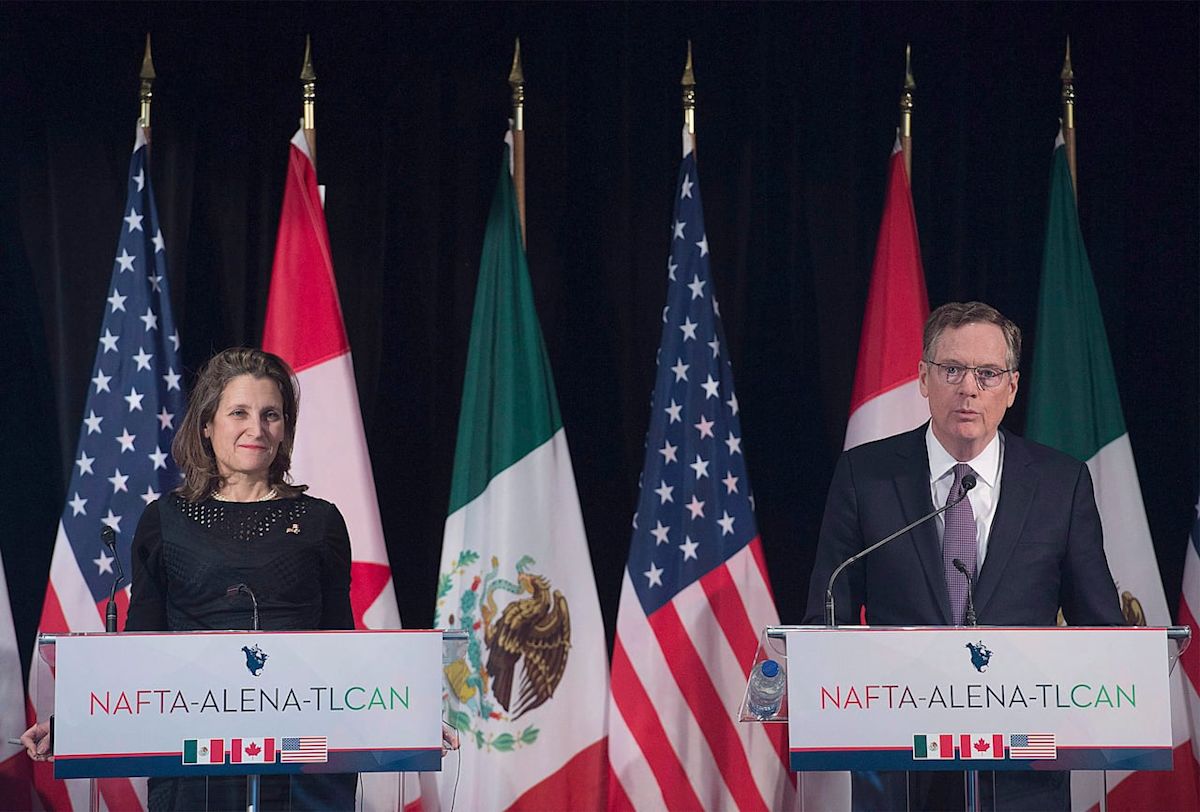
Canada and Mexico have both been engaging with the U.S. individually to settle tariff and other specific bilateral trade irritants in hopes of firming up agreements before entering into trilateral talks on amending and extending CUSMA.
Talks between Canada and the U.S. fell apart on Aug. 21 when Prime Minister Mark Carney pulled his negotiators back to Ottawa. Carney said the U.S. introduced last minute demands on culture, autos and sovereignty that Canada could not stomach.
The talks were aimed at forestalling a U.S. threat to impose 50 per cent tariffs on a wide range of Canadian products, impacting about $27-billion worth of Canadian goods.
Canada has since retaliated with dollar-for-dollar counter-tariffs on more than 700 different U.S. imports that come into force on Sept. 8.
The Canada-U.S. trade dispute has now indefinitely delayed any trilateral talks on advancing CUSMA, said Smith Ramos.
"We don't know what is going to happen with these tariffs and threats."
The U.S. announced on July 1 that it would not extend the CUSMA agreement in favour of renegotiating the terms of the deal.
Canada and Mexico both wanted to extend the agreement. The two countries are adamant the continental trade agreement is good for all three countries.
Mexico's Secretary of Economy Marcelo Ebrard told reporters Thursday that tensions between Canada and the U.S. don't "favour" Mexico and that it's in everyone's interest to find common ground and move forward.
"Hopefully they will come to some agreement, they were very close just a few days ago," said Ebrard, who is heading to Washington, D.C., next month for another round of bilateral talks.
"The North American region needs to integrate, we need to work together one way or another, and we expect it to happen, but it's difficult to know when."
Greer blames Canada for failed talks as premiers weigh further retaliation
Mexican President Claudia Sheinbaum also chose her words carefully when asked about Canada-U.S. trade tensions earlier this week. Sheinbaum spoke with Carney on Aug. 20, the day before the prime minister pulled the plug on trade talks.
"I spoke with Prime Minister Carney on Thursday. I believe that this breakdown hadn't happened yet. I don't want to call it a breakdown, this disagreement — it's better said that way, this disagreement in talks," said Sheinbaum, during her Monday morning news conference.
The Sheinbaum administration has to handle the matter delicately while managing their own unresolved issues at the trade talk table with the U.S., according to Solange Marquez, vice-president of policy with the Canadian Council for the Americas.
"They are trying to avoid … any contamination of the dialogue, of their conversations, with what is happening with Canada," said Marquez.
"From the Mexican side, I am seeing more fear about making the U.S. authorities angry. ... Now that Canada is out of the negotiations, Mexico is trying to protect their own side."
Mexico trade mission launches in Toronto as businesses seek to expand ties with Canada
Marquez said it seems the era of free trade in North America has ended.
"What we're seeing now is there is no conversation about a free trade agreement. We are negotiating on tariffs, a new trade agreement, without the word free there," she said.
"We are negotiating under the framework for a trilateral agreement, but what we see in reality is two bilateral agreements."
Mexican journalist Alex González Ormerod, executive director of The Mexico Political Economist, said that CUSMA "might end up being a weird Frankenstein deal where Mexico and Canada opt out of different things that the U.S. has imposed on the other."
González Ormerod said his own Mexican government sources have told him that the U.S. has also made "outrageous demands" of the Mexicans at their bilateral table.
"It looks like Canada is the first to respond, but it's not the first to be offered a terrible deal with the expectation that people will fold," he said.
"The Mexicans are quite good at speaking softly but not complying with the most outrageous things, versus the Canadians who've decided it's too humiliating or insulting."
Canada at risk of being outmanoeuvred on trade, experts warn
Time to leave the U.S. out of it?
Marquez and González Ormerod both said Canada and Mexico need to solidify their bilateral trade ties outside of their relationship with the U.S.
While both countries have expressed a desire to strengthen ties — sending trade missions to each other this year — the dominant role of the U.S. obscures and limits the potential of a true Canada-Mexico partnership, they said.
"The problem is that Mexico and Canada always see each other through the lens of Washington," said Marquez.
"Maybe the Mexico-Canada trade relationship would be much better off if we actually had to deal with the other as equals and not through the prism of the United States," said González Ormerod.
Jorge Barrera is a Caracas-born journalist currently based in Mexico City for CBC News. He previously worked with CBC's Investigative Unit and CBC's Indigenous Unit. Follow him on X @JorgeBarrera or email him jorge.barrera@cbc.ca.
Related Stories
 Canada
Canada
49 minutes ago
 Canada
Carney government asks court to strike down climate litigation
49 minutes ago
 Canada
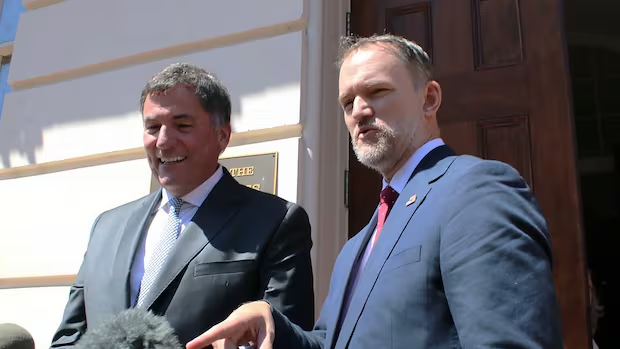
As insults fly around trade, negotiators for Canada and the U.S. avoid getting personal in public
49 minutes ago
 Canada
In Ohio, Canada
49 minutes ago
 Canada
Alberta’s current, former premiers offer contradicting views on U.S. counter
49 minutes ago
 Canada
Gregor Robertson challenged on the Broadway Construction project
1 hour ago
 Canada
Harley-Davidson becomes unlikely flashpoint in Canada
1 hour ago
 Canada
‘We’ve been so worried’: Another B.C. couple missing after Nepal flash flooding
1 hour ago