
U.S. hits Canada, 59 other countries with new tariffs just days after 50% levy on Canadian goods announced
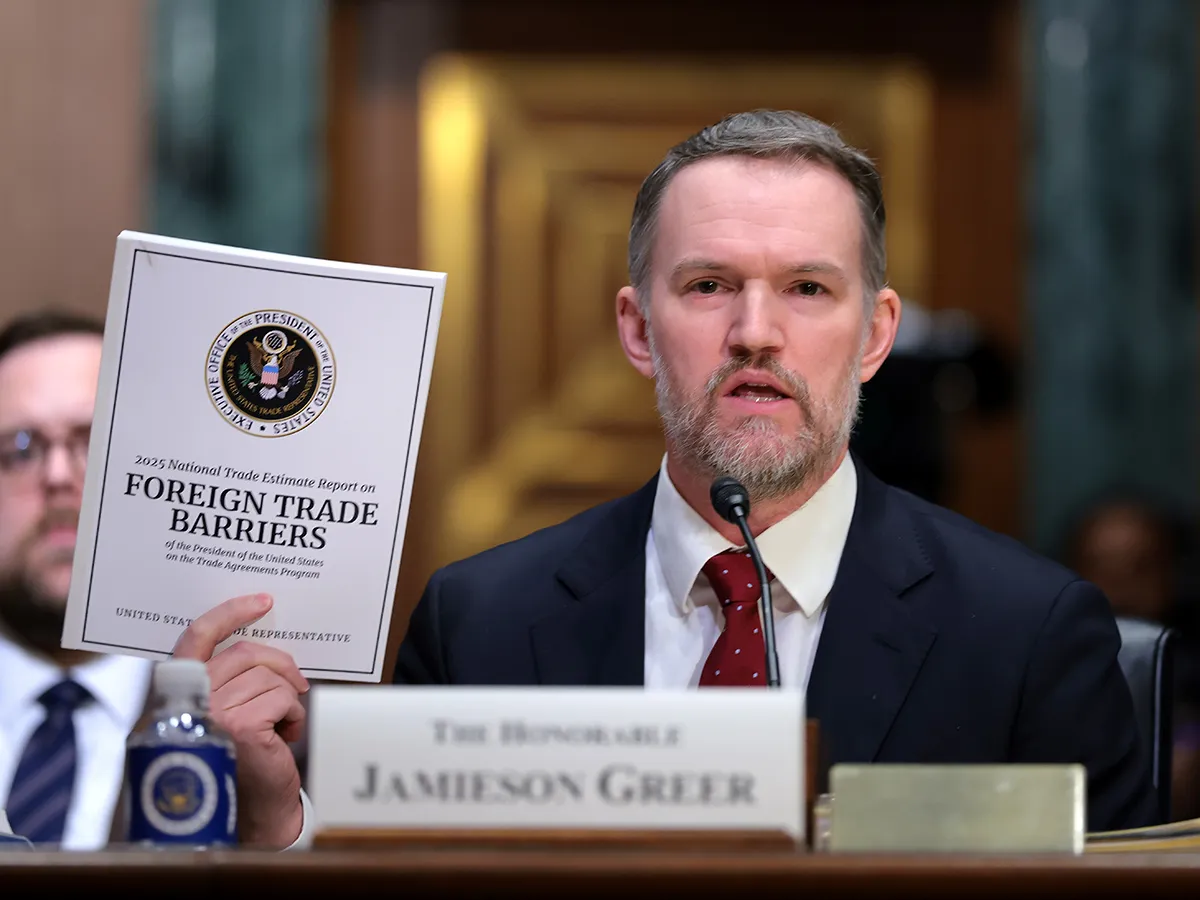
U.S. Trade Representative Jamieson Greer announced on Thursday that President Donald Trump is taking more tariff action against Canada, as well as 59 other economies.
This comes just three days after the USTR invoked the never-before-used Section 338 of the Tariff Act of 1930 to introduce anti-discrimination tariffs against roughly 5 per cent of Canadian goods imported into the U.S. — at a whopping 50 per cent.
Greer said the White House is imposing the new tariffs under Section 301 of the Trade Act of 1974 against 60 economies following a forced labour investigation, which launched in March.
The USTR probe included two rounds of public hearings and more than 2,100 public comments, resulting in findings that the economies — Canada and Mexico were lumped together with China and dozens of other countries — were not sufficiently screening goods produced by child or forced labour.
“President Trump recognizes that decades of moral suasion have not eradicated forced labor from global supply chains,” Greer said in a statement.
“The United States has had a forced labor import ban for nearly a century, and rigorously enforces it; it’s well past time for our trading partners to do the same.”
But trade experts say this has little to do with forced labour.
“The Trump administration has shown little actual concern so far for human rights,” said Andrew Hale, fellow for Washington-based Advancing American Freedom.
“The Trump administration is using forced labour as an excuse to impose tariffs just as they declared emergencies under IEEPA to impose tariffs,” he added.
Hale also noted that “many Americans are wearing clothes that have forced labour in the supply chain. The irony is that many of our allies who are the targets of these new tariffs have better laws and enforcement against forced labour.”
Including Canada in the investigation had surprised trade experts back in March.
Canada’s inclusion “was unbelievably shocking to me,” Clark Packard, research fellow at Cato’s Herbert A. Stiefel Center for Trade Policy Studies, said at the time.
“This poisons the well in terms of any USMCA negotiation,” he added.
Investigations under Section 301, which follow a formalized process of consultations and hearings, usually take a year to complete. But U.S. trade officials had said they expected the probes to be completed by mid-summer — expedited, trade watchers said, to replace the time-limited Section 122 duties imposed after the U.S. Supreme Court ruled against the IEEPA tariffs.
“The administration is trying to recreate what they lost when the Supreme Court shot that abuse of power down,” Hale said.
The new duties have been set up under three categories: 10 per cent for countries with forced-labor prohibitions, including Canada and Mexico; 10-12.5 per cent net of Most-Favoured-Nation rates for some products from the EU, Taiwan, Japan, Korea, and Switzerland; and 12.5 per cent for the remaining countries.
Related Stories
 Canada
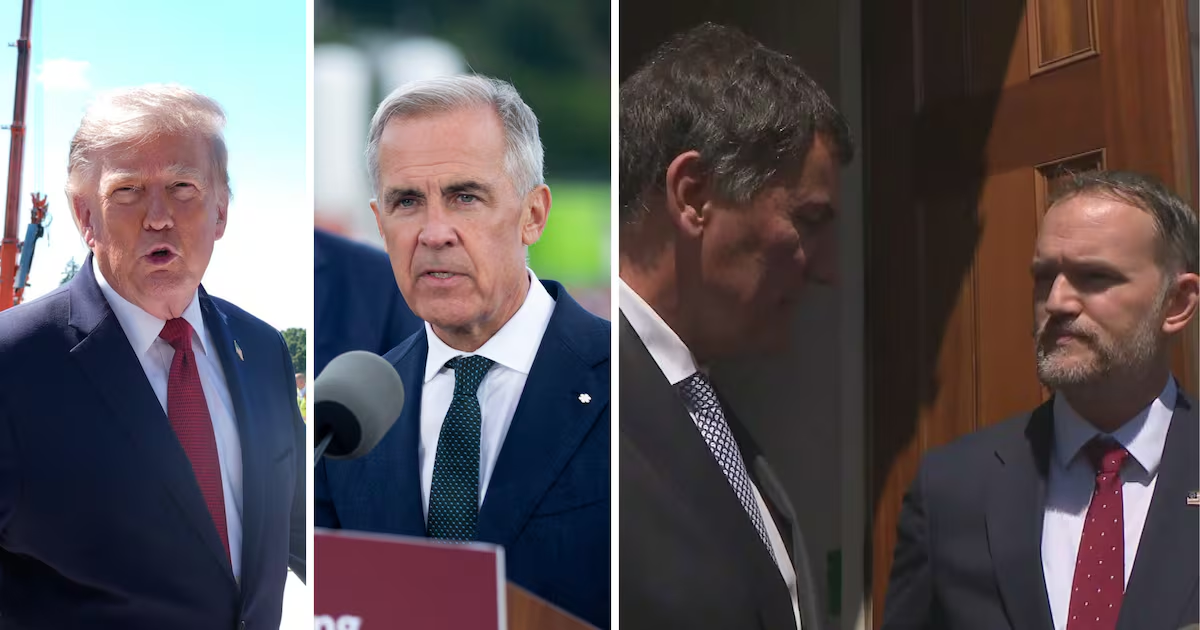
LeBlanc and Greer to meet in Washington hours before tariff deadline. Live updates here.
14 minutes ago
 Canada
‘It’s very unnerving’: Ottawa mom warns after alleged incident involving Uber Eats driver, child
14 minutes ago
 Canada
Justin Ling: Mark Carney may be on the verge of making an unwise concession to Trump
14 minutes ago
 Canada
Drug trafficking suspects sought by U.S. may seek trial in Canada instead
1 hour ago
 Canada
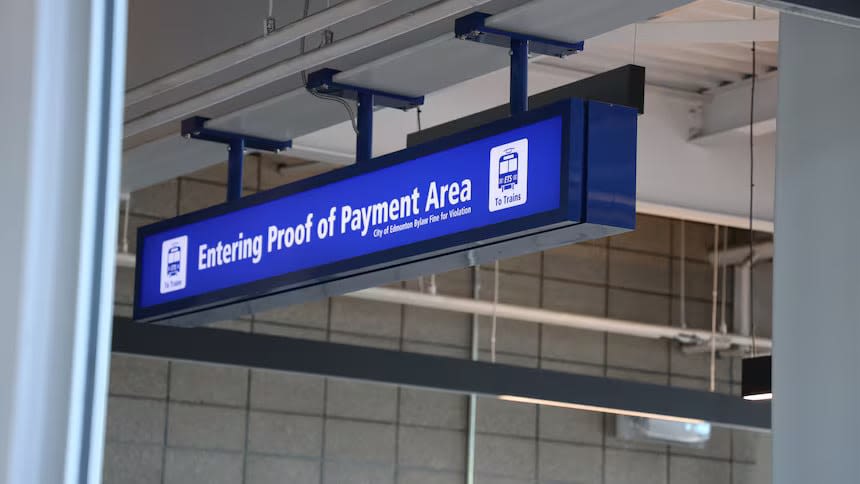
Edmonton to revisit fare gates at LRT stations
1 hour ago
 Canada
First Up: Carney battles two fronts to get a trade deal with fewer tariffs as Canada braces for more Trump impact
1 hour ago
 Canada
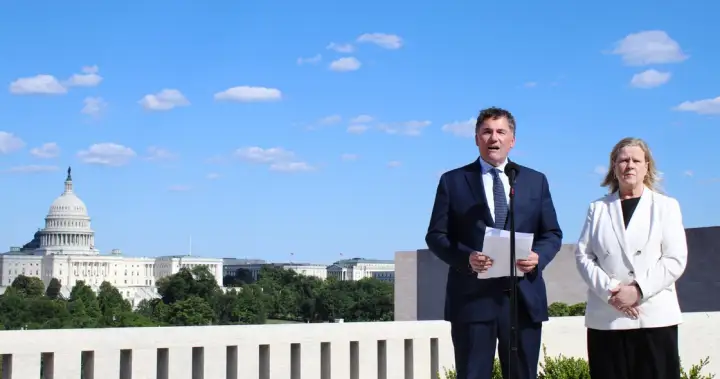
Canada, U.S. race to reach a trade deal before midnight tariff deadline
1 hour ago
 Canada
Reports: DEA joins investigation into Hayden Panettiere’s death
2 hours ago