
University researchers pioneer sustainable medical sensor technology
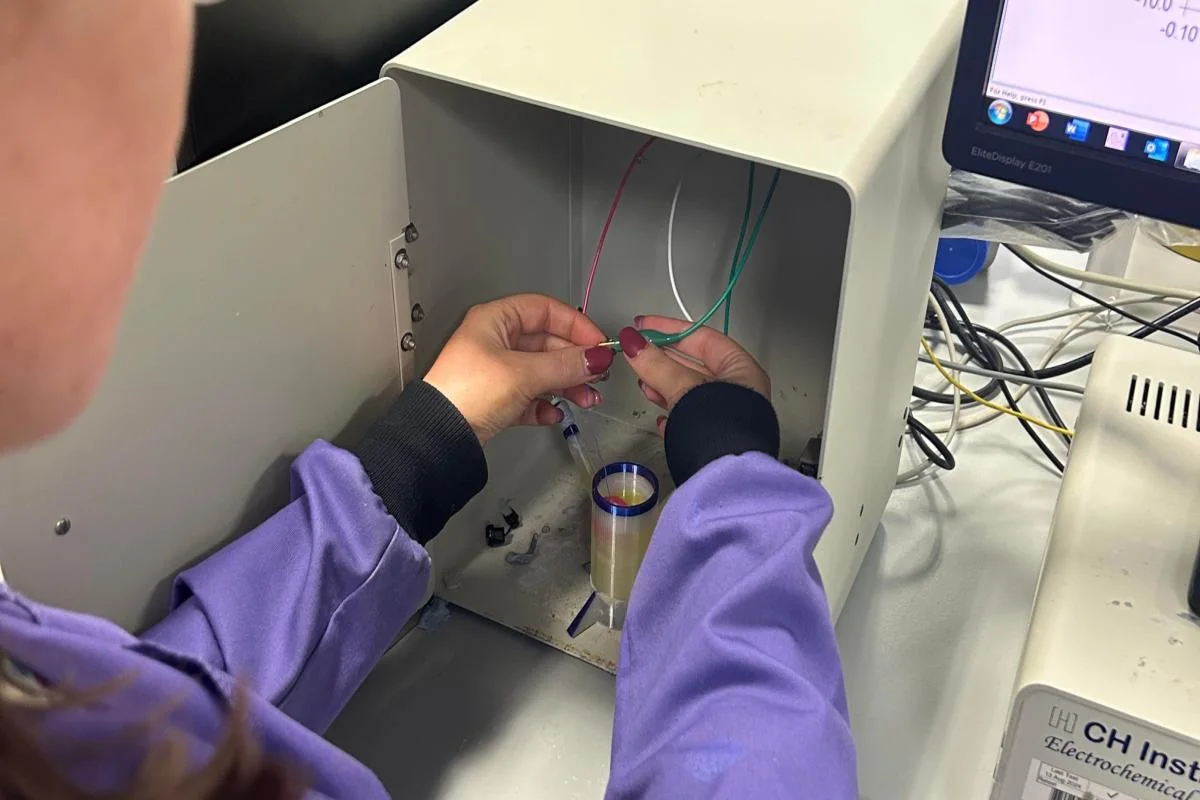
3D-printed medical sensors are being developed to improve global access to clinical diagnostics.
Researchers at the University of Brighton are designing affordable, sustainable sensor technology using low-cost materials and 3D printing, with the goal of broadening access to faster and more environmentally friendly diagnostic tools.
Professor Bhavik Patel, who leads the research, said: "Around the world, millions of people don't benefit from the latest diagnostic technologies because they're expensive to manufacture, require specialist equipment or simply aren't practical to produce at scale.
"We wanted to start again and ask a different question: what would a medical sensor look like if it was designed to be affordable, sustainable and simple enough for almost anyone to manufacture?"
Unlike many current sensors, which are single-use and generate plastic and chemical waste, the Brighton team's designs prioritise recyclability and low-cost materials without sacrificing performance.
Their 3D-printed devices are intended to be manufactured with standard printers and basic electronic components, reducing both financial and environmental barriers.
The technology has already produced working prototypes targeting several health conditions.
One example is a sensor that detects sugars in stool samples to diagnose intestinal malabsorption, a condition affecting nutrient absorption and linked to poor nutrition.
University project challenges bias in body image research
University ranked among UK's best for student satisfaction
New partnership creates career opportunities for university students
Professor Bhavik Patel. (Image: University of Brighton)
Developed by PhD graduate Dr Chloe Miller with biomedical science graduate Athira Prasanth and Professor Patel, the sensor costs less than 10p to make.
In another project, researchers created a device to detect TNFα, a protein signalling gut inflammation.
This could enable easier, non-invasive monitoring for patients with inflammatory bowel disease.
The team is also working on a bowel implant to deliver targeted medication and monitor intestinal health in real time.
Their expertise has led to collaborations across the UK and beyond.
With the University of Strathclyde and the National Measurement Laboratory, Professor Patel co-developed a 20p 3D-printed sensor for cardiac troponin, a protein released during heart attacks.
He said: "Although each of these projects tackles a different health challenge, they're all built on the same idea: creating diagnostic technologies that are better for patients, better for the environment and easier for the world to use."
Related Stories
 Technology
When Tech Companies Die, What Happens To The Products They Leave Behind?
1 day ago
 Technology
Two Finns supplying Russia with missile tech worth tens of millions
1 day ago
 Technology
Drones with pepper spray, four
1 day ago
 Technology
Micron Technology stock pre-market at EUR 800.50: memory storage - ad
1 day ago
 Technology
TAIEX Ends at 4
1 day ago
 Technology
ZAWYA: Technology, start-ups can double India
1 day ago
 Technology
Czech government to consider CZK 1 billion fund for startups
1 day ago
 Technology
GDIN Supports Eight Startups at CEATEC 2026 in Japan, Opens Door to Local Investor Collaboration
1 day ago