
University of Arizona wins five AI research awards

The University of Arizona has been awarded AI research awards funding for five projects through the U.S. Department of Energy’s new Genesis Mission
This national initiative hopes to use artificial intelligence (AI) to accelerate scientific discovery in areas including energy, national security and environmental research.
The AI research awards are part of the inaugural Genesis Mission funding round, which has selected 278 projects involving 342 universities, national laboratories, companies and nonprofit organisations across the United States.
The University of Arizona was one of only four universities to receive five lead awards, placing it among the nation’s top-performing institutions in the competition.
The Genesis Mission aims to combine AI, high-performance computing and quantum technologies to develop faster, smarter scientific research methods. Researchers will test whether AI-powered workflows can improve predictions, enhance experiments and lead to discoveries that have practical benefits for society.
The five University of Arizona projects cover a range of scientific areas, highlighting the growing role of AI in solving complex problems.
One project will focus on making AI-powered scientific systems more secure against cyberattacks. Led by electrical and computer engineering researcher Marwan Krunz, the work will develop physics-informed AI tools designed to protect research applications used in areas such as fusion energy, power grids and climate science.
Another project, led by ecology and evolutionary biology professor Scott Saleska, will use AI to help understand how water, plants, microbes and minerals interact beneath the Earth’s surface. By combining AI with research at Biosphere 2’s Landscape Evolution Observatory, scientists hope to improve environmental models that can be adapted to different ecosystems more quickly.
Assistant physics professor Pooja Siwach will lead a project aimed at improving quantum computing research. The team will develop an AI framework capable of determining the most efficient combination of classical computing, quantum computing or hybrid systems to solve complex nuclear physics problems. The research has potential applications in both scientific research and national security.
In another project, pharmacy researcher Travis Wheeler will use AI to predict how proteins move and function. Faster and more accurate protein modelling could support advances in bioenergy, agriculture and environmental science by helping researchers better understand enzymes and biological processes.
The university is also contributing to a fifth project led by Argonne National Laboratory. Hydrology and atmospheric sciences professor Laura Condon is collaborating on research that will develop an AI foundation model to improve predictions of water availability, groundwater movement and flood hazards across the continental United States.
The AI research awards show the University of Arizona’s ongoing investment in artificial intelligence across research, education and innovation. The university has expanded its AI capabilities in recent years, including the appointment of its first chief AI officer in 2025 and the development of interdisciplinary collaborations that connect engineering, environmental science, biology, computing and physics.
By combining expertise across multiple scientific fields with advanced AI technologies, the funded projects aim to speed up discoveries that could improve energy systems, strengthen cybersecurity, advance quantum technologies, and enhance environmental forecasting.
Related Stories
![India AI Startups Land $50M of $302.85M Funding Week [2026]](https://www.the1news.com.tamilzha.com/storage/news/news_1792337471_F8H1CF4eCK.webp) AI News
AI News
India AI Startups Land $50M of $302.85M Funding Week [2026]
31 minutes ago
 AI News
Consumer apprehension grows as US retailers adopt AI-assisted pricing tools
31 minutes ago
 AI News
Anthropic’s proposed AI safety bill only kicks in if 50 deaths or $1 billion in damages are on the line
32 minutes ago
 AI News
Giving AI a “crystal clear” view of the materials world
1 hour ago
 AI News
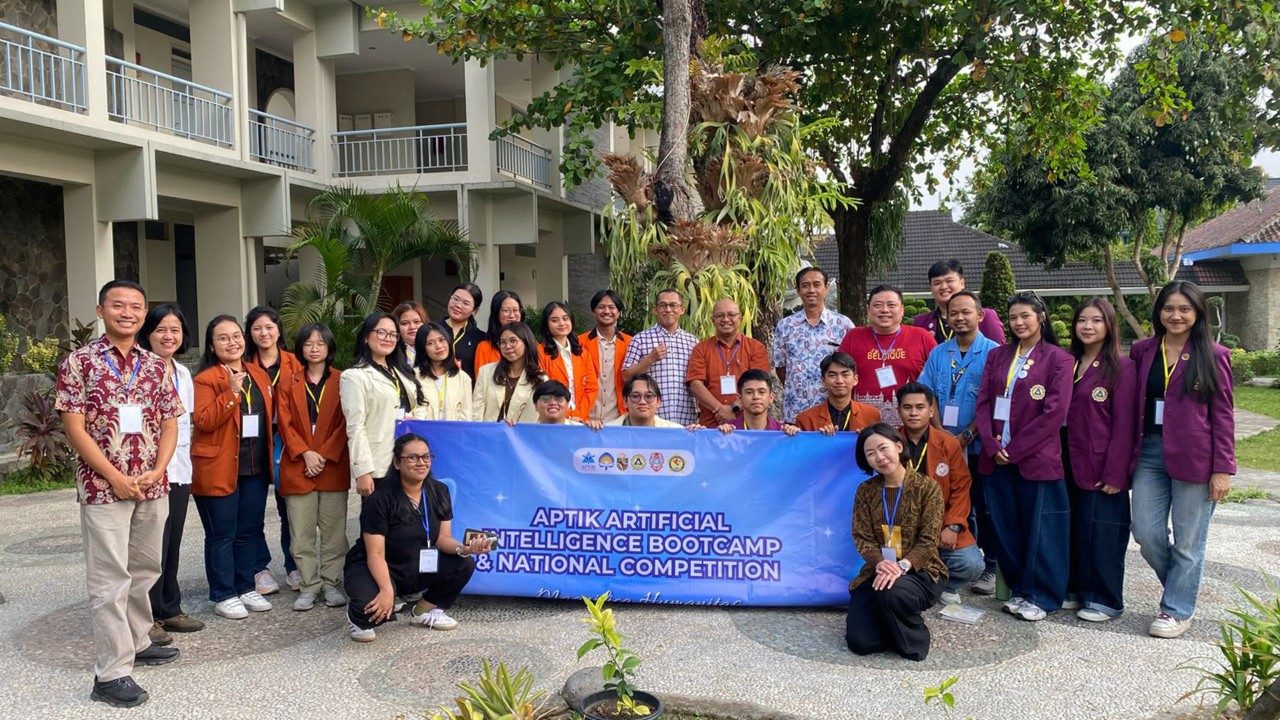
Catholic universities in Indonesia put “Magnifica Humanitas” into practice in the age of AI
1 hour ago
 AI News
Companies Are Realizing They're Spending a Fortune on AI Just So Their Employees Can Generate Error
2 hours ago
 AI News
Claude cracks 25
3 hours ago
''The greatest risk for Cyprus is remaining a passive consumer of artificial intelligence''
4 hours ago