
Two months to go: Inside Alberta separatists' campaign
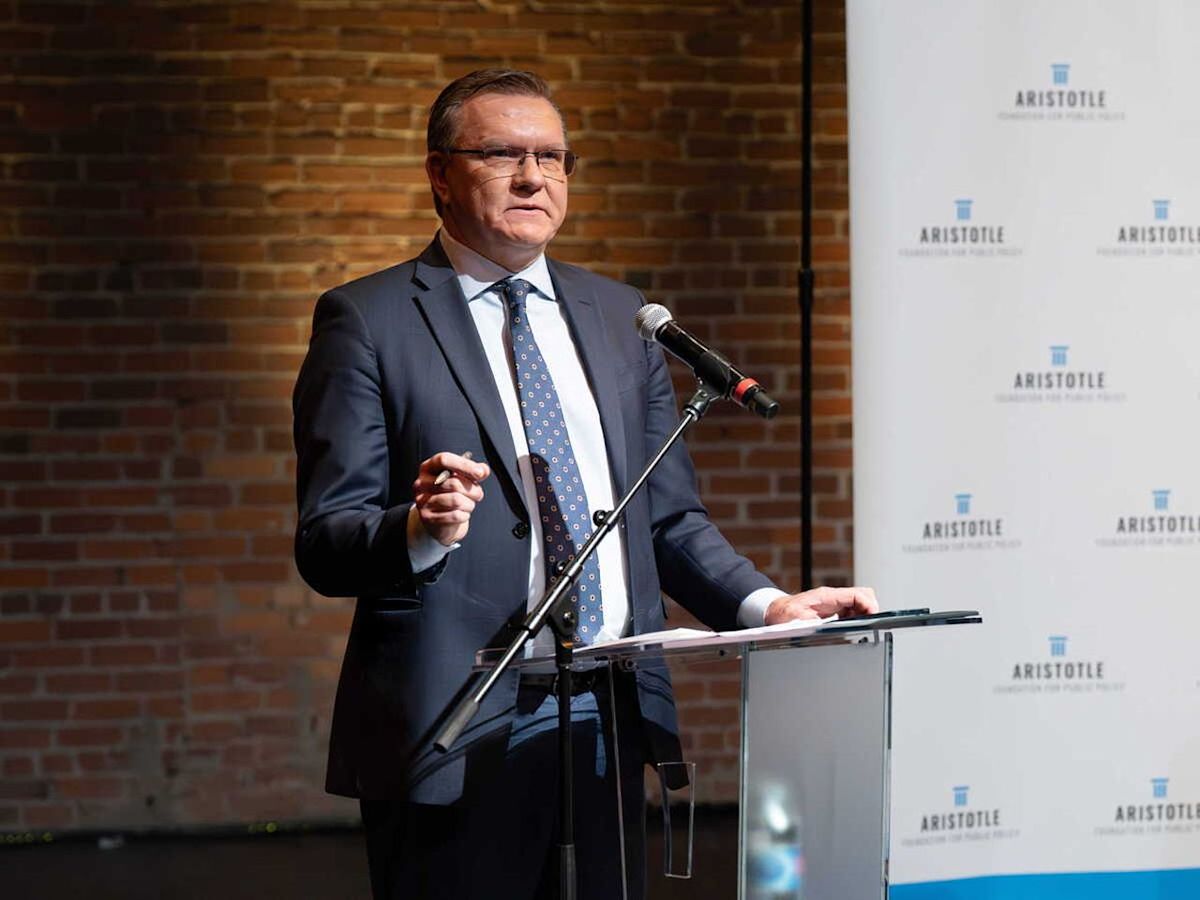
Alberta's independence referendum is now just two months away, with nothing less than the future of the country at stake, so I wanted to check back in with one of the more thoughtful separatist leaders.
I remain one of those flag-waving, Canada-first Albertans who intends to vote Option 1 on Oct. 19 — that Alberta should remain a province of Canada. Yet because of voices like Keith Wilson's, who advocates Option 2 (that the Alberta government commence the legal process required under the Constitution to hold a binding referendum on secession), I am far from complacent about the outcome.
Polls continue to show separatists in the minority, but their campaign is organized, professionally executed, and focused on converting the undecided.
Wilson is co-founder of the grassroots "Let Alberta Decide" campaign, a registered third-party advertiser with a $607,000 spending limit. He says the group has raised approximately $425,000 so far, with an average donation around $100.
He describes a digital-first operation that is heavily invested in AI-driven targeting, delivering distinct messages to different groups: the middle-aged couple earning $400,000, the 22-year-old struggling with rent and car insurance, and the 30-year-old single mother of two.
"We've had digital campaigns before," he notes with evident satisfaction, "but we've never been able to combine digital campaigns and a political question with AI." He presents this as a genuine novelty for a separation vote — and as a broader experiment. And unlike the party-driven referendums that have defined Quebec's sovereignty debates, this Alberta effort is intentionally outside formal party structures.
"It's an interesting experiment," he says, "as to whether or not a major political decision can be effected outside of party structures."
Wilson is also the principal author of a nearly finished blueprint produced by the self-appointed Alberta Transition Council. The document aims to map the practical logistics of separation — finance, foreign affairs, defence, citizenship, borders and the continuity of everyday services for citizens and businesses.
Coincidentally, or by design, this blueprint is expected to enter the public domain around the same time as the Jack Mintz-led expert report commissioned by the Alberta government and prepared by the University of Calgary's School of Public Policy, which will examine the potential economic and fiscal impacts of leaving Canada.
Wilson remains one of the more civil and level-headed voices in the independence camp. In May we discussed, lawyer to lawyer, the provincial duty to consult First Nations before advancing a separation process; I continue to check in as the referendum approaches.
He acknowledges the "wild west" nature of a grassroots effort. Message discipline is impossible. Internal disputes — over a draft constitution for an independent Alberta (Wilson says he has not seen it) and occasional racist outbursts at rallies — are simply the price of openness.
"Just let people do their own thing," he shrugs, "because you're not gonna be able to control it." When someone truly crosses a line, renounce and distance yourself. And, he adds, anti-collusion rules further force the various campaigns to operate in silos.
He is equally sanguine about voter turnout predictions. The Oct. 19 vote is a standalone referendum on a Monday, a week after the Thanksgiving long weekend. Content voters, he believes, will stay home.
Contentment breeds apathy; economic frustration will do the opposite. Between now and Oct. 19, he expects Ottawa's "economic mismanagement" and "ideological obsession" to keep the affordability crisis front of mind and to drive pro-independence voters to the polls.
That economic argument has taken on new colour this week. Even as Canada and the United States' late push to finalize a trade agreement was collapsing — triggering a new round of steep U.S. tariffs— Wilson had already reframed the negotiations around Alberta's contribution.
"Alberta's energy produced Canada's bargaining power," he posted mid-week. President Donald Trump had publicly hinted the long-cancelled Keystone XL pipeline "may be awoken from the grave" as part of the talks, a signal Wilson reads as further evidence of his core claim: Ottawa's leverage in these negotiations is drawn heavily from Alberta's resources.
He rejects any notion of trading "one master in Ottawa for a new master in Washington." Alberta, he insists, possesses the resources, skilled workforce, entrepreneurial culture and negotiating power — including with a British Columbia that would become continentally landlocked — to stand alone as a sovereign country.
"I think the weakness is Canada, not Alberta," he asserts, "vis-a-vis the United States."
He bullishly predicts a majority for Option 2 and is equally clear that no result will cause him to abandon the cause. "If we do not achieve it this time, then the case will continue to be made and Albertans will have another opportunity to decide in the future."
I remain unconvinced that pro-secession voters will secure a majority this fall. What is most striking, and unnerving, is the pervasive sense of inevitability in Wilson's tone.
He frames the current moment as the natural evolution of Alberta politics — the same fracturing of the conservative side of the spectrum that produced successive long-running dynasties (the United Farmers of Alberta, Social Credit, the Progressive Conservatives) and is now generating a period of upheaval.
Demographics have shifted: rural population share has declined while urban centres have grown, creating what he calls a "dangerous political chess board" for Premier Danielle Smith. The greater risk, in his assessment, is not that Smith is removed as UCP leader, but that the party finds itself reduced to a minority or pushed into opposition by October 2027.
"If the premier ignores or provokes the independence supporters within her party, they're not going away," he warns. Those voters will leave for an existing right-wing alternative or a newly formed one, splitting the conservative vote and raising the real possibility of another NDP government — a repeat of the Wildrose-Progressive Conservative fracture that delivered Rachel Notley's victory.
Wilson believes Alberta can do better outside Confederation. I continue to believe the country we already have is worth defending. The conversation between those two convictions will be tested, in concrete and consequential terms, on Oct. 19.
Even in tariff-sheltered Alberta, businesses uneasy about new Trump levies
'To the point of need': How Danielle Smith wants to fix the equalization program
Our website is the place for the latest breaking news, exclusive scoops, longreads and provocative commentary. Please bookmark nationalpost.com and sign up for our newsletters here.
Related Stories
 Canada
Carney outlines the last
12 minutes ago
 Canada
'Quite the system': Rare thunderstorm wows southern B.C., causing havoc at Vancouver airport
12 minutes ago
 Canada
Conservatives urge feds to release details of U.S. deal Canada walked away from
12 minutes ago
 Canada
The lesson from Canada’s collapsed trade talks with the US: negotiation may be futile
12 minutes ago
 Canada
U.S. trade war will be ‘devastating’ for Canada: Trump admin
12 minutes ago
 Canada
Norway to give over $9 billion to Ukraine in 2027
1 hour ago
 Canada
‘Canada wants the benefits of being a state, without being one’: Trump’s response to Canada’s no deal
1 hour ago
 Canada
‘Benefits of being a state’: Trump escalates tariff war with Canada
1 hour ago