
Trump’s Secret Battle Against Chinese AI Could Reshape Tech in 2026
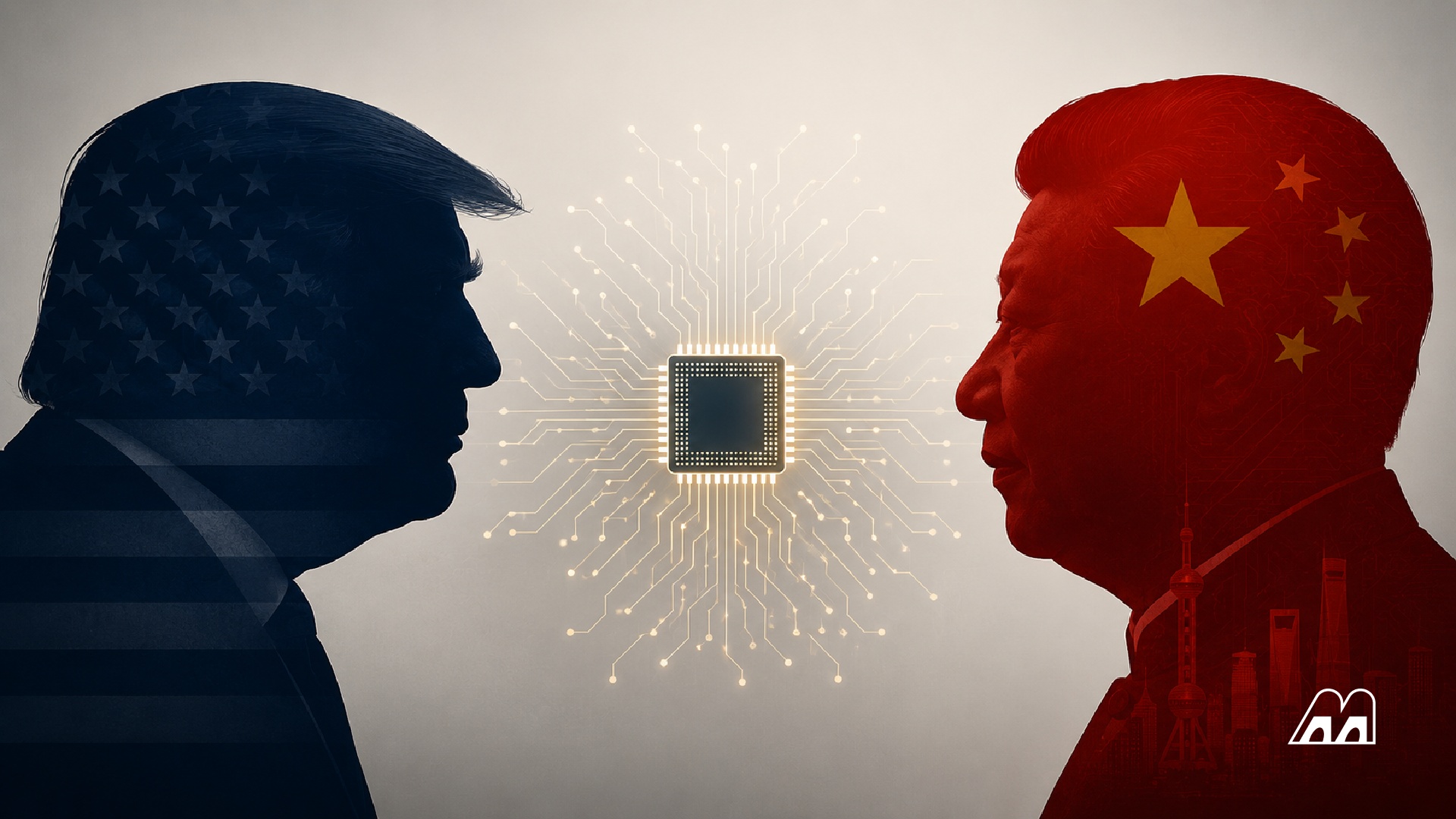
Washington’s AI fight with China has moved from chip controls to something far more disruptive: whether American companies should be discouraged, restricted or even blocked from using Chinese AI models.
According to Axios’ investigation into the Trump administration’s Chinese AI plans, parts of the administration have explored several ways to curb access without announcing a simple nationwide ban. The renewed push follows the arrival of Moonshot AI’s Kimi K3, a powerful Chinese model that competes closely with leading US systems while promising open access and lower costs.
The plan sounds like a national security response. But the deeper fight is about who gets to control the AI market.
Trump officials have discussed more than one route
The administration reportedly considered adding Chinese AI labs to the Commerce Department’s Entity List. That move would force US companies to secure licences before dealing with listed firms, making many commercial relationships impractical.
Officials also discussed a government advisory warning companies about security threats linked to Chinese models. Another proposal would have required US cloud providers to guarantee the security of any Chinese model they hosted and accept liability if something went wrong.
Commerce officials reportedly circulated draft supply-chain rules that could target Chinese open-weight systems too. Pro-innovation officials stopped those ideas at the time, but Axios says national security voices have gained influence as some opposing advisers have left.
No public ban exists. That distinction matters.
The administration could still create the same effect through procurement restrictions, compliance warnings, licensing threats and public pressure. Companies may walk away from Chinese tools simply because the legal risk becomes too difficult to price.
Kimi K3 changed the urgency of the debate
Moonshot AI launched Kimi K3 on 17 July 2026. Reuters reported on the Kimi K3 launch, describing it as a 2.8-trillion-parameter model and the world’s largest open-weight AI system, based on Moonshot’s claims.
“Open-weight” means developers can download the model’s core parameters, run it on their own infrastructure and adapt it for specific tasks. That differs from closed services such as ChatGPT or Claude, where the provider keeps the model behind an online interface.
This model matters because it challenges a comfortable assumption in Silicon Valley: that the strongest systems will remain expensive, closed and American.
Chinese labs have increasingly competed through capable models that developers can customise and deploy at lower cost. We’ve already seen this pressure in the broader shift toward cheaper Chinese AI models for enterprise workloads.
For startups, universities and smaller software companies, that price difference can determine whether an AI project launches at all. That includes teams across South Africa and the wider African market, where access to high-end computing and dollar-priced software can become a serious barrier.
Security concerns are colliding with market competition
Supporters of restrictions argue that Chinese models could expose sensitive data, contain hidden vulnerabilities or create dependencies on technology shaped by Beijing. Those risks deserve testing, especially in government, finance and critical infrastructure.
The administration has also raised concerns about intellectual property. Business Insider reported on Treasury Secretary Scott Bessent’s warning that the US could sanction overseas AI firms if officials find they built models by improperly extracting capabilities from American systems.
But critics see another danger: regulation that protects OpenAI and Anthropic from cheaper competition.
David Sacks, an outside White House AI adviser, warned that leading closed-model companies could use government policy to weaken open-source rivals. If Washington makes Chinese models legally radioactive, American businesses may have fewer choices and higher AI costs.
We think the real story here isn’t whether every Chinese model is safe or unsafe. It’s whether the US government can separate genuine security controls from rules that quietly strengthen a small group of domestic companies.
South African businesses could feel the effects
A US restriction wouldn’t automatically ban Chinese models in South Africa. However, it could change which systems global cloud providers host, which tools multinational companies approve and which models receive long-term developer support.
Local organisations would then face a trade-off:
For South African readers, the bigger question is choice. If the AI market splits into US and Chinese technology blocs, local companies may have to select not only a model, but also the political and commercial ecosystem behind it.
Washington hasn’t settled the fight yet. But Kimi K3 has made delay harder, and the next policy move could shape which AI tools businesses everywhere can afford, trust and legally use.
Would tighter rules protect companies from real security risks, or simply make powerful AI more expensive and less competitive?
Not yet. Officials have reportedly discussed blacklists, procurement restrictions, security warnings and liability rules for companies using Chinese AI systems. However, the administration hasn’t announced a broad public ban.
Kimi K3 is an advanced AI model developed by China’s Moonshot AI. It uses an open-weight approach, which allows developers to download, host and customise the model. Moonshot says Kimi K3 contains 2.8 trillion parameters.
South African companies benefit from having several affordable AI providers to compare. US restrictions could reduce the number of Chinese models available through major cloud platforms and global technology partners. That could increase costs or require local businesses to manage more AI infrastructure themselves.
Temaz Tra is an AI and technology news writer focused on the fast-moving tools, platforms, and companies shaping the digital world. He covers artificial intelligence, consumer tech, cybersecurity, software, social media, and the wider impact of emerging technologies on work, business, and everyday life. With a focus on clear reporting and accessible analysis, Temaz helps readers understand complex tech developments without the jargon. His work connects breaking news with practical context, making it easier to follow how AI and digital innovation are changing the way people live, work, and interact online.
Related Stories
 AI News
This AI startup says it can generate permit
54 minutes ago
 AI News
OpenAI employee busted collecting 'superintelligence' technology
55 minutes ago
 AI News
MI5 reports 50-plus arrests in Iran
55 minutes ago
 AI News
Artificial intelligence is beginning to argue with humans
55 minutes ago
 AI News
How long will humans be needed for translation?
1 hour ago
 AI News
Scientists urge tighter AI controls to prevent global cyber risks
1 hour ago
 AI News
OpenAI engineer charged after listening device found in meeting room
1 hour ago
 AI News
Kroger to lay off thousands of employees amid its increase in AI usage
1 hour ago