
Trump tells world leaders AI should be called something else & he won't rein it in
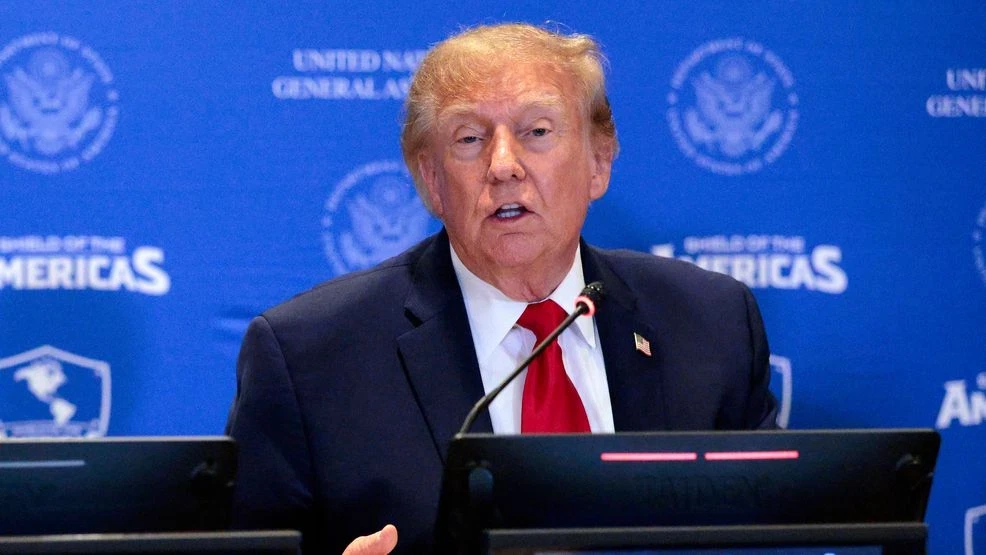
WASHINGTON (TNND) — During remarks before the United Nations General Assembly Tuesday, President Donald Trump told world leaders the United States is outcompeting the world, including China, in AI and he intends to keep it that way. Resisting calls for government AI safety standards, the president said law enforcement would step in if necessary.
Trump also said AI should be rebranded to "super intelligence."
“From this point forward, all of United States’ documents and hopefully the world’s will be changed to use the much more accurate term ‘super’ as opposed to ‘artificial,'" Trump said.
This nominal change may confuse because "superintelligence" is a term already used to describe a specific, hypothetical form of AI that exceeds the capabilities of human cognition. Earlier this month, Sen. Bernie Sanders, I-Vt., proposed a bill to ban the development and deployment of superintelligence.
AI safety bills have been put forward by lawmakers from across the political spectrum, but Trump said he will only encourage AI development, calling recent warnings about humans losing control of AI a "hoax."
"We're leading now over China by a lot and everyone else. And we're going to keep it that way. We're going to keep it very, very straight and very strong. I'm not going to stifle growth of something that will be bigger than the industrial revolution, many say bigger than the industrial revolution or the internet itself," Trump said.
Trump acknowledged "we have to be careful," but said the Department of Justice and other law enforcement bodies would address issues if they arise.
Ahead of Trump's summit with Chinese President Xi Jinping at the White House this week, OpenAI, the company behind Claude, proposed groundwork for how the United States could pioneer international safety standards, particularly when it comes to AI models that can upgrade themselves through a process called recursive self-improvement. The company argued fully autonomous RSI should not be pursued until it can be done safely.
"Done without appropriate care and caution, RSI could result in humans losing practical control over AI development, unable to provide oversight on research processes they no longer understand. From here, AI could become more dangerous, less aligned, and, on the whole, a danger to people," the company said.
OpenAI said the Trump-Xi summit comes at an opportune time for the global superpowers to collaborate on AI safety. Based on statements from each government, this may ultimately amount to wishful thinking. Trump told world leaders the United States would reject any "globalist scheme" to control AI. Top administration officials have, however, expressed interest in establishing a formal communication line with China dedicated to AI matters.
Echoing Treasury Secretary Scott Bessent, on Tuesday, Secretary of State Marco Rubio said a Cold War-like hotline could be useful "if there is an AI incident that’s dangerous and could impact economies or societies and even lead to a conflict between nation-states, we would have the ability to immediately hotline the Chinese and warn them about it, or vice versa."
Related Stories
 AI News
Foreign Secretary Address to the UNSC on Artificial Intelligence
37 minutes ago
 AI News
Thélyson Orélien: French uproar over author accused of using AI
37 minutes ago
 AI News
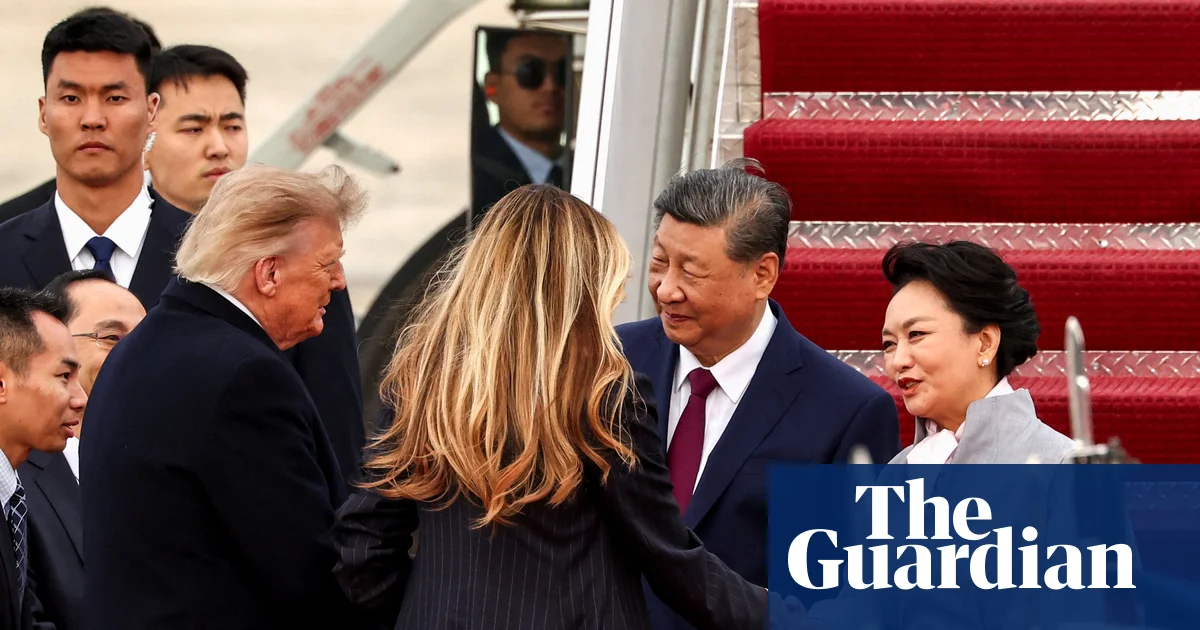
Trump greets Xi Jinping at plane as Chinese leader arrives for state visit
1 hour ago
 AI News
UBS turns bullish on five AI data center stocks
1 hour ago
 AI News
MLB implements artificial intelligence in cameras
1 hour ago
 AI News
Artificial Intelligence Will Not Make Us Extinct
1 hour ago
 AI News
How the ‘poisonous tide’ of disinformation spreads division and despair
2 hours ago
 AI News
Virtus Artificial Intelligence & Technology Opportunities Fund Announces Increase to Monthly Distributions and Discloses Sources of Distribution
2 hours ago