
Trump is angry about the loonie 'imbalance': But what does he mean and what can he do about it?
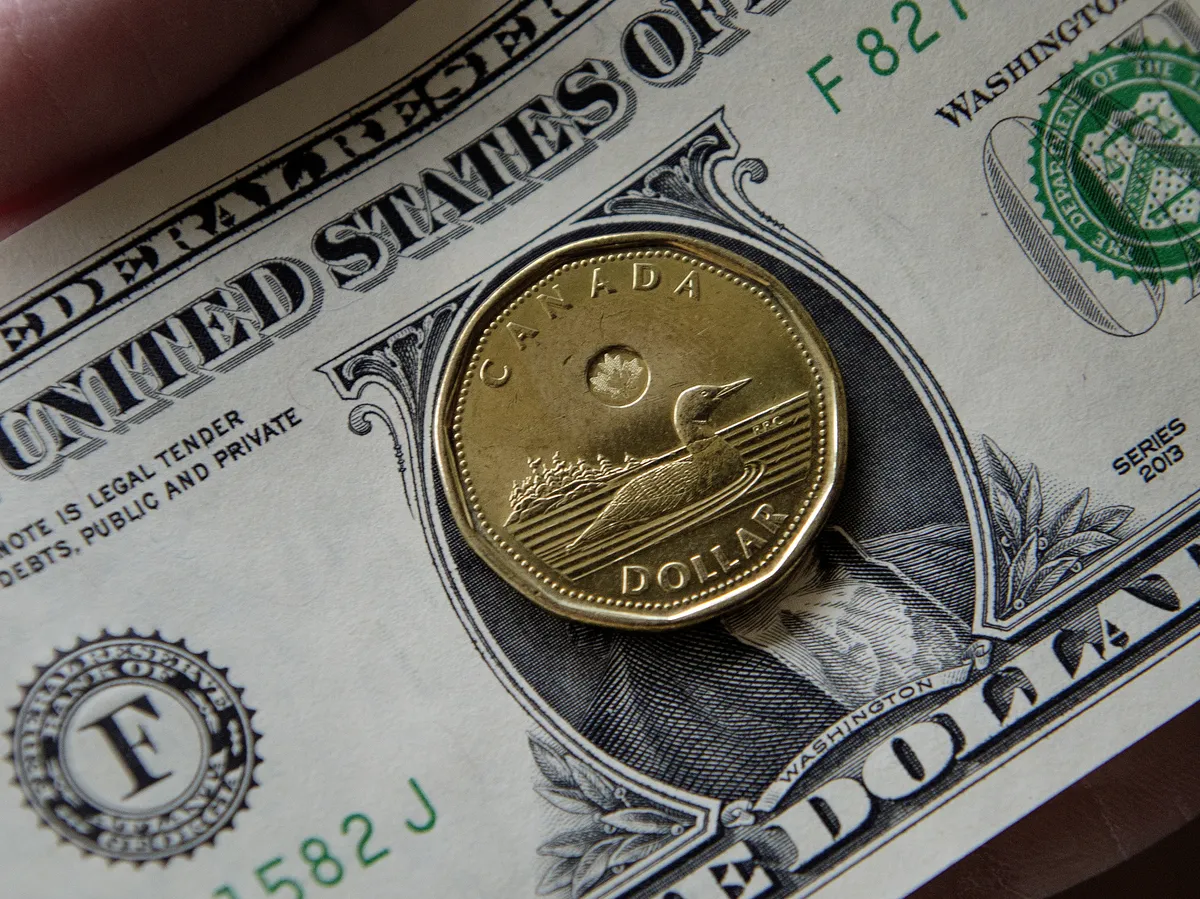
U.S. President Donald Trump opened a new front in the trade war earlier this week, accusing Canada of running a currency “imbalance” two days before Canadian counter-tariffs took effect. “Canada’s (currency) dollar imbalance with the U.S. is unacceptable. It has been that way for years — but no longer!” he wrote in a social media post. What did Trump mean by imbalance, and could the U.S. really target the exchange rate as part of the trade war? The Financial Post explains.
What is a dollar imbalance and where is the loonie trading now?
Trump’s comments about a currency “imbalance” appeared to be in reference to the loonie’s relative weakness compared to the greenback, something that can give a country’s exporters an advantage. The Canadian dollar is currently trading at around 72.37 cents US, or around $1.38 per U.S. dollar.
Loonie weakness isn’t new. The last time the Canadian dollar was at par with the U.S. dollar was in early 2013, after a nearly decade-long commodity boom that lifted it as high as US$1.06 in July 2011.
By January 2016, it had dipped below 70 cents US for the first time since 2003, prompting warnings that the economy was being threatened by “currency instability” that was hurting business and consumer confidence.
For most of the past decade, the loonie has traded between 70 and 80 cents US.
“If you look at full year averages going back to 1970, there’s only a handful of years where, on average, parity was achieved for the full year.” said Vikram Rai, a senior economist at TD Economics. “It’s not normal. It’s fairly rare.”
The loonie has been under more pressure due to the trade war, languishing in the low 70s.
Does a lower loonie help Canada?
The lower loonie is a boon for Canadian exporters. A lower currency makes it cheaper for others to buy Canadian products and more expensive for Canadians to buy abroad. That dynamic has helped drive a wider international trade surplus in recent months.
Canada’s merchandise trade surplus widened to $3.9 billion in June due to higher total exports, which edged up by 0.4 per cent to a record $77.5 billion in June. In real or volume terms, total exports edged up by 1.1 per cent.
At the same time, the average value of the Canadian dollar decreased by 1.7 cents US in June, the largest monthly decrease since October 2022. When expressed in U.S. dollars, Canadian exports actually decreased by two per cent in June, while imports were down by 2.1 per cent.
However, the weaker loonie also puts pressure on production costs.
“It’s not obvious in the long run that a lower exchange rate fundamentally is better for the economy, even if in the short term it does seem to clearly support export demand,” Rai said.
Related Stories
 Canada
Premier Doug Ford set to shuffle his cabinet
52 minutes ago
 Canada
Ontario expands eligibility for tariff support funding to protect businesses, workers: Ford
53 minutes ago
 Canada
N.B. announces new measures to battle impact of tariffs imposed by the United States
53 minutes ago
 Canada
Ford to announce cabinet shuffle, fill 3 positions after ministers resigned
53 minutes ago
 Canada
PM Carney tells Zelenskyy Canada will help Ukraine rebuild
53 minutes ago
 Canada
Ontario court records accessed in cybersecurity breach
1 hour ago
 Canada
Doug Ford says Canada walked away from ‘absolutely terrible’ trade deal as he announces expanded tariff support
1 hour ago
 Canada
Trump, hoping to salvage midterms, makes a dubious pledge to give every U.S. adult $5,000 if GOP wins
2 hours ago