
Trade war, Alberta referendum loom large as Carney charts cabinet's year forward
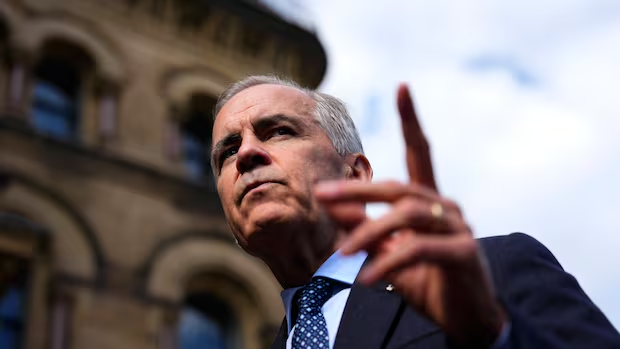
Trade war, Alberta referendum loom large as Carney charts cabinet's year forward
New parliamentary sitting presents plenty of challenges to PM with no end in sight to escalating trade war
When Prime Minister Mark Carney gathered leaders of the world's foremost economies in Kananaskis Country's picturesque mountainside last spring for the G7, it was fresh off his election win, a wind seemingly at his back as he met with U.S. President Donald Trump to talk trade, and the threat of the province's separation from Canada was a remote hypothetical.
"Our primary focus will be on trade and trade with Canada," said Trump at the time, standing side by side with Carney in his first visit to this country since 2018. "I'm sure we can work something out."
A little more than a year later, Carney is once again holding high-level meetings in the Rocky Mountains of the province where he grew up, this time to plan the upcoming parliamentary sitting with his cabinet, fresh off three byelections where his governing Liberals cleaned up.
But there is little else in common with the optimistic outlook of 2025.
Trade tensions between Canada and the U.S. only continue to intensify, while the danger of Alberta's departure from federation has become much more real.
Liberals remove layer of review process for energy projects, backing off bypassing at-risk species protections
While Abacus Data founder and CEO David Coletto said there's little indication Canadians are blaming the prime minister for the trouble facing the country at this time, they are still looking for answers on the way forward.
"I think there's always risk when the impact might be job losses or the cost of things going up because we are in the midst of a cost of living crisis, you know, the No. 1 issue for most Canadians right across the country," Coletto told CBC News.
Carney releases video saying U.S. wanted 'dependency' in too many areas
The prime minister continues to defend his decision to reject the proposed new trade agreement with the U.S. in order to protect Canada’s sovereignty, as officials from the Trump administration try to convince the public that Carney walked away for political reasons.
Carney is close to peak popularity, with poll numbers stronger than his predecessor Justin Trudeau at this point in his mandate, according to Coletto, who says there’s no sign personal attacks from the White House are going to change that anytime soon.
"The likelihood that Canadians would trust what Donald Trump says over Mark Carney is very low," Coletto said.
"I think we’ve always assumed that there would be a best-before date on the public’s patience and I now question that because I think as long as people overwhelmingly believe that the greatest threat to their quality of life is coming from Washington and not from policy out of Ottawa that that’s going to continue to buy the prime minister and the government time."
Pivot away from U.S., national unity on the agenda
As the two-day cabinet planning forum with cabinet ministers and secretaries of state kicks off, there’s no announcement yet on whether Ottawa will match the Trump administration’s latest retaliation.
The White House is adding more Canadian products to its list of those subject to tariffs of 50 per cent, including mattresses and motorboats, and also planning to ban certain Canadian goods, including most alcoholic drinks, some dairy products and motorcycles by the end of the month.
That itself is a response to Ottawa imposing retaliatory tariffs on more than $27 billion worth of U.S. imports – a counter to 50 per cent levies the Trump administration placed on an equivalent amount of Canadian goods last month, after Carney called off trade talks.
Government assesses U.S. trade war damage, says Canada in 'a position of strength'
The cabinet planning forum will focus on the pivot Carney says he is trying to lead, steering Canada away from its over-reliance on the U.S. — its largest trading partner — shoring up the economy and strengthening partnerships with other countries.
It’s expected that ministers and secretaries of state will arrive prepared to defend their performance on their files and propose solutions as the country deals with what Carney describes as an unprecedented crisis.
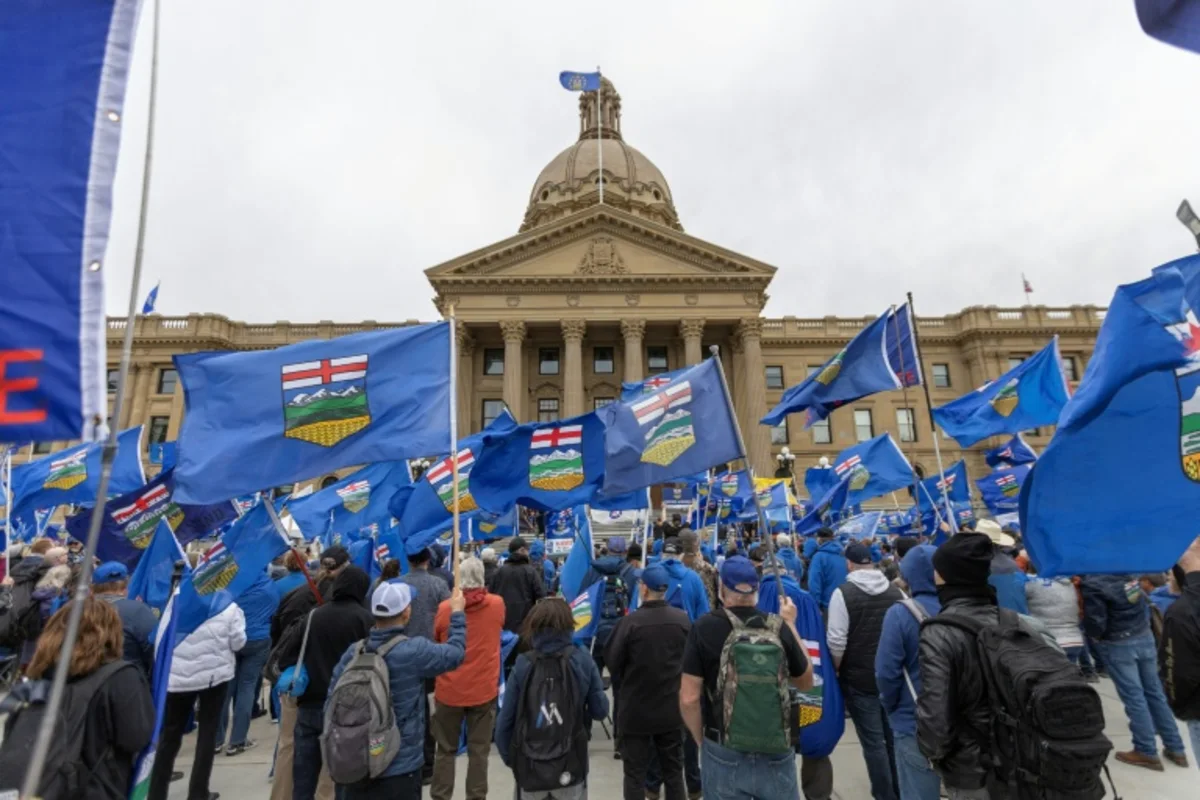
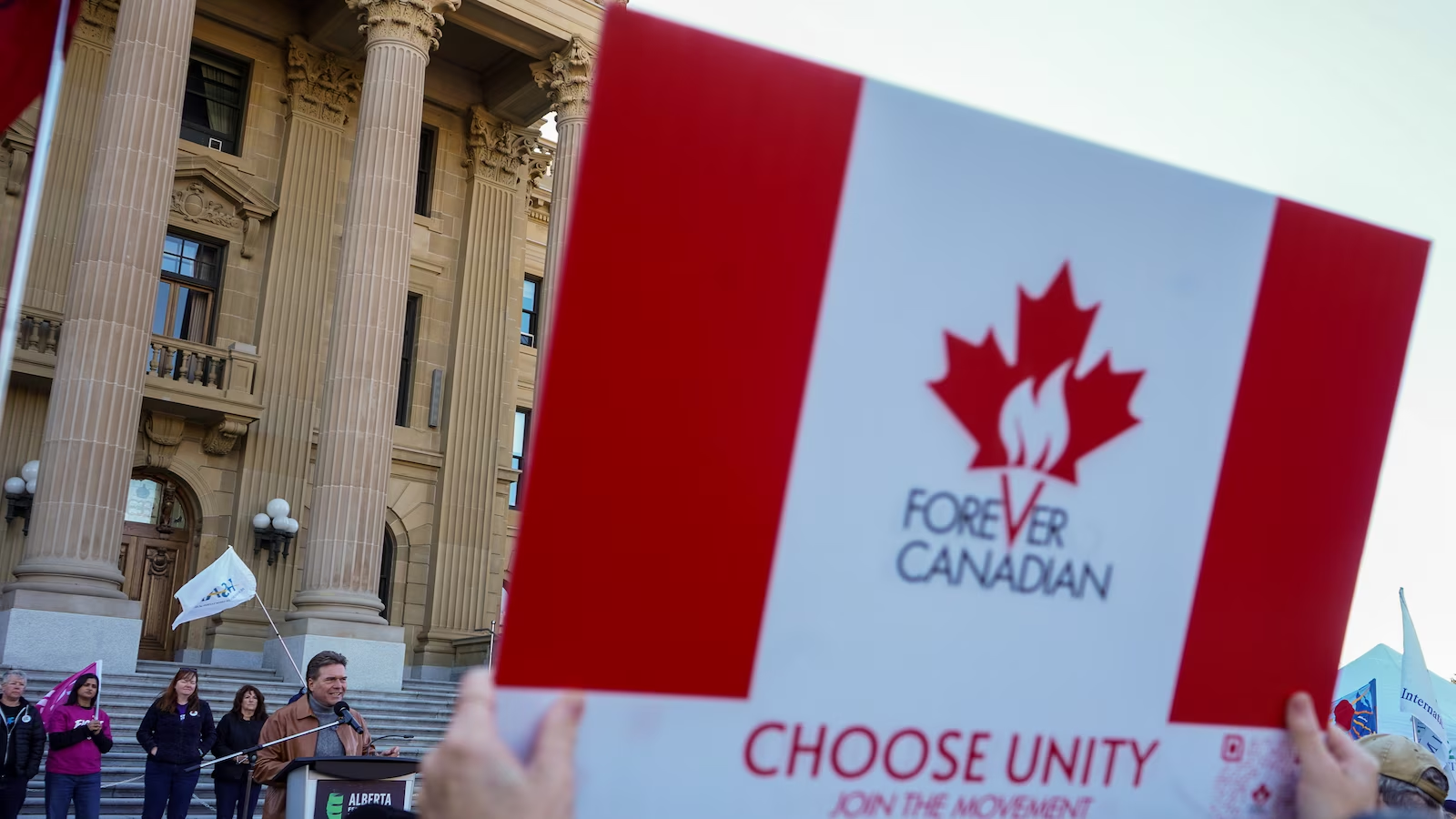
The forum will also tackle separatism, coming as it does a little more than a month ahead of a referendum where Albertans will answer, among other questions, whether they want to stay part of Canada or have an eventual vote on secession.
Some of Carney's top ministers fanned throughout the province ahead of the cabinet meeting, including Natural Resources Minister Timothy Hodgson, who was in Clive to break ground on a carbon-capture project.
"We are in a trade war, a trade war that we did not ask for, but that we must win," he said. "Canada didn't ask for a world where energy security equals economic security, equals national security. But that's the world we're in today."
At Issue | Canada faces more U.S. trade war escalation
Finance Minister François-Philippe Champagne, at an armchair discussion hosted by the Edmonton Chamber of Commerce, was asked about the possibility of restarting talks with the U.S.
"At the right time, there will be further engagement with respect," Champagne said. "Canada's a big nation, Canada's a G7 country, Canada's a NATO country … and Canada is a big customer. We buy more from the United States than Japan, England and Germany combined."
"Any action taken will affect both sides of the border."
Guests scheduled to brief cabinet reflect the concerns about both the trade war and Alberta separatism.
Ukrainian President Volodymyr Zelenskyy visits Canada
The list includes the mayors of Calgary and Red Deer, pollsters including Janet Brown — known for her insights into the Alberta political landscape — and Ian Bremmer, the founding political scientist of Eurasia Group.
Ukrainian President Volodymyr Zelenskyy, who landed in Calgary Wednesday, will also briefly address cabinet in Banff.
Missing from the list is any expert on affordability or pocketbook issues, unlike in January 2026, when Carney and his ministers heard from Food Banks Canada CEO Kirstin Beardsley.
An apparent ambivalence toward pocketbook issues might become a weakness for Carney in the long term, Coletto said.
"I think that thing that Canadians are looking for more than anything is reassurance," Coletto said. "Reassurance that their government understands the risks seized by them and is doing everything it can to mitigate them at the same time as finding ways of looking long term to how to strengthen Canada."
Olivia Stefanovich is a senior reporter for CBC's Parliamentary Bureau based in Ottawa. She previously worked in Toronto, Saskatchewan and northern Ontario. Connect with her on X at @CBCOlivia. Reach out confidentially: olivia.stefanovich@cbc.ca.
Related Stories
 Canada
Albertans head to polls in historic referendum on whether they want to stay in Canada
1 week ago
 Canada
In the news today: four soldiers killed, Alberta referendum, AI privacy fears
1 week ago
 Canada
How a grass fire at a Canadian military base killed four soldiers
1 week ago
 Canada
How will household electricity rebate reduction, temporary winter pricing change impact Ontarians?
1 week ago
 Canada
Residents told to boil tap water due to bacteria
1 week ago
 Canada
Oil
1 week ago
 Canada
Albertans vote on path to independence as Carney fights to keep Canada united
1 week ago
 Canada
Two of 4 soldiers killed in fast
1 week ago