
The Trump era sees Canadians
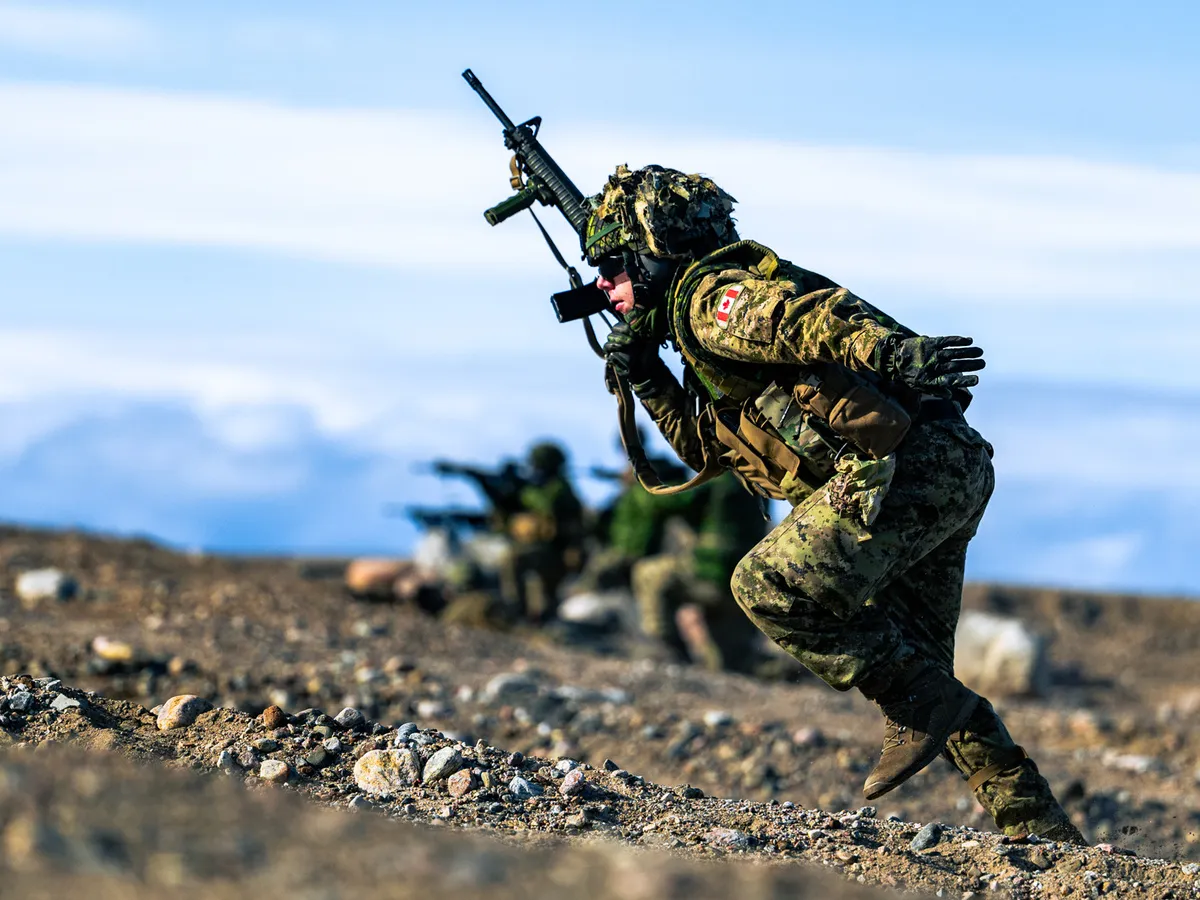
WASHINGTON, D.C. — Military recruitment is rebounding in both Canada and the United States.
For the last two years, the Canadian Armed Forces have beaten their Regular Force recruiting target — hitting roughly 105 per cent of it this past fiscal year, the highest number in nearly 30 years — while U.S. armed services met and exceeded recruiting targets by three per cent in 2025.
The U.S. military and its recruiting efforts have consistently been top of mind for President Donald Trump. In fact, less than two months after his second inauguration, he took credit for record recruitment while addressing Congress in March 2025.
“We couldn’t recruit anywhere. We couldn’t recruit. Now we’re having the best results,” he said in what was to become a recurring theme in his speeches.
Last week, while en route to the NATO summit in Turkey, where the focus was largely on defence burden-sharing, Trump posted on social media to celebrate the military’s growing strength.
“The United States Military has never been stronger, or more powerful. No other Nation can do what we do (It’s not even close!). This year we set even more Historic Recruiting Records, months ahead of schedule. Morale has never been higher,” he wrote.
Technically, the recruiting rebound in the U.S. got its start before Trump’s second term, said Katherine Kuzminski, director of studies at the Center for a New American Security in Washington who focuses on military personnel.
“We saw this rebound begin in the Biden administration and then continue through the Trump administration, and that was after about three years of real struggle across the services to reach their military recruitment goals,” she said.
She and her colleagues instead point to other factors driving Canadians and Americans to enlist, including practical changes like administrative reforms, pay increases, and eligibility changes. And all of it amid intensifying geopolitical tensions and a rough economy, especially for young people.
Canada sped up intake by reducing administrative friction: applicants can now move through digital onboarding faster, enroll before all screenings are complete, and qualify under broader eligibility rules, including for permanent residents.
The administrative changes in Canada have eased earlier bottlenecks and long processing times that often saw military candidates opt instead for civilian jobs, said Richard Shimooka, a senior fellow at the Macdonald-Laurier Institute.
“They had enough people trying to enlist (before)… the problem was they just couldn’t get them into uniform,” Shimooka said. “Part of it is just that the system is better now.”
The U.S. used a different but related approach, relying on prep courses and medical-waiver reform.
Kuzminski says a big part of the American rebound was the Future Soldier and Sailor Prep Courses that help unqualified recruits to train to meet the physical and academic standards for joining the military. This, she said, accounted for roughly a quarter of the U.S. Army’s recruits in 2024 alone.
Related Stories
 Canada
'Serious incident' at Canada base causes deaths, sparks fire
55 minutes ago
 Canada
Canada's Horse Racing Industry Seeks Tax Breaks
1 hour ago
 Canada
Maritime premiers offer condolences following tragedy at Canadian Forces Base in Alberta
1 hour ago
 Canada
4 reasons why Pete Fry is the new mayor of Vancouver
1 hour ago
 Canada
Multiple people killed, dozens injured in explosion a Canadian military training base
1 hour ago
 Canada
19 dead, 25 hurt in stampede at India religious gathering
2 hours ago
 Canada
Global gathering in Toronto focuses on fight against MS
2 hours ago
 Canada
Alberta’s only federal minister says Ottawa ‘already engaged’ in immigration autonomy talks with province
2 hours ago