
The orbital research economy will be won on standards
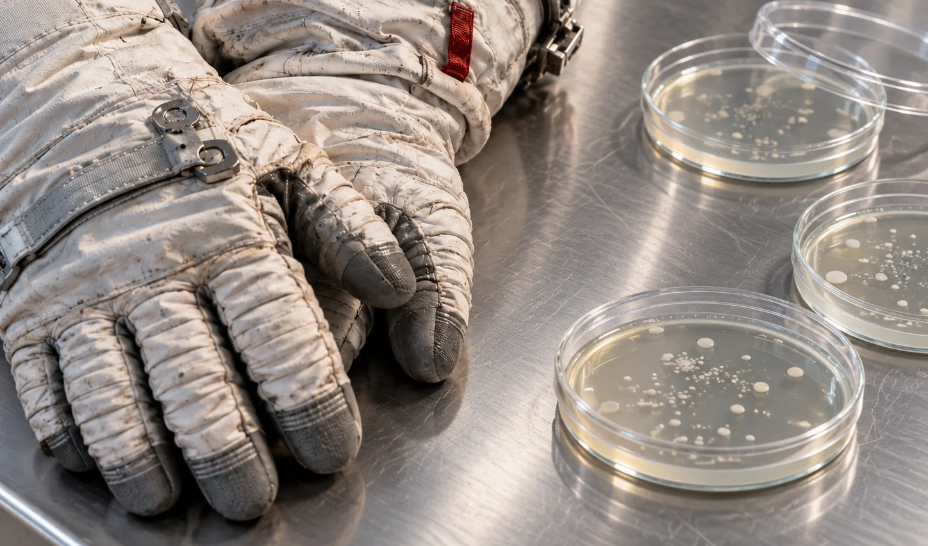
I watched SpaceX go public with the same mixed feeling I suspect a lot of people in this industry did, relief, mostly. The largest listing in history just told the market, in the blunt language it actually understands, that space is a real asset class and not a rich man’s hobby. Good, this was needed!
The IPO only validated the launch business. The part of the orbital economy focused on real pharmaceutical research in microgravity is still not an industry. It’s a scrapbook of brilliant one-off experiments. And what stands between those two states isn’t another rocket. It’s something far less glamorous: standards.
The science is no longer the question
For those asking “is space-based pharmaceutical research even real?” That question has been out of the way for a while now.
MSD grew crystals of its blockbuster cancer drugs on the International Space Station and ended up with new, more uniform crystal forms. That kind of result matters because better crystals can help extend patent protection on a medicine that brings in tens of billions of dollars a year.
Brazilian geneticist and developmental biologist, Alysson Muotri, has been sending tiny, lab-grown models of human brain tissue to space. In microgravity, these “brain organoids” aged at the molecular level much faster – by about a decade – than they would on Earth. That finding has now helped seed the first clinical trial for a neurological condition built on discoveries made in space.
Arun Sharma flew human heart cells derived from stem cells and watched them self-organise into more mature, better-structured heart tissue in orbit than in any dish on the ground. Meenal Datta from the University of Notre Dame grew mini-tumours alongside immune cells and found they formed more consistent, more realistic cancers in space, with structures that actually mirror the disease in patients.
Catriona Jamieson, UC San Diego Sanford Stem Cell Institute Director, has taken this furthest. Her team saw cancer stem cells in space renew themselves and switch on a key enzyme, ADAR1, far faster than they ever do on Earth. That “fast-forwarded” data now underpins a Phase 1 clinical trial running back on the ground.
This isn’t speculative, evidence shows microgravity gives you biology you cannot get on Earth. And since most drug candidates still die in the clinic, very often because the early models quietly lied to us, better models aren’t a nice-to-have, they’re the whole game.
Every one of those failures is years of someone’s working life and a few hundred million dollars gone into failed trials. If orbit can move that number even a little, the prize is enormous.
Why pharma still isn’t buying
So here’s the question; if the science is this good, why isn’t every serious pharma already up there?
The uncomfortable answer is that the space community, collectively, have made this work almost impossible to buy. A result you can’t reproduce, validate and compare isn’t an asset to a regulated company, it’s just a nice story. That’s wonderful for a proof of concept, but completely useless the moment a quality director of a biotech company has to put their name on it.
Pharma buys when the hardware is validated, the procedure repeats across operators, and the numbers line up against other numbers. In orbit, we’ve been so busy proving we can run the experiment, that we forgot to make anyone able to trust it.
Space does not need its own rulebook
Now the part where I think this industry is about to make a genuinely expensive mistake.
When you’re doing something that feels this new, there’s an almost irresistible pull to invent new rules for it. A shiny “space-grade” quality framework, a certification with the word “orbital” stamped on it. I understand the instinct, and I think it’s wrong from the point of commercialisation, because the entire value of a microgravity result is that you can hold it up against what we already know.
Pharma has spent decades and, conservatively, hundreds of billions of dollars, building up data on Earth under a well-established set of rules and standards.
These include GLP and GxP (good laboratory and manufacturing practices), the ICH guidelines that harmonise drug development across regions, USP monographs that define drug quality, ISO/IEC 17025 for testing labs, and the assay‑validation norms already accepted by the FDA and other regulators.
That mountain of data is the benchmark. A result from orbit only means something when you can say it in a language a regulator already speaks: same validated assay, same controls, same quality system as the ground, and isolating the one thing that changed because we took gravity away.
The single difference is the product, not the hardware, not the view. Invent your own separate standard and you cut orbit off from that entire mountain. You generate beautiful data that no regulator has a box for and no research director can line up against anything.
Standards are how markets get captured
And this is where the boring stuff quietly turns into money. Standards look like compliance paperwork, they’re actually how a market forms and how it gets captured. Trust follows standards, adoption follows trust.
The winners are simply the platforms people trust without having to think about it. Whoever first runs microgravity research to the same validated, auditable standard, as a good terrestrial contract lab becomes the reference everyone else is measured against, the default in the room. That is a far deeper moat and what a regulated buyer pays a premium for, and then can’t easily walk away from.
So here is the test I would put to any team working in orbit: when the data comes back down, can a research director drop it straight into their existing dataset and compare, with no asterisk, no caveat, no translation layer? Clear that bar and you’ve built a valuable product.
Launch is becoming a solved commodity, securing missions opportunities to perform scientific discovery in space won’t be enough to own the market. It goes to whoever makes orbital research trustworthy, by the standards this industry already lives and breathes, and turns microgravity from a place where remarkable things occasionally happen into a place where reproducible, regulator-ready discovery simply gets done, on demand, on an ordinary Tuesday.
The people who treat standardisation as the product, and not the annoying paperwork at the end, are the ones who will own this when it grows up.
Related Stories
 Finance
Environmental groups critical of housing levy idea
7 hours ago
 Finance
'No decision' yet on proposed wastewater tax
7 hours ago
 Finance
Stewart's dilemma after fourth at Alfred Dunhill Links
9 hours ago
 Finance
Vote
10 hours ago
 Finance
Here's how to watch the 'Tracker' Season 4 premiere
14 hours ago
 Finance
Russia strikes Kyiv bridge as German chancellor visits Ukraine in show of support
16 hours ago
 Finance
The opportunities and obstacles of migration: UNFPA study flags key gaps
19 hours ago
 Finance
Best Finance and Banking Books to Read: Investing, Markets, and Money Management Insights
1 day ago