
The invasive spotted lanternfly has been detected in Canada for the first time
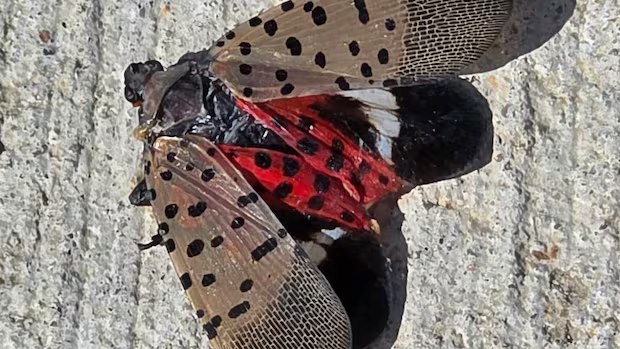
The invasive spotted lanternfly has been detected in Canada for the first time – in Windsor
The fly is known to kill grapevines and impact other crops and trees
An invasive insect known to kill grapevines and impact other crops and trees has been detected for the first time in Canada by the Canadian Food Inspection Agency (CFIA).
And that first detection happened in Windsor.
Windsor residents have reported previous sightings of the spotted lanternfly, according to a non-profit that works to prevent the spread of invasive species.
But this is the first time it's been detected by an agency survey, the Invasive Species Centre said.
“Spotted lanternfly is known to damage and kill grapevines, causing significant impacts for the grape and wine industry,” the centre said in a Thursday news release.
“This pest could also have an impact on other crop growers and the horticulture and forestry industries, as well as residential yards and neighbourhood parks. Spotted lanternfly can have widespread economic, ecological and social impacts if allowed to spread uncontrolled.”
The spotted lanternfly is native to southeast Asia and was first detected in North America in Pennsylvania in 2014, the centre said.
It can feed on the sap of over 100 different plant species.
The centre is asking people to learn to identify the insect.
If they see a fly or its eggs, it’s asking people to photograph them, put the fly or eggs into a sealable plastic bag or container, and report it to the CFIA.
“All [Canadians] must report any suspect sightings of SLF to the Canadian Food Inspection Agency (CFIA) immediately,” the release said.
“A good report includes an accurate location and photos of the insect. The CFIA will respond to reports of spotted lanternfly and take appropriate action, which may include site surveying and insect collection.”
How to identify a spotted lanternfly
The invasive Species Centre and the CFIA have provided a number of tips for identifying the flies.
The insect’s clear, sticky liquid excrement, known as honeydew, can accumulate at the base of a host tree and can foster the growth of sooty mold, the centre said.
It can often attract bees and wasps.
The Invasive Species Centre provided the following advice on reducing the spread of the fly:
Heather Kitching reports local news for CBC stations across Ontario and the North. You can reach her at heather.kitching@cbc.ca.
With files from Peter Duck and Dalson Chen
Related Stories
 Canada
Is Canada becoming an ‘associate member’ of the European Union?
8 minutes ago
 Canada
What does Canada want from the European Union?
8 minutes ago
 Canada
Fact check: Are deepfakes illegal in Canada?
8 minutes ago
 Canada
Carney welcomes ‘ambition’ in EU relationship; Trump, Poilievre slam potential deal. Live updates here.
8 minutes ago
 Canada
'We will rule in CANADA': Bishnoi gang letter to police disclosed to CBC News
8 minutes ago
 Canada
World reacts to Carney’s pursuit of new alliance with the European Union
39 minutes ago
 Canada
Why these seniors are heading to Ottawa with a message for Mark Carney
1 hour ago
 Canada
Canada and the EU are getting cosy. These charts show how our economies stack up
1 hour ago