
The college dropout behind a US$1.8B startup powered by AI
Working from his home in Los Angeles, the 41-year-old relied on more than a dozen AI tools to write software code, create website content, generate marketing materials, manage customer support, and analyze business performance. Tasks outside his expertise were outsourced.
The startup quickly gained traction, attracting 300 customers in its first month and another 1,000 in its second. By 2025, Medvi had grown to serve 250,000 customers and generated US$401 million in revenue, with net profit reaching US$65 million, or 16.2%, according to financial records reviewed by The New York Times.
The company is now projected to achieve US$1.8 billion in annual sales this year. Unlike larger competitors, Medvi operates with an extremely small team consisting only of Gallagher and his younger brother. Its profit margin is nearly three times higher than that of major telehealth provider Hims & Hers.
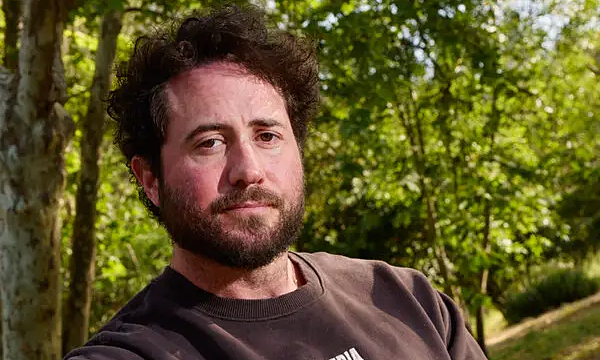
Matthew Gallagher, founder of telehealth startup Medvi. Photo from X
Much of Medvi’s operational workload is handled by external platforms that manage physicians, prescriptions, pharmacy fulfillment, shipping, and regulatory compliance. The company focuses on customer acquisition, branding, advertising, e-commerce and support, much of which is powered by AI.
Jiten Chhabra of CareValidate told The New York Times that the company’s speed was surprising. "You’re like, ‘Do you have an army of people behind you somewhere?’ And he’s like, ‘Nope,’" he said. Jon Lensing, CEO of OpenLoop, said Gallagher had even begun sharing AI workflow advice with his own service providers and praised his technical skills, saying his "native tongue seems to be AI."
Medvi has not raised outside funding. Gallagher said he consulted Kobie Fuller, general partner at Upfront Ventures, who advised him not to raise money if he did not need it. Fuller said he viewed Gallagher as an early example of a broader shift rather than a one-time case. "Those folks that have those skills, it’s kind of like their superpower. This is an extreme example, but I don’t think it’s going to be the last by any stretch."
Gallagher’s journey to success was anything but smooth. He spent part of his childhood living in motels and cars before his family eventually settled in Cincinnati, Ohio. As a teenager, he learned to code on his own, built websites for local businesses and ran small online ventures. At 18, he sold a web-hosting business for $6,000. He briefly enrolled in college but never graduated, later moving to Los Angeles to try acting before returning to technology work.
In 2016, he founded Watch Gang, a subscription-based wristwatch startup. The company expanded to about 60 employees but never turned a profit. Gallagher said Medvi’s cumulative profit of $70 million to $80 million has felt especially significant because of his difficult upbringing. "For the first time, I’m not in survival mode," he said.
He has used the profits to fuel further growth. Medvi introduced a men’s health service in February, attracting 50,000 customers in its first month. A meal delivery service followed in March, with women’s health, hair growth and skincare offerings planned next.
The rise of Medvi echoes a prediction made by OpenAI CEO Sam Altman in 2024 that AI would eventually enable the creation of a billion-dollar company run by a single person. "Which would have been unimaginable without AI," Forbes quoted Altman as saying, "and now will happen."
Gallagher said he initially thought Altman was referring to a company that developed AI technology. He later realized Medvi might fit the prediction in a different way. "It’s not an A.I. company, but I did it with A.I.," he said.
Related Stories
 AI News
In the News: Manjeet Rege on AI and Cybersecurity Threats
2 minutes ago
 AI News
AI Companies Are Learning an Ironic Lesson as the People They Pay to Improve Their Chatbots Are Just Feeding AI Slop Into Them
2 minutes ago
 AI News
'It's way too much'
56 minutes ago
 AI News
The World Cup Pride Match Is A Winner
56 minutes ago
 AI News
Toronto police say they've intercepted 18 drones over World Cup event spaces
56 minutes ago
 AI News
US says it struck targets in Iran over ‘continued aggression’ against shipping
56 minutes ago
 AI News
Meet the walkers, making their way across Canada to raise money for charity
56 minutes ago
 AI News
Advocates warn of influx of Haitian refugees to Canada after US Supreme Court ruling
57 minutes ago