
Tech Transfer Transformations
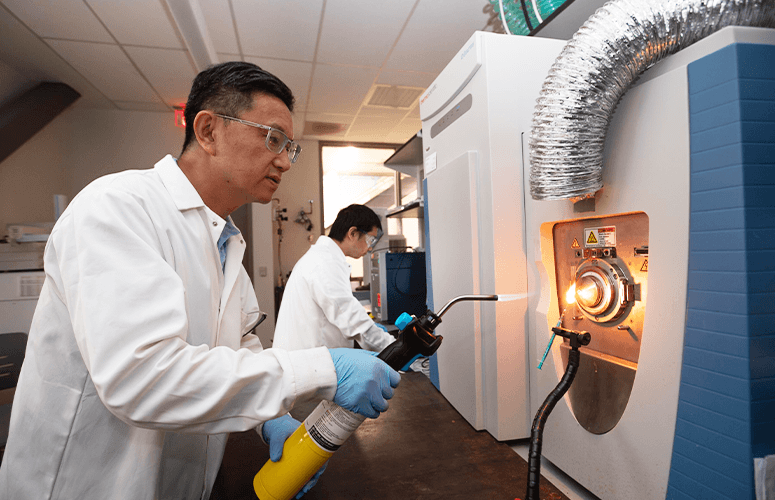
New Jersey universities are expanding technology transfer in an ongoing trend that’s fueling both innovation and economic growth.
The now-popular paradigm of universities licensing their researchers’ inventions to other entities and/or forming startup companies didn’t always routinely exist. Decades ago – partly in the name of academic purity – university staff would often write research papers that could lie fallow. “The technology was [just] sitting in the scientific journal, eating dust somewhere in academic libraries,” notes Atam P. Dhawan, Ph.D., chief strategic innovation officer and senior vice provost for research at Newark-based New Jersey Institute of Technology (NJIT). “Academia was not looking into the translation validation of the innovation – the practical technology for [a] particular application.”
The federal Bayh–Dole Act, enacted in 1980, was one factor in increasing technology transfer by allowing universities, small businesses, and non-profits to retain ownership of inventions developed with federal funding.
“[In] translational research, about 80% of assumptions [are] either challenged or proven wrong, so about two-thirds of startup companies do not survive after five years,” Dhawan says. For a return on investment, external partners such as investors or large companies need exclusive licensing rights to patents that have been secured by academia. “That’s where the tech transfer comes [in],” Dhawan notes.
Overall, according to the Information Technology & Innovation Foundation, US universities “disclosed more than 554,000 inventions, secured 141,000 patents, launched 18,000 startup companies, and contributed up to $1 trillion in GDP and $1.9 trillion in gross industrial output” between 1996 and 2020 alone. More recently, the technology transfer services market was valued at approximately $96.4 billion in 2024 and grew to approximately $101.6 billion in 2025.
Case in point: Supported by an investment of up to $1 million, ProTrace Labs was launched in October 2025 from NJIT’s New Jersey Innovation Institute (NJII) Venture Studio, with ProTrace offering rapid and accurate PFAS (per- and polyfluoroalkyl substances) testing.
ProTrace is operating alongside other NJIT-affiliated firms. There is also a broader effort to combat PFAS (also known as “forever chemicals”), with NJIT’s Dhawan, for example, developing the New Jersey PFAS Partnership Innovation Consortium, comprised of 15 companies and four founding-member universities: NJIT, Princeton University, Rutgers University and Stevens Institute of Technology.
Overall, NJIT has notably increased its tech transfer abilities via a $6 million grant from the National Science Foundation (NSF) for commercializing campus inventions. NJIT is also part of a regional research hub bolstered by a $15 million NSF grant meant to help faculty and students translate federally backed research into businesses.
Licensing technology or launching startups are herculean tasks at any university: Inventors must generally undergo processes that include disclosure, evaluation and assessment, obtaining intellectual property protection, and – finally – commercialization.
The invention must also receive initial funding – perhaps from a university itself – before eventually receiving monies from outside investors. Deborah Perez Fernandez, Ph.D., executive director of technology transfer at Rutgers University, explains that many technologies are commercialized via licensing to existing companies – especially large, established companies – that demand de-risking prior to licensing. She adds that the so-called “valley of death” is the funding gap between technologies’ early stages until they become more mature and thus more appealing for commercialization.
“Sometimes that’s a very difficult [period], but we have a gap funding program that’s … run by the new ventures team that provides small grants that are … geared towards addressing some of the [case-specific] questions that industry or partners would want to see answered [prior to licensing],” she says.
More broadly, Rutgers University has been lubricating interactions between academia, venture capitalists and industry via its March 2026 inaugural Rutgers Innovation Showcase, an event where approximately 400 attendees – including 73 research groups and 12 Rutgers startups – convened.
Rutgers has been succeeding overall: It generated $15 million in licensing revenue (FY 2025) against the broader backdrop of the university’s 4,290 research awards and $933 million in research grants and sponsored programs for that 12-month period.
Industry is symbiotically attuned to the innovative gems germinating at universities. “It’s a great advantage in the US that we have a strong venture system,” explains Neal Lemon, Ph.D., associate vice chancellor for innovation at Rowan University and associate vice president for innovation at Cooper University Health. “The fact that some of the larger companies and their industries are really taking technology the last few miles [of commercialization] and leaving openings for innovation from startup companies [arising from institutions] – or using knowledge generated from that research – [is good].”
Technology transfer realms range from information technology and machine learning to artificial intelligence and medical devices – to everything in between. The medical sphere is arguably exemplified by HydroPep Therapeutics, a Rowan University-Cooper University Health Care startup developing HydroBone – a “biologic that delivers bone-forming peptides designed to accelerate fracture healing.”
HydoPep is part of a broader pattern. A November 2025 showcase for medical technology that Cooper and Rowan supported featured more than 50 various technologies. “Almost all of [the inventors] had prototypes already developed that were being tested either pre-clinically – and in some cases – clinically,” Rowan’s Lemon says. “We’re very proud of being able to help bridge that gap.”
Research, collaborations and tech transfer are only growing in New Jersey. As far back December 2024, the New Jersey Commission on Science, Innovation and Technology (CSIT) announced the expansion of the website for ResearchwithNJ from five to eight research institutions, yielding more than 365,000 pieces of research output and almost 7,000 researcher profiles. CSIT concludes, “The robust platform, used globally, connects companies, faculty, and entrepreneurs with the goal of growing more academic research and business collaborations.” These figures, and the technology transfer associated with them, are poised to expand in tandem with emerging technologies.
To access more business news, visit NJB News Now.
Related Stories
 Technology
When Tech Companies Die, What Happens To The Products They Leave Behind?
1 week ago
 Technology
Two Finns supplying Russia with missile tech worth tens of millions
1 week ago
 Technology
Drones with pepper spray, four
1 week ago
 Technology
Micron Technology stock pre-market at EUR 800.50: memory storage - ad
1 week ago
 Technology
TAIEX Ends at 4
1 week ago
 Technology
ZAWYA: Technology, start-ups can double India
1 week ago
 Technology
Czech government to consider CZK 1 billion fund for startups
1 week ago
 Technology
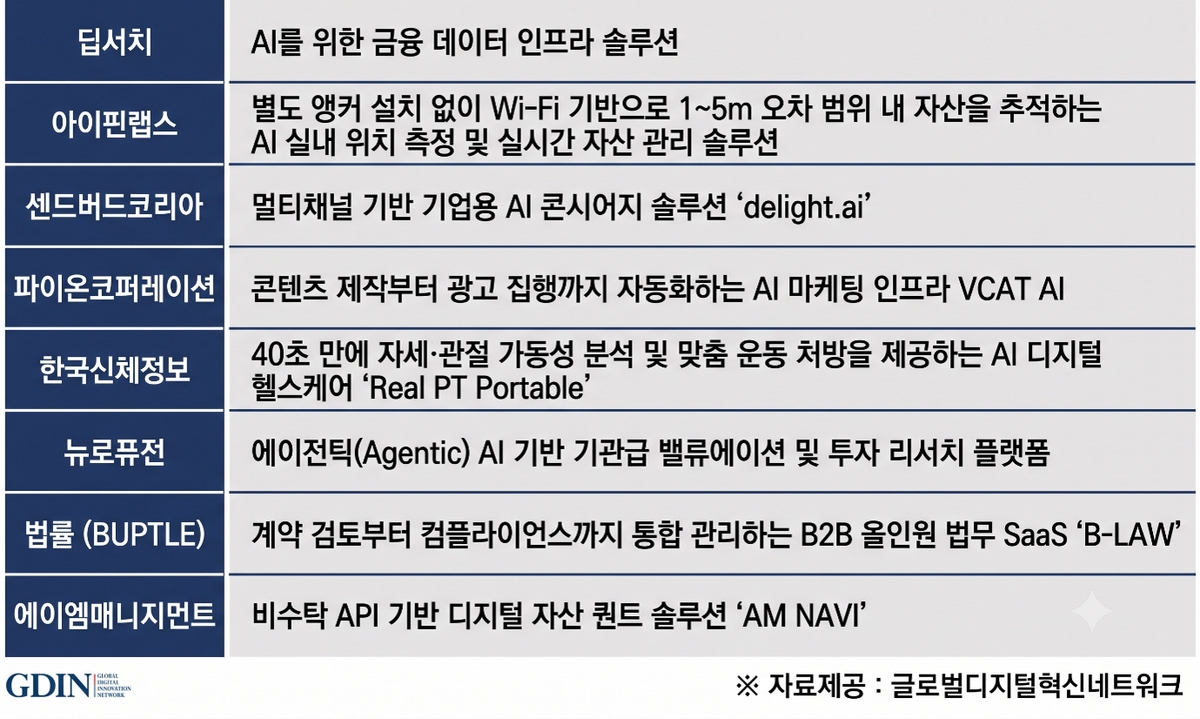
GDIN Supports Eight Startups at CEATEC 2026 in Japan, Opens Door to Local Investor Collaboration
1 week ago