
Surge in Squamish rescue calls, including 1 fatality, prompts backcountry warning
Surge in Squamish rescue calls, including 1 fatality, prompts backcountry warning
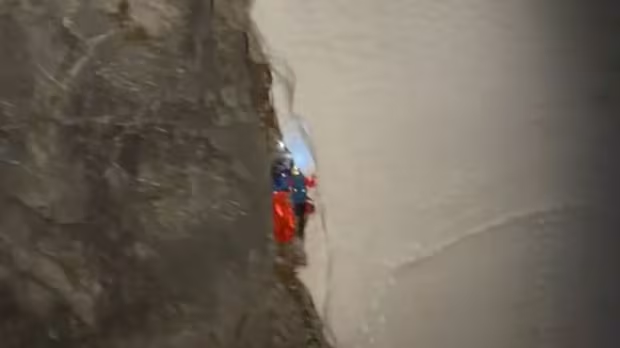
Squamish Search and Rescue tasked to 4 calls in 7 hours Saturday, including 'canyoneering' fatality
A surge in search-and-rescue calls in the Squamish region last weekend, including a fatality, has prompted a warning about backcountry safety.
Sea to Sky RCMP say first responders and search-and-rescue crews were tasked to five calls over the weekend, four of which came in a seven-hour period on Saturday.
"A lot of those were competing for our resources," Squamish Search and Rescue manager Mike Teske told CBC News.
"That can be challenging because we have limited resources so we have to prioritize calls as they come in."
Teske said they had to call for mutual aid from North Shore Rescue to help deal with the multiple calls.
On Saturday, crews were called to Sky Pilot, Tricouni Peak, the Howe Sound Crest Trail, and a canyon east of Britannia Beach where a 31-year-old man died in a waterfall system.
On Sunday they were called to rescue an injured hiker in the Shannon Falls pool system.
More stories from Vancouver-South Coast
"At this time of year we always see an increase in our call volume, just more people out recreating — the mountains are a beautiful place, but they definitely have consequences and have risk associated with them," Teske said.
It's been a deadly year in the Sea-to-Sky region with Saturday's death marking the seventh recorded since April.
Teske said the victim was reportedly "canyoneering" at the time, an emerging sport that involves navigating canyons using a variety of techniques including scrambling, climbing, jumping, rappelling and swimming.
"It does present some challenges for rescue, for sure," he said.
In May, two paddleboarders died after falling into Browning Lake. Other fatalities this year have involved rock climbing, mountain biking and hiking.
Family identifies couple involved in paddleboarding accident near Squamish
Earlier this month, the B.C. Coroners Service urged the public to take extra precautions this summer, noting an uptick in deaths related to outdoor recreation during the spring.
According to the coroners service, an average of 14 people per year have died while hiking or climbing in B.C. between 2016 and 2025.
The service says hiking or climbing deaths were most common between May and September with a peak in July. The highest number of fatalities was recorded near Squamish and North Vancouver.
Surge in rescue calls keep Sea-to-Sky search crews busy
Sandra Riches, executive director of B.C. AdventureSmart, said the top reason for search-and-rescue callouts is injury.
"That's usually from slips, trips and falls, lower-extremity injury," she said.
"The second one is getting lost or disoriented. Not everyone knows how to use a map and a compass together."
#TheMoment a hiker saved himself during a harrowing trip in the B.C. wilderness
Riches said preparation is the key to avoiding those risks, including wearing proper footwear, carefully planning a trip, and packing an emergency communication tool like a SPOT, Zoleo or Inreach device if heading into the backcountry.
RCMP said two of the weekend's calls near Squamish involved the use of SOS features on satellite communication devices.
"Our secondary means of communication, which most of us all carry, is our cellphones. Don't rely on that as your primary," she said.
Teske had a similar message as the summer kicks off and the weather heats up.
"Do the research, be prepared for what you are going to do, let somebody know where you are going," he said.
"If you get into trouble, call early because rescue does take a long time. We're all volunteers.”
Related Stories
 Canada
Australian police find meth hidden inside McMuffin breakfast sandwich
53 minutes ago
 Canada
Here's what Mark Carney said when asked if he would run in the next federal election
53 minutes ago
 Canada
‘Loss of support is not boding well’: What the byelection results mean for Poilievre
53 minutes ago
 Canada
Yorkton
1 hour ago
 Canada
Canada’s counter
1 hour ago
 Canada
Canada’s Carney says US must ‘start being serious’ to resolve trade dispute
1 hour ago
 Canada
Calgary home with pro-Trump flags becomes vandalism target in cross
1 hour ago
 Canada
Environment Canada warns of incoming heavy rain for Sooke, Metchosin
2 hours ago