
Stripe swallows Parafin
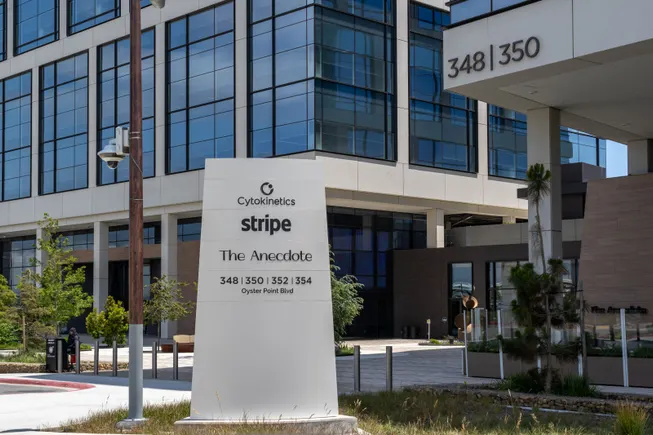
Stripe, which has dual headquarters in South San Francisco, California and Dublin, provides payments services for some 18,000 digital services providers that cater to small businesses, the release said. As a result, Stripe said it sees an increasing number of startups in its ecosystem with an appetite for more capital.
Meeting those small businesses’ demand for capital is a revenue-generating opportunity for Stripe, the company said. Merging Parafin into Stripe will boost the number of businesses to which Parafin has access for selling its services. Meanwhile Stripe will also gain from Parafin’s existing clients joining its ecosystem where they might purchase its other services.
San Francisco-based Parafin was founded in 2020 on the notion that small and midsize businesses have trouble landing loans because banks’ traditional credit system is set up for large enterprises, two of the company’s founders, Sahill Poddar and Vineet Goel, explained in a public letter announcing the Stripe purchase. As a result, SMBs are frequently denied capital, but not necessarily because they have bad credit, the founders reasoned.
“Banks underwrite SMBs with processes designed for large companies and often require personal credit scores,” the founders said.
“The result is that the average SMB spends weeks applying for financing, commingling personal and business liability, and is more likely than not to be turned away,” the Parafin founders said in their Wednesday letter.
Since Parafin extended its first cash advance in 2021, its lending has mushroomed to $3 billion in credit extended over the years to some 60,000 businesses in the U.S. and Canada, they said.
The types of financing Parafin offers has also expanded. The company now sells a variety of financing options, including term loans, business-to-business financing repaid over time and credit cards, tapping Cross River Bank for support.
Parafin had an annual revenue run rate of $100 million as of last December, based on the company’s internal assessment, according to a press release that month.
The founders suggested in their letter that the Parafin operation will continue as it has after the Stripe merger, only on a larger scale.
“Offers, outstanding financing, and repayment terms are unaffected, and our combined scale and commitment will allow us to test more often, learn faster, and turn what works into better options for the platforms and businesses we serve,” the letter said. “Inside Stripe, we will get to help more businesses as we pursue this endeavor at an even greater scale.”
Paraffin has raised nearly $200 million in equity financing over its six-year lifespan, according to the venture capital research site Crunchbase. The company attracted $100 million from investors in a December 2024 fundraising, giving the company a $750 million valuation, according to a press release at that time.
“Platforms power millions of small businesses throughout the world and are central to Stripe’s mission,” Stripe’s business lead, Neetika Bansal, said in Wednesday’s release. “Sahill, Vineet, and the Parafin team bring acute expertise and leadership in credit, risk, and embedded financial products.”
Privately-held Stripe has been on an acquisition spree, buying two companies in as many months. Stripe’s financial wherewithal for acquisitions has increased over the past decade as its own valuation has skyrocketed with its rising payments processing volume. In February, management pegged the business to be worth about $160 billion for the purposes of selling shares to employees and existing shareholders.
In August, Stripe acquired artificial intelligence services company OpenRouter, reportedly for about $7.5 billion, per the New York Times and other media outlets. OpenRouter provides services that aid its corporate clients in routing their artificial intelligence work to about 400 AI models such as those from Anthropic, Google and OpenAI, managing the companies’ token usage expenses and AI spending.
Related Stories
 Startups
How Growing Startups Keep Product Quality High Without Slowing Releases
13 minutes ago
 Startups
Central Asian Startups Go Global
1 hour ago
 Startups
DraperU India Demo Day: 13 Startups Pitch to Investors; Ordo and WearSynapse Secure Rs 25 Lakh Each
6 hours ago
 Startups
Why IDFC FIRST Bank's MD and CEO V. Vaidyanathan believes there has never been a better time to start up in...
16 hours ago
 Startups
A Chat With Tomas Milar: What Startups Should Look For In A Cap Table Management Platform
1 day ago
 Startups
Anna Tobin on Building the Financial Infrastructure for Global Startups
1 day ago
 Startups
K
1 day ago
 Startups
How Liverpool’s Digital and Creative Startups Are Attracting Investment
2 days ago