
Startups abandon crowded urban EdTech market for overlooked learners
For years, Kenya's education technology startups largely targeted urban private schools with reliable internet access, digital devices and parents willing to pay for online learning.
That trend is beginning to shift as a growing number of early-stage firms develop products for learners with disabilities, refugee communities and rural schools’ segments long overlooked by mainstream education technology providers.
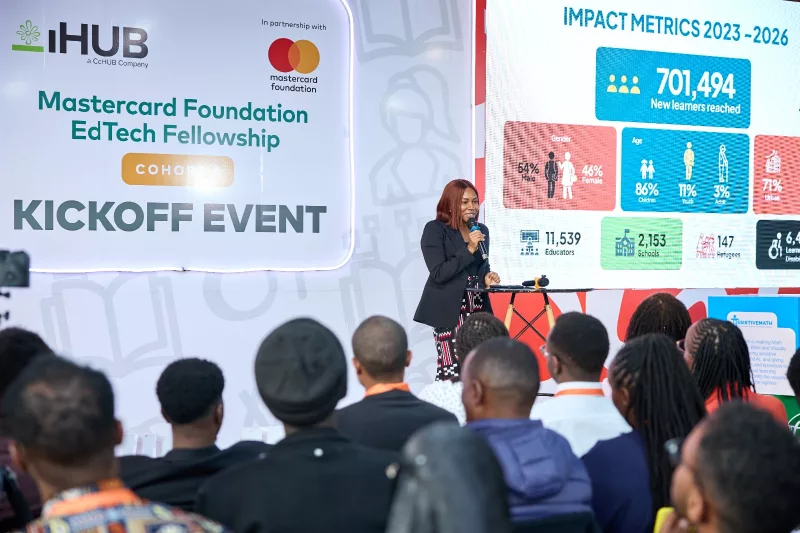
The shift was evident after innovation hub iHUB selected 12 startups for the fourth cohort of the Mastercard Foundation EdTech Fellowship, with this year's intake deliberately focusing on businesses building solutions for underserved learners.
Unlike previous cohorts that mainly backed growth-stage companies, the latest program is targeting early-stage ventures and extending support from eight months to 18 months, reflecting the longer time needed to test products and build sustainable business models in underserved markets.
The selected startups are developing assistive technologies, offline and multilingual learning platforms, artificial intelligence-powered education tools, and vocational training solutions aimed at expanding access to education.
“The Fellowship sits at the intersection of three powerful forces – education system transformation, inclusive technology-enabled solutions and sustainability of Africa’s EdTech entrepreneurship,” said Mastercard Foundation director of the centre for innovative teaching and learning Wariko Waita,
Each startup will receive up to $100,000 (about Sh13 million) in equity-free funding alongside technical support covering product development, business strategy and pilot testing.
iHUB Managing Partner Nissi Madu said the programme is prioritising founders addressing barriers faced by learners who have historically been excluded from technology-enabled education, while helping them build businesses capable of scaling.
Since launching in Kenya in 2023, the fellowship has supported 36 education technology companies that have collectively reached more than 700,000 learners, worked with over 2,100 schools and expanded access to learning for more than 6,000 learners with hearing and visual disabilities.
The growing emphasis on inclusive education signals a broader shift in Kenya's EdTech sector, where startups are increasingly viewing underserved communities not only as a social impact opportunity but also as an untapped commercial market.
Related Stories
 Technology
Portugal to have a new technology centre
29 minutes ago
 Technology
In a rare moment of unity, Americans are fighting Big Tech together
30 minutes ago
 Technology
Leatherwood throws 4 TDs in Tennessee Tech win over Monmouth
2 hours ago
 Technology
Tainan’s Qigu Science and Technology Industrial Park gains new tenant
3 hours ago
 Technology
Two NHS trusts to use speech-to
5 hours ago
Osaka’s Deep Tech Startups Prepare For The Global Stage Ahead Of GSE 2026
6 hours ago
 Technology
Wolverhampton and Walsall trusts to use speech-to
6 hours ago
 Technology
MTN calls for coordinated investment in digital infrastructure and skills to drive Africa’s growth
8 hours ago