
SoFi's Bank Stablecoin Signals New Era for Crypto Banking
SoFi's bank-issued stablecoin marks a new era for crypto banking: for the first time, a U.S. national bank embeds a bank-issued stablecoin in a consumer app.
What Just Happened: SoFi's Bank-Issued Stablecoin Goes Live
CoinMarketCap's October 19, 2026 report states SoFi made SoFiUSD available to its 14.7 million members inside the SoFi app. The company announced the launch on May 27, 2026. This is the first time a U.S. national bank has embedded a bank-issued stablecoin in a consumer banking interface — the same app members use for savings, spending, borrowing, and investing.
Technically, the token runs on Ethereum and Solana, is redeemable 1:1 for U.S. dollars from SoFi Bank, and is backed by liquid assets held in reserve, with regular independent auditor attestations. Members can buy, sell, hold, and convert SoFiUSD inside the app. SoFi's CEO Anthony Noto said, per CoinMarketCap: "People no longer have to choose between blockchain technology and regulated banking products." SoFi cautioned that SoFiUSD is not FDIC-insured and carries the ordinary risk of loss of a digital asset.
SoFi is not the first bank to issue a stablecoin — U.S. Bank launched USBDC, according to the bank's own announcement — nor the last; Reuters reported on September 1, 2026 that Goldman Sachs, Bank of America and others plan a joint dollar stablecoin. What SoFi did that is new is distribution: a bank-issued stablecoin embedded in a consumer banking app with 14.7 million users, not a standalone institutional product. For businesses, that makes bank-grade redemption and reserve attestations a visible consumer benchmark — corporate treasurers should now expect the same from their crypto banking providers.
Why It Matters Now for Crypto Banking
The main effect is normalization: a reserve-backed, redeemable stablecoin as an ordinary banking feature. If a consumer can hold one next to a savings account, a startup's or DAO's business crypto account should not sit on weaker foundations. The question shifts from "is crypto banking legitimate?" to "which layer do you trust: a bank-issued stablecoin with named redeemability, a third-party stablecoin like USDC, or an opaque token with no attestations?" Decision rule: prefer instruments with 1:1 redemption rights, disclosed reserves, and independent attestations.
The Reuters report on Goldman Sachs and Bank of America points the same direction. The Federal Reserve's December 17, 2025 note examines what bank-issued stablecoins mean for deposits, credit, and financial intermediation. This is consistent with the broader big-bank shift in crypto banking and the business-side adjustments following Schwab's move. The bridge is being paved.
Background: How We Got to Bank-Issued Stablecoins
A decade ago, crypto banking meant self-custody wallets and exchange balances. Then came crypto-friendly neobanks and hybrid platforms that combined fiat rails with crypto custody. The missing piece was a bank-grade stablecoin: issued by a regulated bank, redeemable on demand, with reserves a regulator can see. SoFiUSD is that piece arriving.
Stablecoins became too large to ignore; they now function as settlement instruments, not just trading collateral. The Bank of England's explainer describes stablecoins as digital assets designed to maintain stable value relative to a specified asset or pool. Regulators began drawing a line between reserved, redeemable stablecoins and algorithmic or unbacked tokens; the Fed note is explicit evidence. Banks responded: U.S. Bank launched USBDC, Goldman/BofA announced a joint plan, and now SoFi embedded it in a consumer app. Issuance without distribution is just a pilot.
What SoFi's Move Means for Startups and DAOs
For startups and DAOs, a bank-issued stablecoin is operational currency for treasury, payroll, vendor payments, and cross-border settlement. The scale is already there: stablecoin payments have surged 45%, and businesses use dollar-tokens because chain settlement clears in minutes. SoFiUSD validates that use case from inside a chartered bank.
A stablecoin is only useful if a business can transact with it. OneSafe, a financial technology company rather than a bank (its banking services are provided through partners), unifies fiat rails — ACH, domestic and international wires, bill payments, corporate cards — with crypto functionality: instant crypto-to-fiat conversion, crypto payments, and USDC deposits and withdrawals at no charge. Digital assets are held through Fireblocks custody, with multi-factor authentication enabled by default. That architecture solves the gap a bank-issued stablecoin does not: SoFiUSD gives you a redeemable token, not multi-signature treasury controls, role-based permissions, or automated payment flows — business requirements, not consumer features.
The source does not publish SoFiUSD-specific fee tables. The roadmap includes tokenized deposits eligible for FDIC insurance, 24/7 low-cost cross-border transfers, and a listing on Bullish. If those land, settlement windows shrink and correspondent-bank fees get bypassed. But a business still needs an account that can hold, send, and convert the token. SoFiUSD raises the floor, not removes the need for infrastructure.
Risks and Realities: Standards, Security, and Compliance
Risk depends on the instrument's structure, not the word "crypto." SoFiUSD is not FDIC insured, and SoFi itself said so. But it is redeemable 1:1, backed by liquid assets, and subject to regular independent attestations — materially safer than an unbacked token, but still not a deposit. For a business, that distinction determines whether working capital belongs there.
Retail investors can tolerate one-key custody; a startup or DAO cannot. Business treasury requires multi-user access, role-based permissions, transaction thresholds, and a custody layer that can survive a lost key. Deutsche Bank's custody expansion is forcing enterprises to confront custody as a business requirement. OneSafe, for example, holds digital assets through Fireblocks — custody claims without a named, auditable custodian should be treated as no claim at all.
DAOs often are not legal entities in any jurisdiction, yet they hold treasury, pay contributors, and enter contracts. A bank-issued stablecoin does not fix that; it adds a regulated asset into an entity that may not have a bank relationship. Compliance falls on the platform: know-your-business, sanctions screening, transaction monitoring. Chainalysis's guidance for banks frames this as issuing, partnering, or integrating. For global startups, the practical bar is lawful serving — identity verification, business documentation, no OFAC-sanctioned countries. That is the price of stablecoin regulation reshaping how the rails work.
What to Watch Next in Business Crypto Banking
SoFi's roadmap names tokenized deposits eligible for FDIC insurance and 24/7 low-cost cross-border transfers. If deposit insurance arrives, the line between stablecoin and bank money blurs further. Watch whether these features are priced like bank products or crypto products, and whether competitors follow within quarters.
The Federal Reserve's note signals that stablecoins are now a deposit-and-credit question. Internationally, USDC's role in AI agent flows under MICA and the broader EU framework suggest convergence on reserved, redeemable, audited stablecoins. Monitor jurisdiction-by-jurisdiction rules rather than assuming a U.S. launch sets a global standard.
The next wave asks platforms to absorb bank-issued stablecoins and tokenized deposits without forcing a team back to a legacy bank. OneSafe's model — segregated global accounts, corporate cards, crypto on/off-ramps, Fireblocks custody, and DAO-native role controls — is built for that bridge. The question is whether such platforms can maintain speed and compliance simultaneously.
What is SoFiUSD and why is it significant?
SoFiUSD is a bank-issued stablecoin created by SoFi Bank and available to its 14.7 million members inside the SoFi app, per CoinMarketCap's October 19, 2026 report. It runs on Ethereum and Solana, is redeemable 1:1 for U.S. dollars, backed by liquid assets, and receives regular independent auditor attestations. For the first time, a U.S. national bank has embedded its own stablecoin in a consumer banking interface. It is not FDIC insured.
How does a bank-issued stablecoin change crypto banking for businesses?
It raises the credibility floor. A bank-issued stablecoin carries a named issuer, 1:1 redemption, and audited reserves. The bar shifts from "is crypto legitimate?" to "does my account integrate a stablecoin with verified reserves and transparent redemption?" It also pushes operational uses — treasury, payroll, vendor settlement — into the mainstream.
What are the risks of using stablecoins in a business banking context?
Four, in order: not deposit-insured; reserve and redemption risk; custody and access control risk; compliance and jurisdiction risk. None makes stablecoins unusable; all make provider choice the deciding factor.
How should startups and DAOs respond to this development?
Start with the treasury question: which assets should working capital sit in, and under what redemption and audit terms. Then match the instrument to infrastructure — an account and custody layer that can hold, send, convert, and report on it. For DAOs, demand multi-user controls, role-based permissions, automated payment workflows, and a named custodian. The criterion is verified reserves, named custody, and lawful serving of your jurisdiction.
What should businesses look for in a crypto banking platform today?
When you're ready to run fiat and crypto operations from one secure platform built for startups and DAOs, open a OneSafe account.
Related Stories
 Cryptocurrency
Could crypto give startups an edge? (Sponsored)
2 weeks ago
 Cryptocurrency
A company with 2,380 bitcoins is exploring blockchain
2 weeks ago
 Cryptocurrency
Côte d’Ivoire seeks responsible development of blockchain and digital assets
3 weeks ago
 Cryptocurrency
HIVE Digital Technologies Ltd. (HIVE) Stock Price, News, Quote & History
1 month ago
 Cryptocurrency
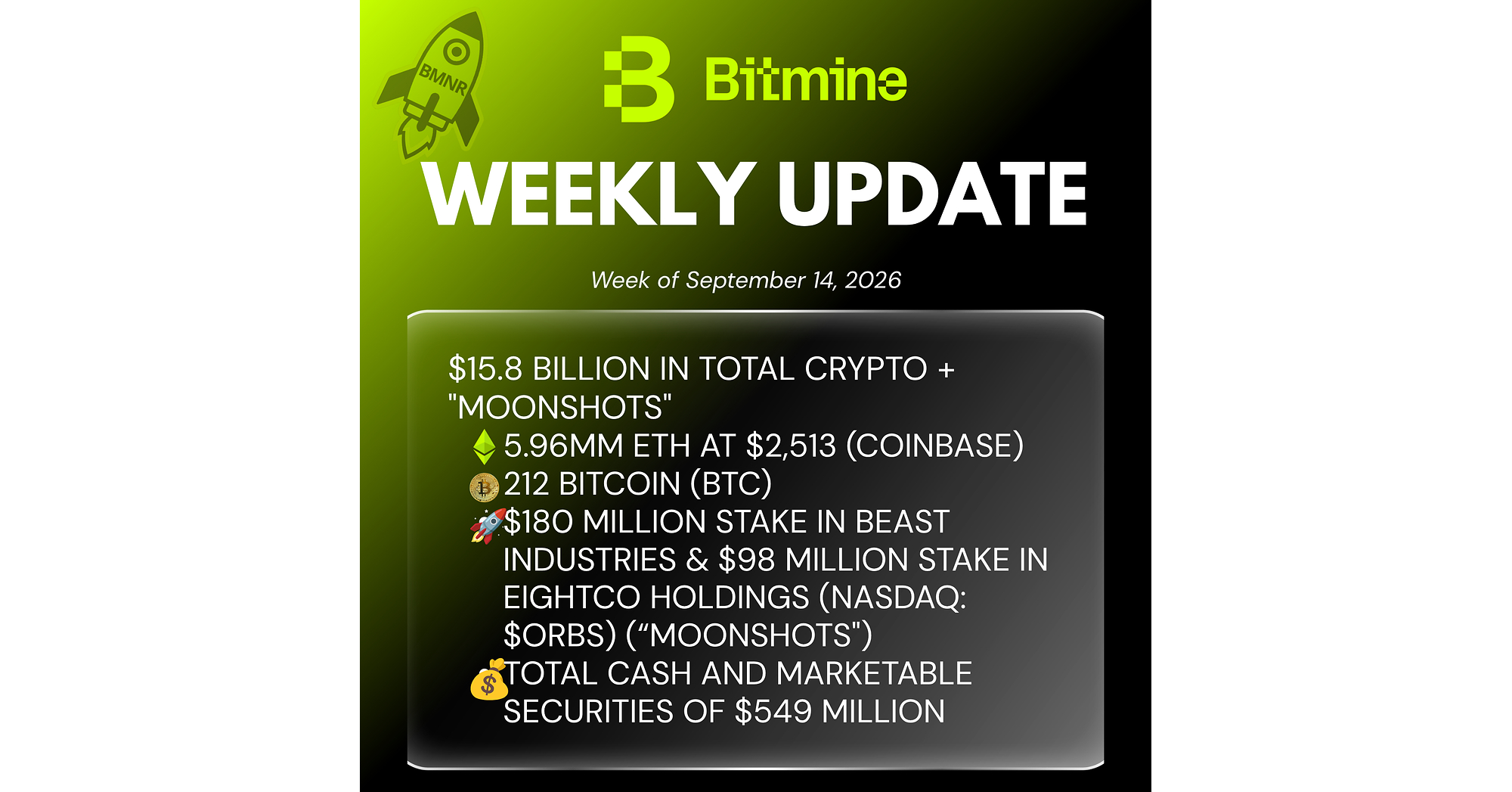
Bitmine Immersion Technologies (BMNR) Announces ETH Holdings Reach 5.96 Million Tokens, and Total Crypto and Total Cash Holdings of $15.8 Billion
1 month ago
 Cryptocurrency
Hackers steal $320 million in crypto from Bitcoin network used by exchanges: What the company has to say
1 month ago
 Cryptocurrency
Top 10 Part
1 month ago
 Cryptocurrency
Lisk shuts down blockchain, cutting off a backer of African startups
2 months ago